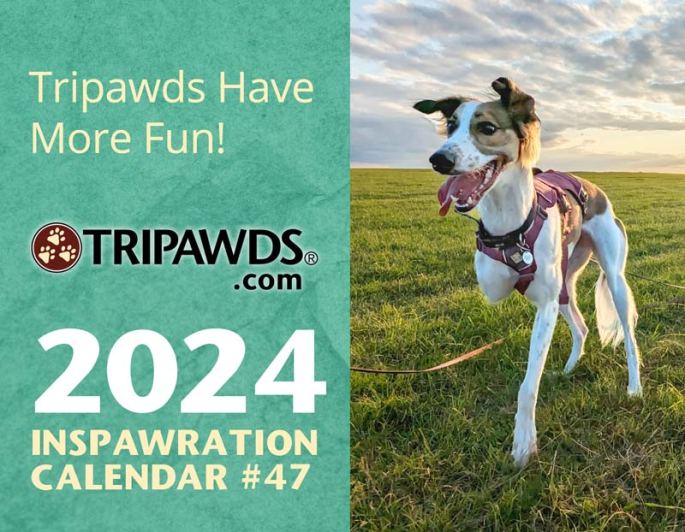
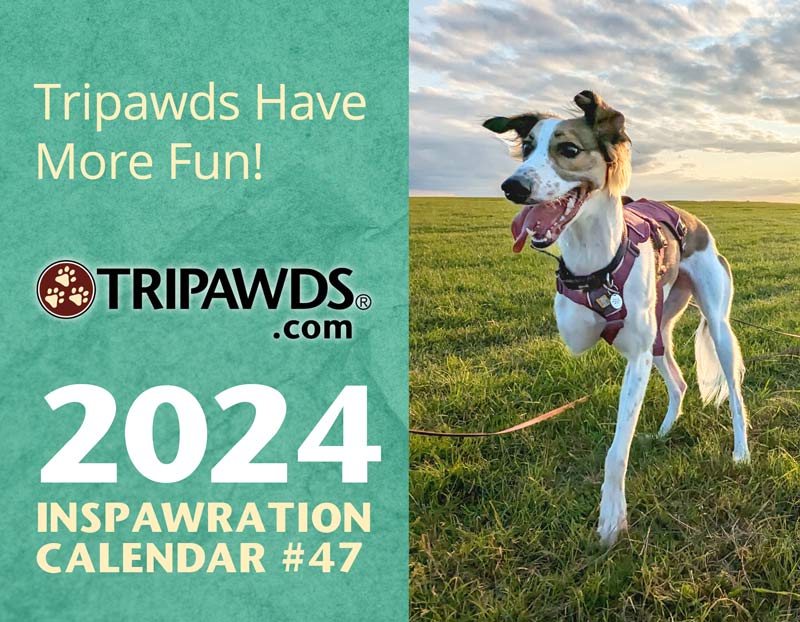
Tripawds is an online community supporting pawrents of three-legged dogs and cats. Every year, they ask for photo submissions for their calendar. I never saw the requests in the past, but this year I did!
Cookie and Ziggy are featured in April as part of calendar #47.
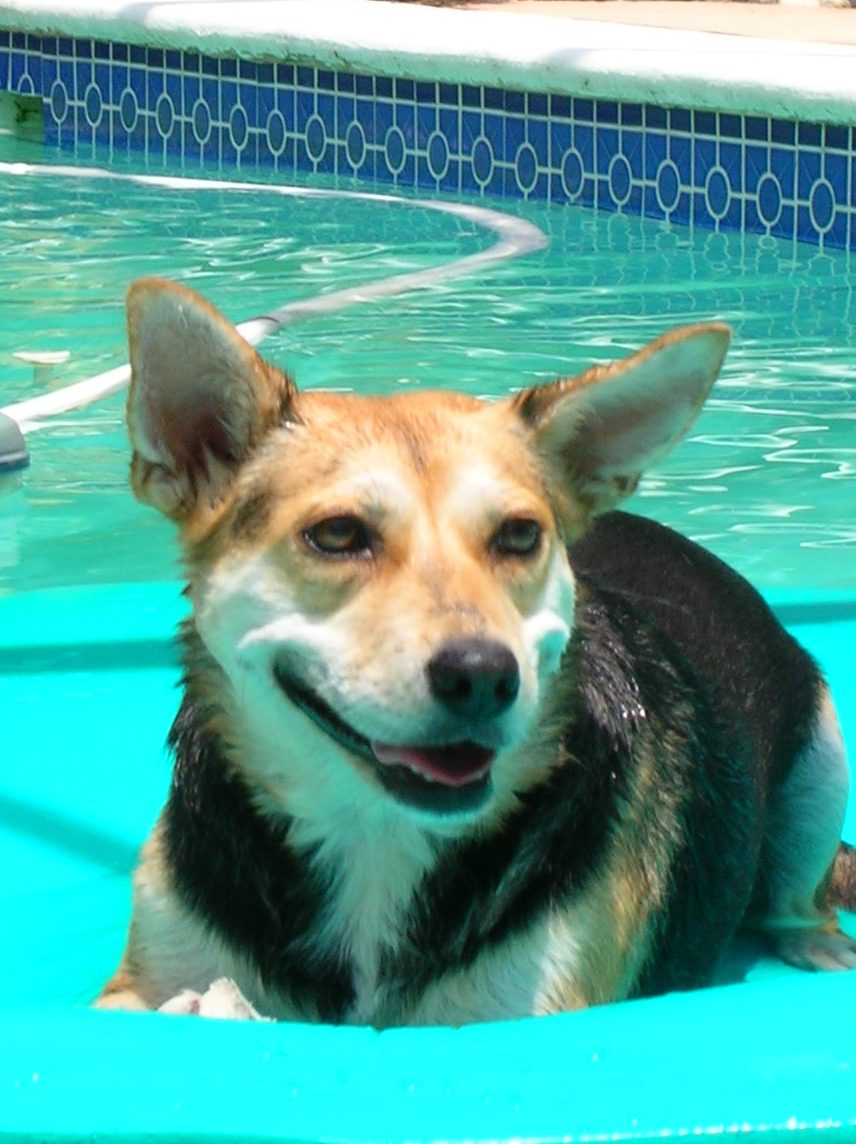
This is one of my favorite photos because of the optical illusion. I didn’t even notice when I first took the photo. A friend commented when I posted the picture on social media!
It was hard to find a good picture of Ziggy that clearly showed him as a tripawd.
Tripawds has three calendars for 2024 – two canine and one feline. Ziggy and Cookie are featured in calendar #47. A calendar purchase helps support the Tripawd community, including the financial aid they offer to support those who struggle to opt for an amputation for their furbaby.
He may be dog number three and has only been here for a little over a year, but Chip has already started teaching us so much – and reinforcing previous lessons.
3-3-3 Rescue Rule
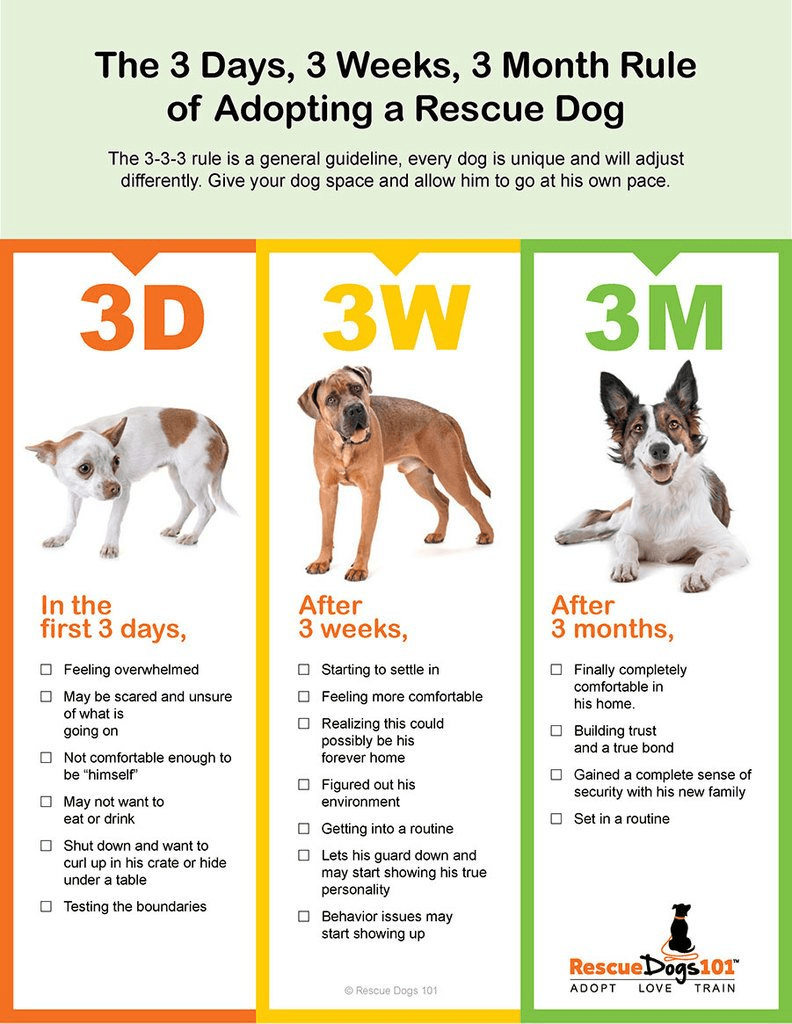
Long before bringing Chip home, I learned about the 3-3-3 rescue rule. In a nutshell, it says that rescue dogs need three days to decompress, three weeks to learn your routine, and three months to feel at home.
It’s a general rule and not something that applies consistently across all rescues since every dog is different! When I first heard of this “rule,” it made perfect sense, though it didn’t seem to apply quite exactly with Cookie or Ziggy. They adjusted more quickly.
Meanwhile, this has fit Chip very well, but he’s probably taken a little longer with each phase. So far, Chip is our most challenging dog and can cause more frustration. BUT, it is SO rewarding to see how far he has come. Part of it is natural growing up, another part is continuing to adapt to a safe, loving, and stable environment, and yet another part is us figuring out and meeting his needs (i.e. sufficient enrichment and exercise).
This approximate timeline is important to consider when deciding to rescue. Be prepared to invest the appropriate amount of time before your new pack is running smoothly. Each dog will be different based on their history (which the degree of known detail will vary based on the circumstances they were found/surrendered) and their individual personality.
Bottom line: Be patient. Work with your pup and seek out professional trainers to help your pup adjust.
Barking is trainable
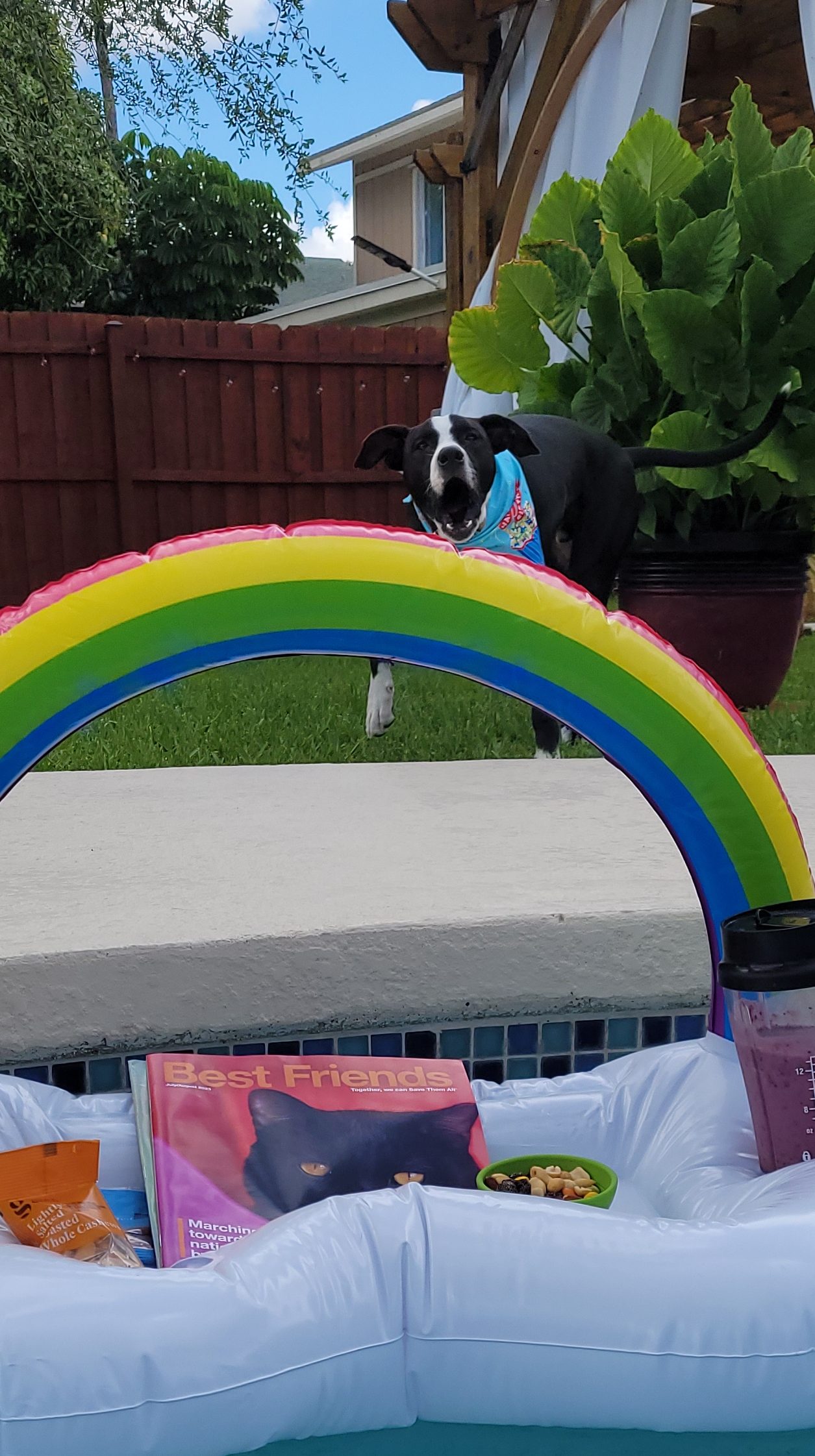
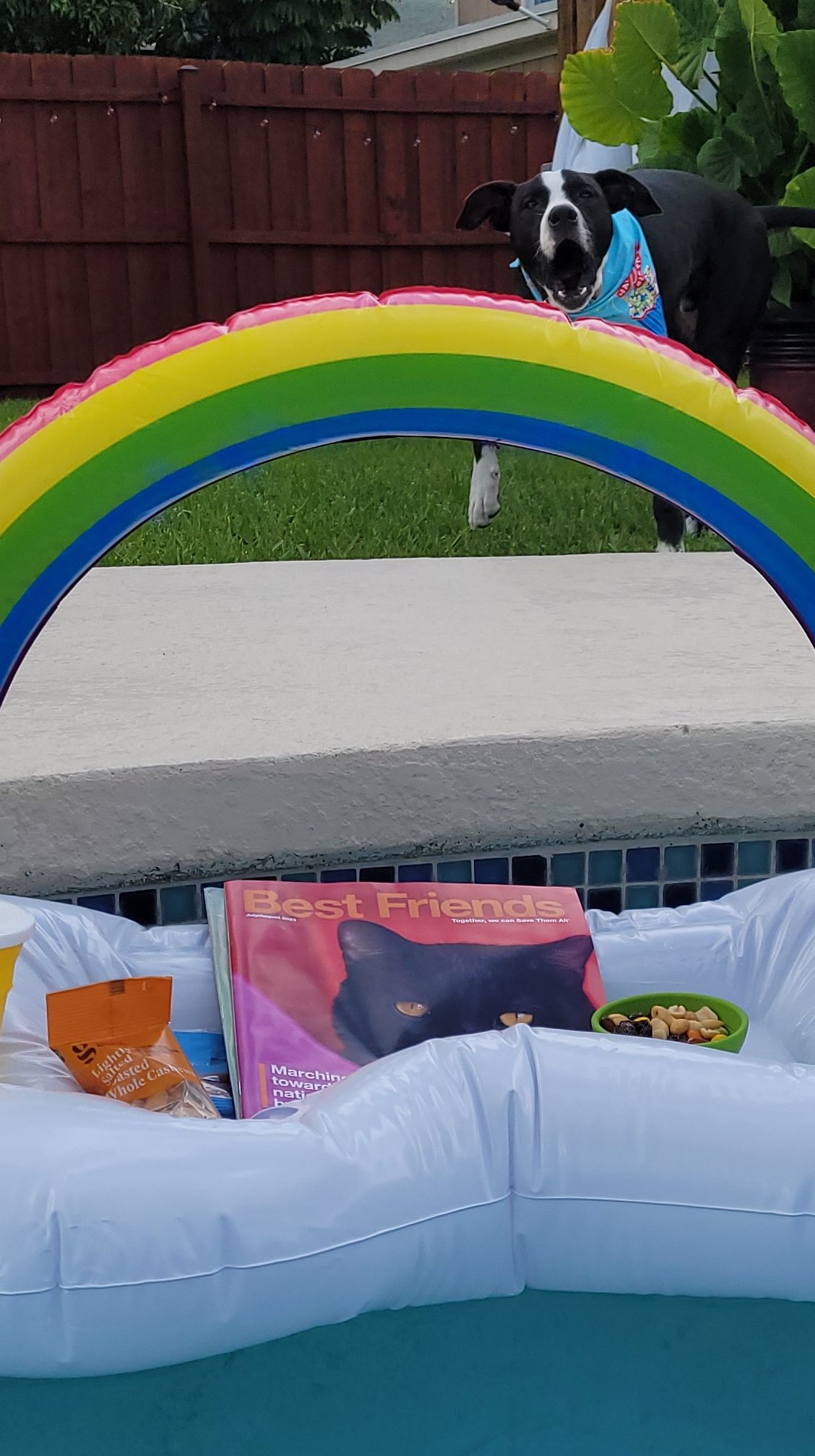
Chip barking at a pool float.
Cookie and Ziggy are not avid barkers. Sure, they’d bark if a delivery was being made or “suspicious” people walked past our house. But that was mostly it. Any other time they needed to communicate they would use their eyes or body language.
Not Chip. He is a “chatty Cathy.” While I believe that’s partially due to him having husky in him, it’s also been reinforced one way or another. Barking is a form of communication, and while we may not agree with the importance of why they’re barking, dogs are trying to communicate something when they bark.
For example, when I would shower and get ready for work, I would crate Chip in our bedroom just outside the master bath. At first, he would bark non-stop. Fortunately, I was able to be in his line of sight if I left the door open. So, when he was quiet, I would reward it – with LOTS of verbal praise and treats, when I could.
He quickly learned that I was nearby and that he didn’t need to narrate the entire time I was in the shower.
Other scenarios are harder to train (though professional trainers are more likely to offer up better tools than me), but with time they’re doable. In the beginning, for many reasons, we would walk Cookie and Chip separately. We couldn’t always ensure that one of us was home with Chip while Cookie would get walked. So he was crated, and for Cookie’s 20-minute walks, Chip would bark almost non-stop.
Over time, he grew more confident that he wasn’t being abandoned and that we always came back. We also slowly started testing the waters leaving him uncrated during her walks. Thankfully, those experiments were successful, and the combination of time and being uncrated worked for Chip.
Bottom line: The key with barking is to make sure you reward the silence, not the barking – particularly in scenarios where the barking isn’t appropriate. Barking is a natural dog behavior and shouldn’t be eliminated, simply managed. Find professional trainers that can help you modify the behavior.
Reactivity isn’t a bad word
Before Chip, “reactivity” had a bad connotation for me. I took it to mean an aggressive, unapproachable, unsocial dog. But it’s not.
Reactivity is simply a dog responding to stimuli in the environment. It could be for a multitude of reasons including overexcitement and fear.
One account that does a great job educating and bringing awareness on reactivity.
I’m still learning how to best support Chip and set him up for success. Sometimes his reactivity is clearly fear, and other times excitement. Those are his main drivers, but there are other times when it’s hard to tell.
Bottom line: Be open to the “reactive” dog label. Whether your dog is reactive or not, I encourage learning more about reactive dogs because it can help you support pawrents of reactive dogs when you encounter them.
Life lesson: Stay tuned
Chip showing off “peek a boo” in his Canine Good Citizen class.
One year in is too early to pick Chip’s life lesson, so you’ll have to stay tuned as he grows up to see what else he teaches us!
Though Ziggy was our second dog, he has been my greatest teacher so far. Here are just some of his lessons.
You’re their Advocate
Regardless of whether you view yourself as a pawrent, owner, or guardian, you’re definitely their advocate. They cannot voice their feelings, desires, or opinions. Living with them day in and day out, you know them best. Sure, you rely on experts (e.g. vets, trainers, groomers, etc.) to help care for them, but you can choose what advice to follow.
With Ziggy, I had two memorable experiences as his advocate.
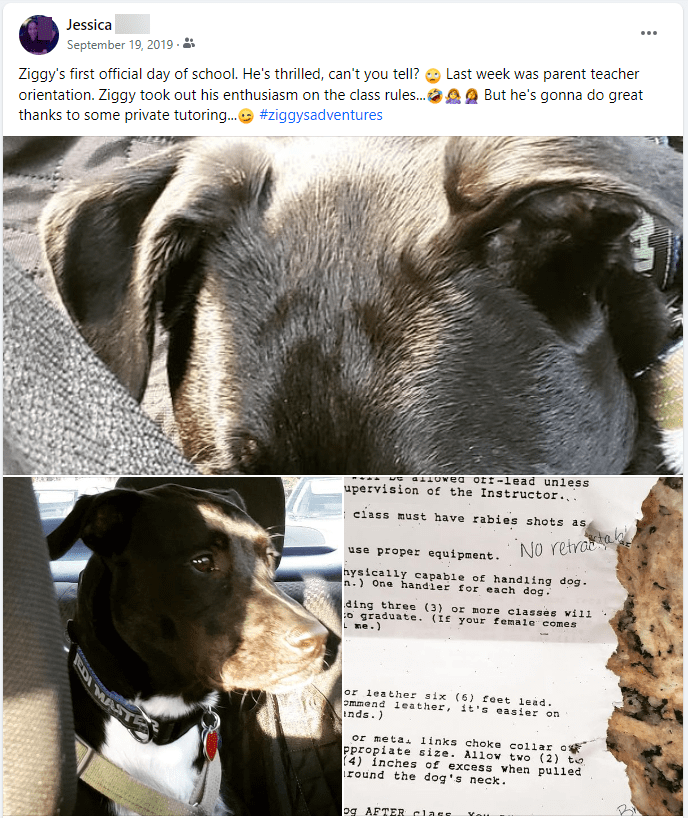
The first was with a trainer. We wanted to take Ziggy to the same place we trained Cookie, but unfortunately, they weren’t offering classes at the time. I signed up for a training class through a community education program offered by the school district.
The first week was a dog-free class to go over the class policies. I got a bad feeling but decided to give her a shot. I should have trusted Ziggy’s opinion when he chewed part of her class policies.
Chewed-up policies on the bottom right.
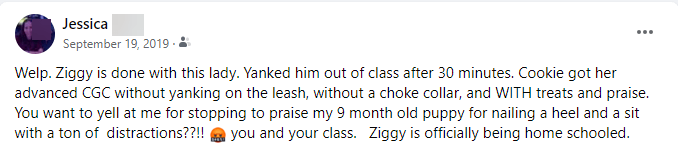
I followed a friend’s advice to listen to the perspective but do things the way you know better. In the first week with Ziggy, we had to all walk in a circle, spaced apart to practice heel / loose leash walking. Ziggy wasn’t quite getting it with her method. I stepped a bit out of the circle so as to not get in anyone’s way and proceeded to teach him the way we taught Cookie. He nailed it. I stopped to praise my nine-month-old puppy. I was yelled at. I yelled back that her methods were outdated and unnecessary (lots of punishments and corrections). I stormed out of the class never to return again.
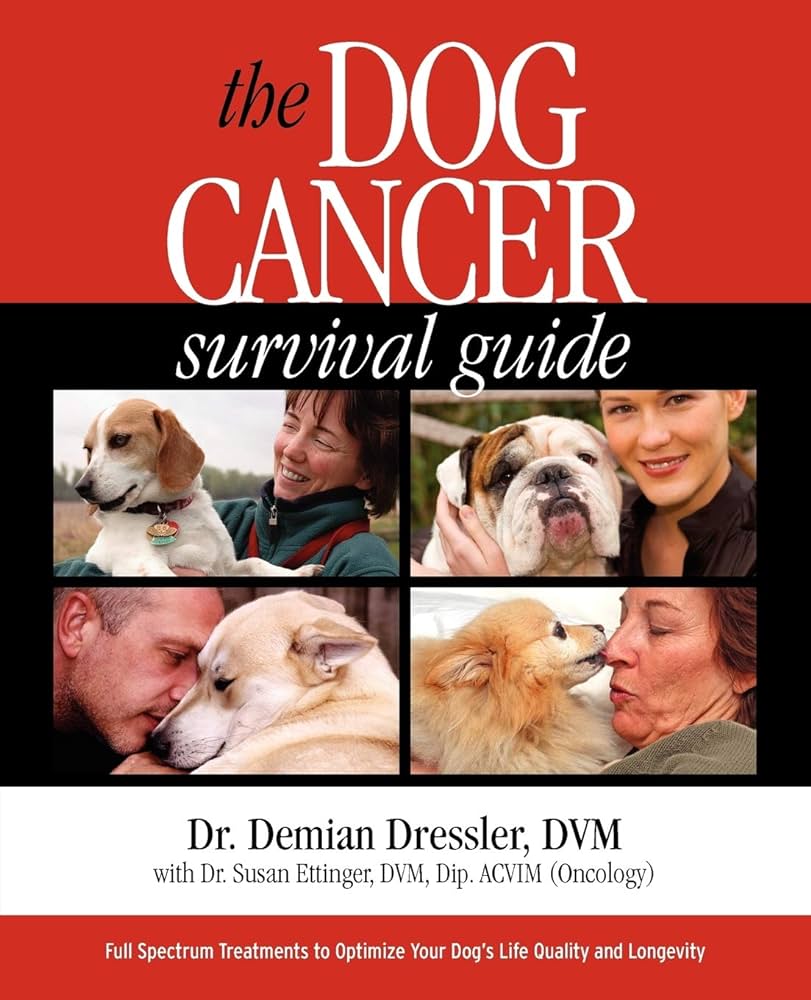
During Ziggy’s cancer journey, we switched vets a couple of times. The second time was when I was trying to talk to the vet about switching Ziggy to a home-cooked diet from The Dog Cancer Survival Guide (paid link). He made a few remarks that showed he wasn’t really looking at it, but when he said “Ziggy’s doing great. You don’t need to do anything else,” I knew it was time to find another vet.
I was coming to him with stuff that I wanted to explore and try. He shut me down, and that wasn’t the attitude we wanted on Ziggy’s care team.
Bottom Line: If it doesn’t feel right to you, don’t do it, get another opinion, or at the very least question it. You are their advocate. No one knows them better than you.
Every dog is different
Ziggy and his “crooked” sit.
A trusted friend and dog trainer (the same one with the advice above) had to beat this one in my head. Whenever we’d talk about Ziggy, often about training matters (like his “crooked” sits), I would compare Ziggy to Cookie. She said this one to me REPEATEDLY.
I don’t have good anecdotes for this one, but when you struggle to teach one something the same way you taught another, remember this. When one seems to like something that the other hated, remember this.
Bottom line: Dogs are as unique and different as we are. Remember that in all aspects of your relationships with them (especially in training), and adjust accordingly.
Trust your gut
Since dogs can’t tell us when something is wrong, they don’t feel well, or they are in pain, it’s up to us to make observations and take action. It’s easy to brush aside some symptoms we see – especially if you’ve overreacted once already or you simply don’t know that a behavior is actually a symptom. But this is where a health journal can come in handy.
When I first noticed Ziggy’s limping, we initially took a rest and wait-and-see approach. We went that route in part because as a puppy we rushed Cookie to an emergency vet thinking she injured a paw (she was walking on it by the time the vet saw her).
After a week or two of observation and no improvement, we made the call to go to the vet. Watching him like a hawk is what led to his early diagnosis.
The symptom of Ziggy’s cancer was incredibly subtle – just him not putting weight on the leg that had the tumor.
Bottom line: trust your gut. Every time you make a choice, you learn from the experience and fine-tune your gut decisions.
Life lesson: don’t worry be happy
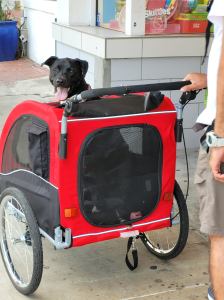
Ziggy was happy as can be riding in his stroller in Key West.
One could argue that all dogs teach us this lesson – and it’s true. But Ziggy in particular had no concerns in the world. Whether it was after his amputation, a chemo treatment, a visit to the botanical garden, or the doggy ice cream shop, he was always happy.
It’s Chip’s one-year Gotcha Day anniversary! We made room in our hearts for another pup about seven months after Ziggy passed away, but Chip wasn’t the pup that started it all.
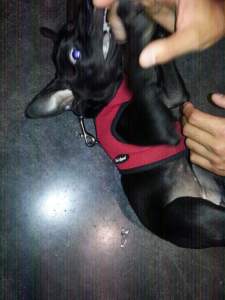
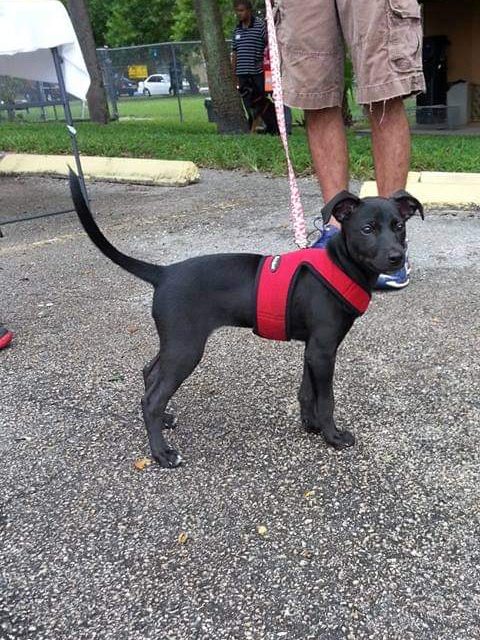
One of Chip’s profile pics from the rescue’s website. Photo Credit: A Second Chance Puppies & KittensChip cuddling with his littermate at his foster mom’s. Photo Credit: Sandra, Chip’s foster mom
It started with Frankie
As our hearts started to heal after Ziggy’s passing, I would pause on social media posts about adoptable puppies from the various rescues that I follow. The ones that tugged on my heartstrings (black and white mutts, a tripawd, etc.) I would show my husband, who would respond with a non-committal “Uh huh” or “I see.”
Eventually, my husband showed ME a puppy, saying “Cookie wants him.” That was a few weeks before a planned trip to Key West. We agreed that we should wait until after the trip so we wouldn’t need to worry about training a puppy on that trip (our pups join us in Key West).
One week before the trip, I saw a video of Frankie – a black and white puppy with one blue eye and one brown eye who already knew some basic commands like sit. I debated showing my husband since our trip was close. But I sent him the video.
“He’s not going to last long. Let’s get him!” was all I needed to hear. I immediately filled out an application. Then we sat on eggshells waiting for a response. I worried whether we’d be allowed to pick him up after our return, so I planned and packed as though a puppy would be joining us.
The night before the trip we got the call. We were approved to adopt any dog except Frankie – he was already going to the home that adopted a littermate that he bonded to.
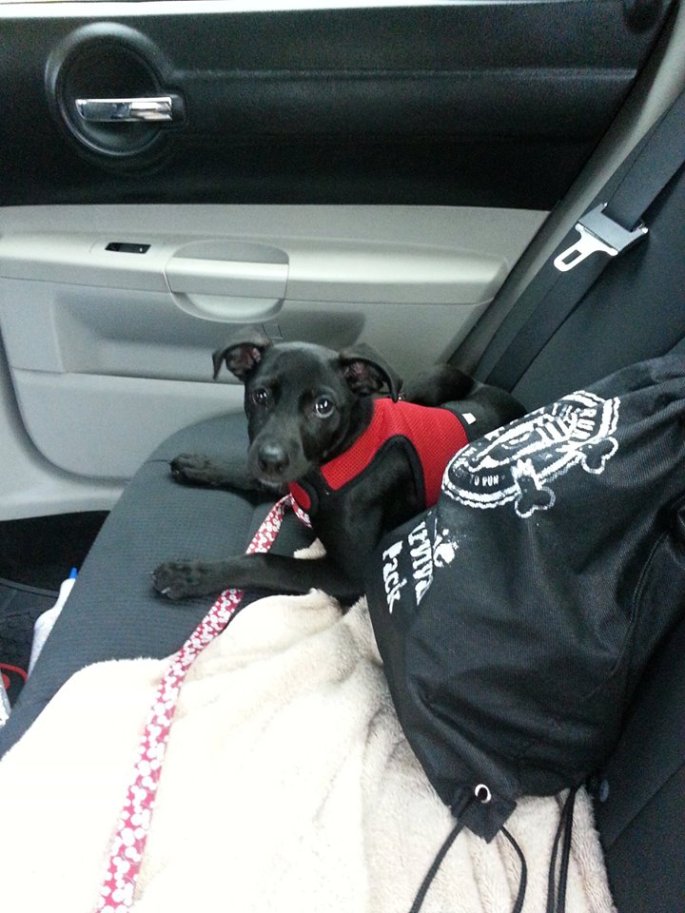
They were having an adoption event at a store en route to Key West, so we decided to stop in. We met one puppy – Chip (formerly known as Perry).
Not love at first sight
While Chip was very friendly, crawling into our laps, he barked. A lot. We decided against him as we were a little worried that he’d be too jealous of Cookie.
On we went to Key West, monitoring news from the rescue group (and others) about adoptable dogs. We found another one with the same group that we arranged to meet at the foster mom’s house the day we got back.
Everyone hit it off, and the foster mom was excited about us. But lo and behold, there was some miscommunication, and that dog was committed to another family. They were doing a meet and greet the next day at an adoption event, but if it didn’t work out we were next in line.
Second Try’s a charm
Cookie is shocked she’s getting a little brother. Again.Chip’s side-eye game has been on point since day 1!
So, we went to the adoption event to check out other pups in case that one fell through. The only puppy of interest was Chip, and he was there with a different foster mom.
Luckily for Chip, my husband didn’t recognize him at first. So I arranged a “re-introduction,” which is when my husband realized he was about to be suckered.
Again, Chip was friendly but chatty. This foster mom had been with Chip longer and shared a video of Chip playing with his littermate and foster sister. She assured us that he’s not a jealous pup and that the barking is how he likes to play (and communicate as we would eventually learn).
Chip quickly stole my heart, and my husband gave in to bringing this troublemaker home!
The rest is history
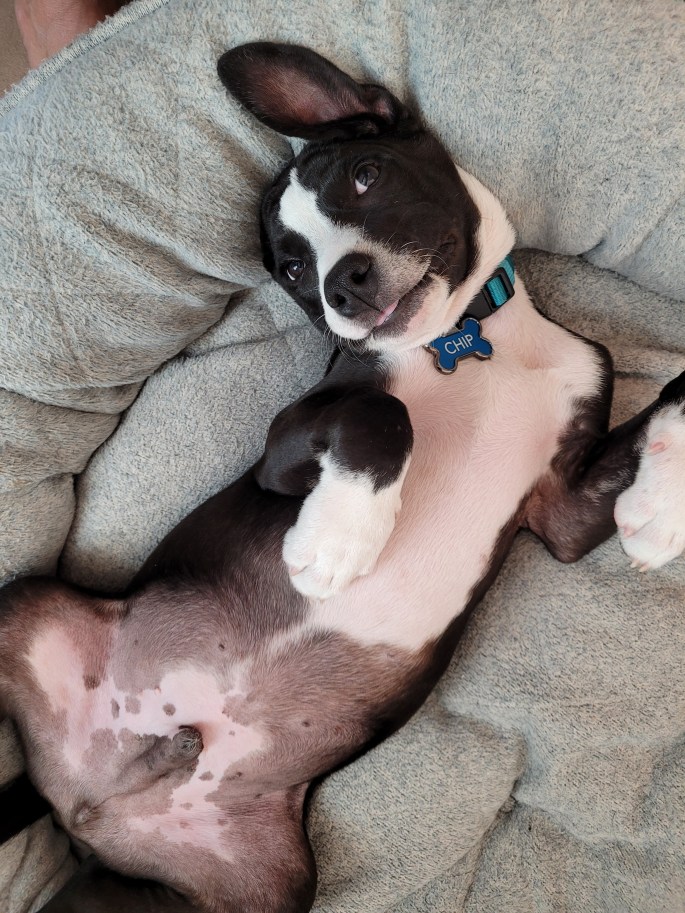
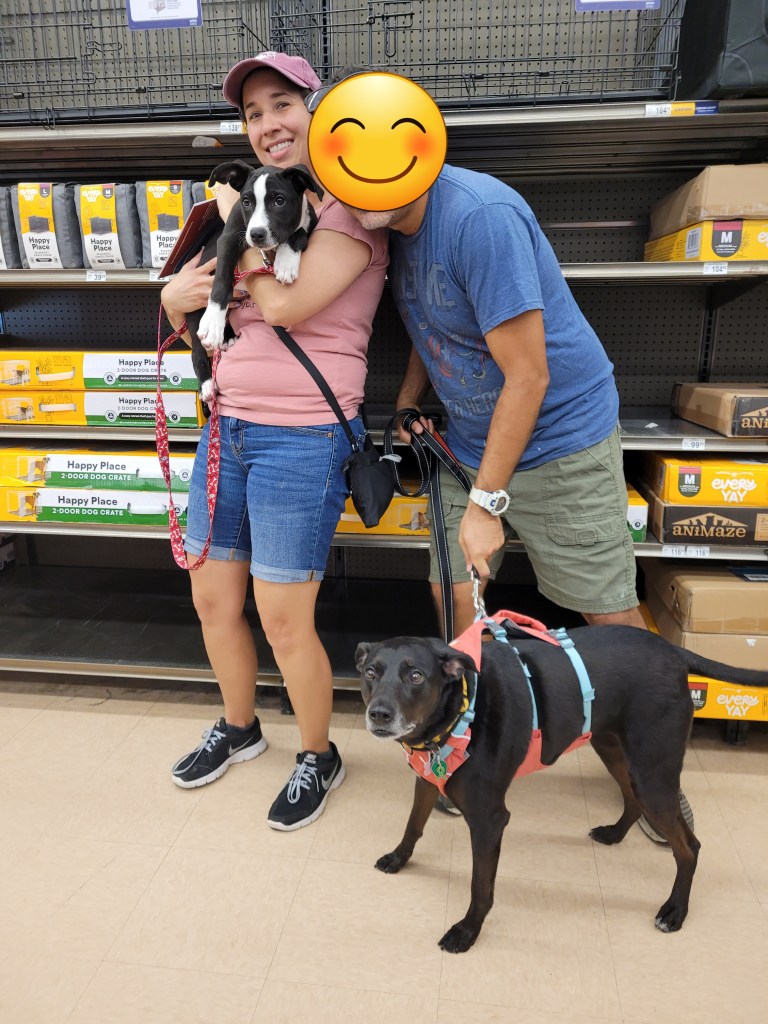
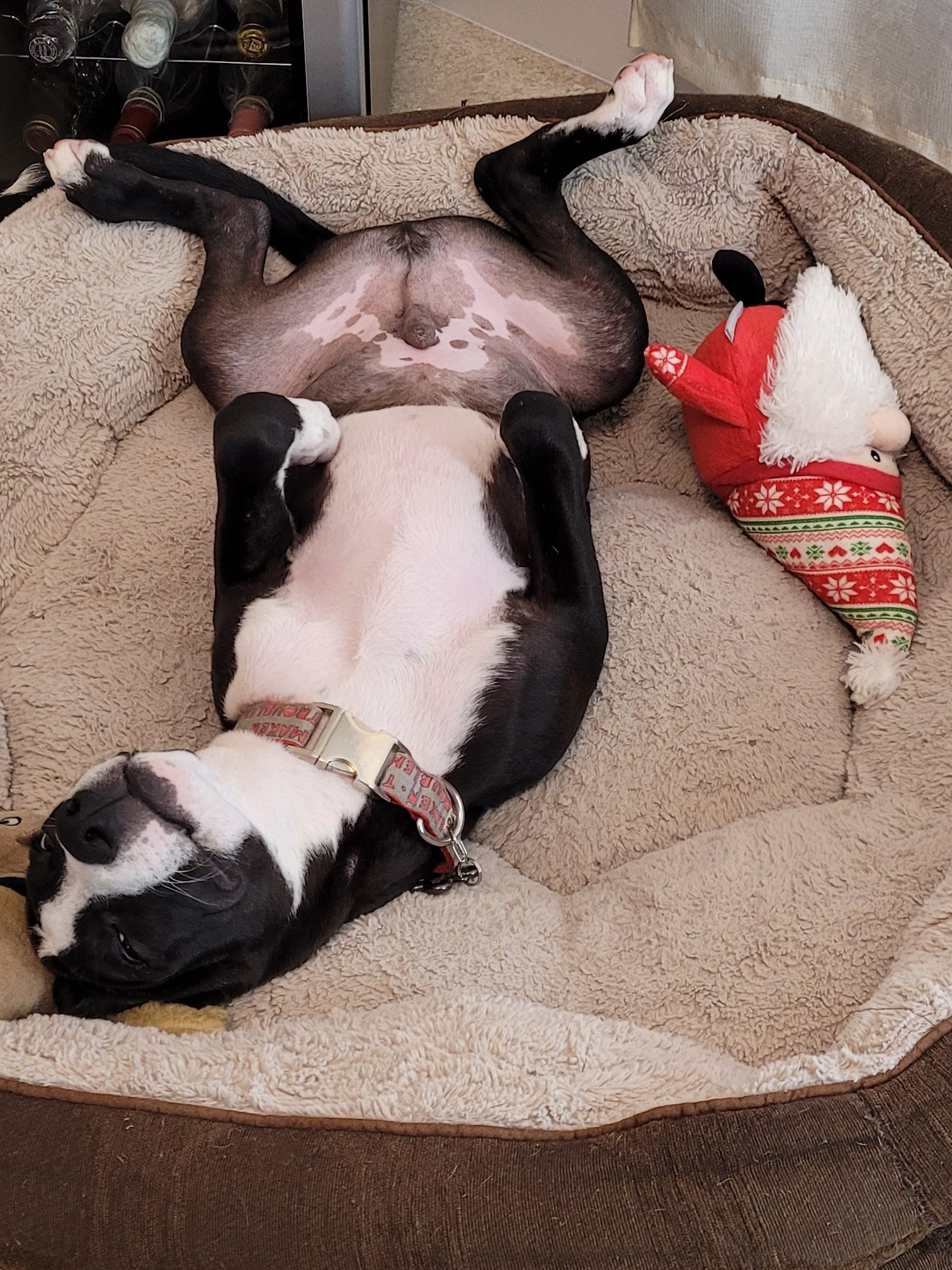
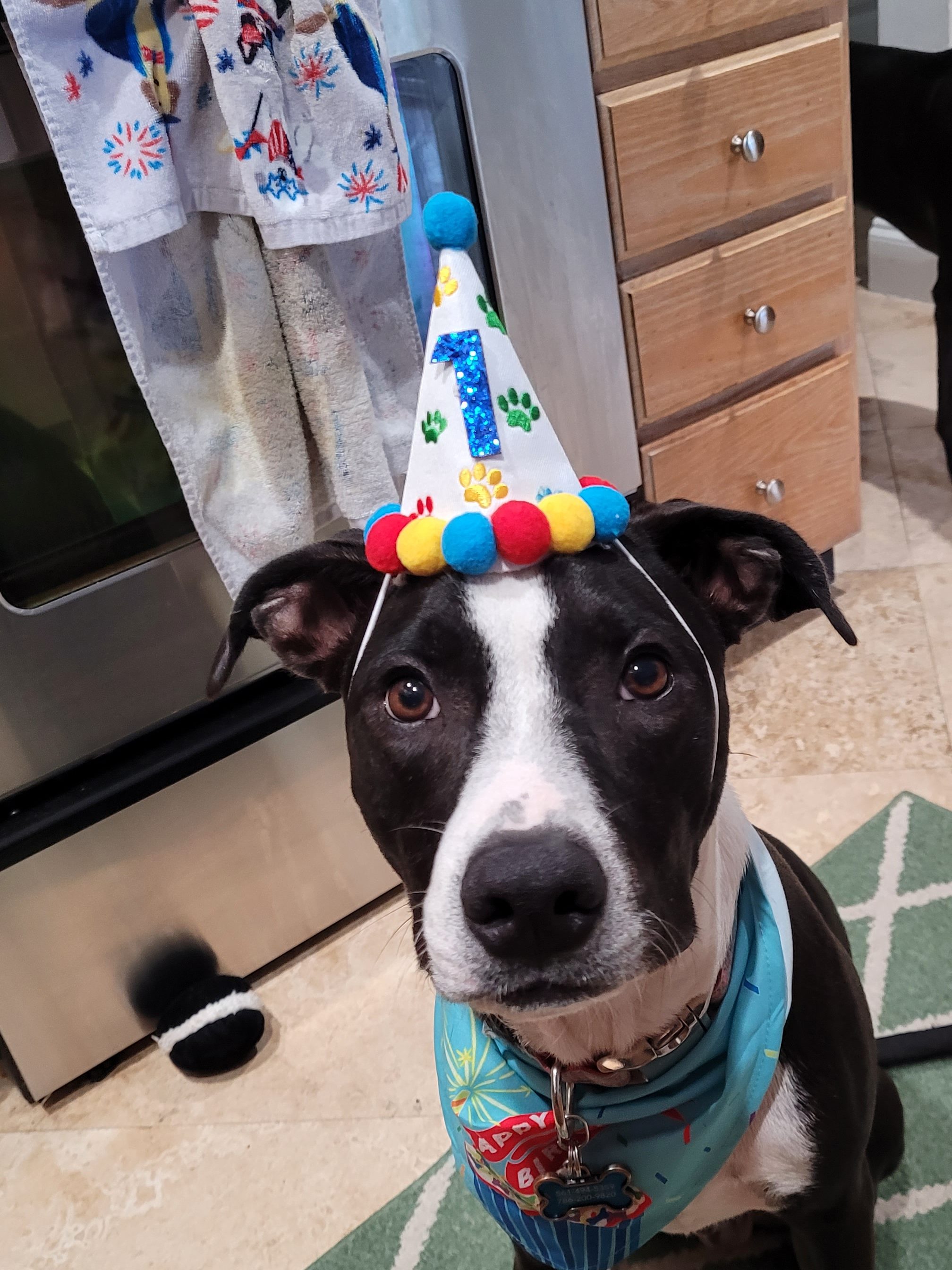
Day 1: Shopping for puppy suppliesOfficially Chip! Posing with his name tagHe doesn’t sleep on his back anymoreBarking at the pool floaty on his first birthday!Chip turned 1 in July.
The rest is history. My husband’s instinct was kinda right. Chip is definitely the most challenging of our dogs, requiring the most training, but it has been incredibly rewarding to see him mature. (And bark a heck of a lot less often.)
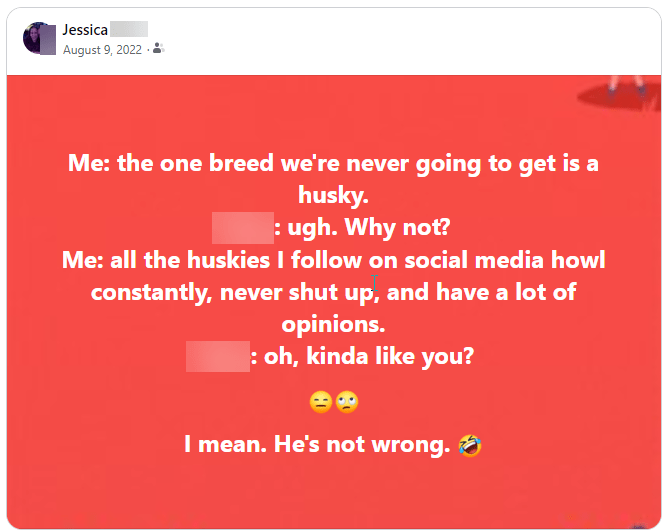
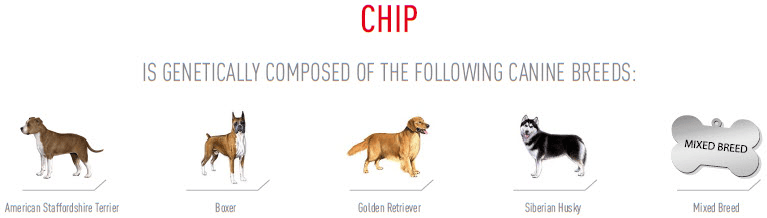
The most amusing part of Chip’s story is when we got his DNA test back. Two months before we adopted Chip, I documented this conversation between my husband and I:
And the results: American Staffordshire, boxer, golden retriever, and husky! And that is what I call karma!
All of my pups have taught (and continue to teach) me a lot about being a Dog Mom. Here are the top lessons from Cookie, my first teacher.
Puppy Cookie en route to her first class 9 years ago.
Dogs don’t Equal Instant Friends
When we first brought Cookie home, I expected to meet and become friends with a bunch of other dog pawrents in the neighborhood. That’s a big fat NOPE!
At first, I thought these other dog owners were just rude. With time, I realized there’s more than meets the eye.
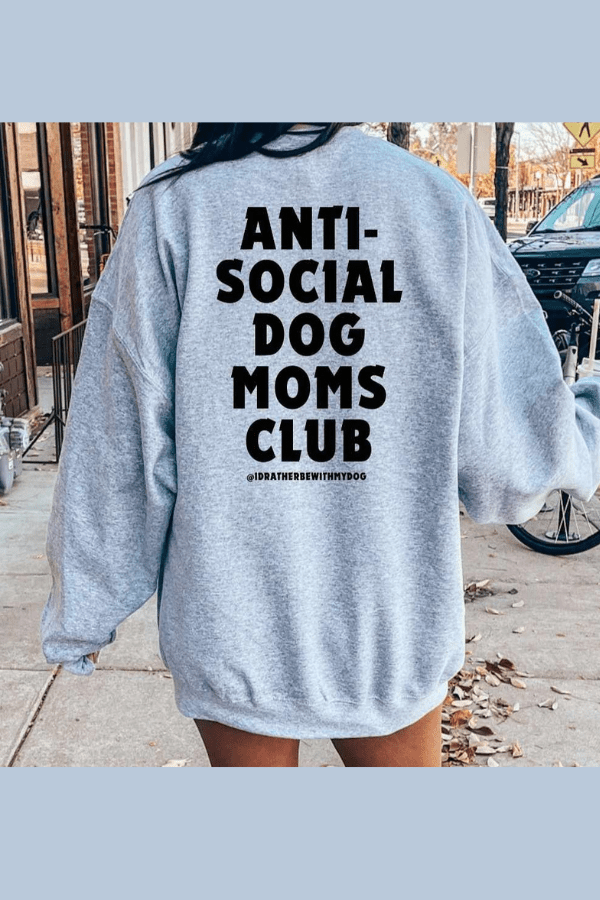
For starters, not all humans are social (duh!). And, just because they have dogs, doesn’t mean they’re interested in befriending other dog pawrents. I was more interested in meeting people back then. Now, I look forward to buying gear like this:
More importantly, they’re likely looking out for the well-being of their dog. Their dog may be anti-social, nervous/reactive around new people/dogs, or could be recovering from an illness and not interested in saying hi. Better yet, they could be training their dog not to go up to every person or dog that crosses their path (something I’m working to correct with Chip!).
Bottom line: Don’t expect everyone to want to do a meet and greet or want to become friends. That’s true even if you’re out at a public event. They really may just want to bond with their dog competing in dog sports, or maybe they’re focused on training or socialization.
Dog parks are a recipe for trouble
This one may surprise you, especially those who knew us in Cookie’s puppyhood. We took Cookie to dog parks regularly. At the time we didn’t have a fenced yard, so we did it for exercise in addition to socialization, playtime, and bonding. We would occasionally meet up with friends who also had pups.
Over time, we started to encounter challenges. At the park closest to home, the humans became problematic. Some wouldn’t pick up after their dogs, so the rest of us would be left to hope that our pups wouldn’t step in, roll on, or eat (yes, eat) the poop. Thankfully, that never happened with Cookie, but was a legit fear when I’d observe people ignoring their pooping pooches.
Many would also not properly supervise their dogs, intervening when body language indicated displeasure or stress. Any time I observed this, in Cookie or others, I was quick to cut playtime short. (She’d often run up to me, telling me she was ready to go.)
Another challenge can be the size and number of dogs in the park.
The dog park closest to home at the time had three areas for different-sized pups. However, many regulars would get everyone together regardless of size. As a puppy, Cookie LOVED playing with all dogs, especially the larger ones. Then Cookie had an accidental run-in with much larger dogs.
Puppy Cookie playing with an unimpressed Big Dog at the neighborhood park.Cookie trying to get the attention of the unimpressed Big Dog at the neighborhood park.Cookie and her puppy BFF, Annabelle. They preferred playing with each other over other dogs.
At the local park, there was more flexibility in what dog groups you engaged with, but sometimes it was all or nothing. Another dog park further away had a different set-up: one section for small and another for big dogs.
We would often meet up with a friend and her pup (Annabelle), the same age as Cookie, at the second park. They were too big for the small dog section but significantly smaller than most of the dogs in the big dog section. For a long while, that park worked well for us. It was spacious with plenty of space for different groups of dogs to interact. Cookie and Annabelle however, often preferred each other’s company to that of other dogs.
One day while Annabelle’s mom and I were talking, I heard a loud yelp that I knew belonged to Cookie. She was physically OK but shaken up after a couple of larger dogs accidentally ran into her. We went home after that, but later walking in our neighborhood she was wary of some other dogs that she previously had been friendly with.
Fortunately, she got over it, but it was the beginning of her trust in other dogs waning, especially larger ones. Even now she is happier saying hi to the small dogs.
Bottom line: dog parks can be fun, but there’s a lot of opportunity for trouble – beyond the ones that we experienced. You’re better off scheduling play dates with the dogs and humans you know and trust. If you or your friends don’t have a yard, there’s a cool service where you can rent private “dog parks” (aka backyards). I’ve never tried them before, but Sniffspot may be worth a look!
A look is worth 1,000 words
Each of my dogs have different communication styles. Had dog buttons been popular when Cookie was a puppy, I’m sure she would have taken to it quickly. Now, I’m pretty sure her disinterest is due to knowing that one look from her gets her what she wants 99% of the time.
What also impressed me is how Cookie will try different ways of asking for something if we don’t understand the first time. For example, when Cookie was still potty training and we were learning to understand her cues there was a time that she had been more energetic (the equivalent of the human “I gotta go!!!” dance) that we chalked up to puppy energy. Cookie ran to our bedroom, brought a dirty sock from the hamper, and dropped it in front of me. And stared at me. She never did that before. When I asked her if she needed to go out, her reply was an emphatic, “FINALLY! YES!!!”
Since then, Cookie helped to potty train both of her brothers. They were both harder to interpret the play as needing to potty. So, when she knows better, she asks to go out, then when her brothers walk outside, she asks to go in. And soon the brother in question pees.
Bottom Line: Anyone who thinks dogs don’t understand us has clearly never paid close attention.
Crate Training
Cookie taught us the benefits and importance of crate training, but three dogs in and we’re still learning how to do it right.
Neither my husband nor I had experience with crates before Cookie, and we didn’t want to confine her too much on days she had to be alone with both of us at work. Given the set-up at that first apartment, we used baby gates to confine her to the kitchen and foyer area.
Let’s just say that the stories of Cookie’s escapes and troublemaking in the five months she lived at that apartment could fill an entire post. Beyond using crate training for potty training (and training in general), having a pup that is comfortable in a crate is beneficial if they ever need to spend time in one at the vet, groomer’s, during dog sports/classes, or at a shelter if you ever have to evacuate for a natural disaster. While Cookie has adapted well to those situations, it has more to do with luck and her general temperament than anything we did.
Life Lesson: Ask
Finally, Cookie’s life lesson: if you don’t ask, the answer is always no. Cookie is a master negotiator. She has gotten more treats and attention simply by asking.
Everything that we experienced with Ziggy led me to do a number of things differently or started doing for both Cookie and Chip.
Health Journal
After getting the hemangiosarcoma diagnosis in December 2020, I started a health journal for Ziggy and Cookie. It’s a notebook where I keep track of the supplements they’re on, changes in diet, notes of any symptoms I observe, questions for the vets, feedback from the vets, etc.
I’m very diligent about documenting whenever a particular symptom arises (i.e. vomiting, diarrhea, limping, etc.). It may not seem to be a big deal if it happens once, but it certainly helps with identifying patterns, connections to changes in diet, or determining if it’s something that happened previously.
About one year before noticing the limping that led to Ziggy’s diagnosis, he ran around in the yard and briefly limped. A year later though when it started again, I had no recollection of what leg it was on. While it turned out to be irrelevant, it may have been helpful to reference when going through his diagnosis.
It can be a challenge to be consistent with it when the pups are healthy. I have a reminder set on my phone to take notes every couple of days. Sometimes I skip it (especially if I’ve been making several other notes), and other times I consider the framework I learned in a seminar from PetSummits.com: BEAM – behavior, energy, appetite, and mood. There may not always be much to write, but noting what is normal or what changes you’re observing can help identify patterns or other changes to discuss with your care team.
Nutrition
In January 2020, I started home cooking for Ziggy. At some point, I also started cooking for Cookie. They both started on the dog cancer diet from The Dog Cancer Survival Guide*. When Chip joined our pack, I planned to keep him on kibble until he graduated to adulthood. However, he was a very itchy pup. Among several recommendations from our vet, I started cooking for him too. I chose a recipe based on my veterinarian’s guidelines from Yin & Yang Nutrition for Dogs* by Dr. Judy Morgan.
While fresh whole-food diets are the highest quality for dogs (not unlike humans), it’s not always the most convenient (again, not unlike humans). Our veterinarian once advised us to balance a whole fresh food diet with the constraint of being a busy human.
Based on the volume that I’m able to batch cook and how much they eat for their weight, I feed them kibble for breakfast (they’re fed twice daily) and home-cooked food for dinner.
When choosing kibble (or other pre-made food), I refer to TruthAboutPetFood.com. They publish a list every year of the highest quality pre-made food (be it kibble, fresh, or raw). They contact pet food manufacturers inquiring about how they source ingredients and their cooking methods. Many brands are not on the list, but that could be due to unresponsiveness from the manufacturer or lack of awareness of the brand by the website. Nonetheless, it’s my go-to for selecting kibble.
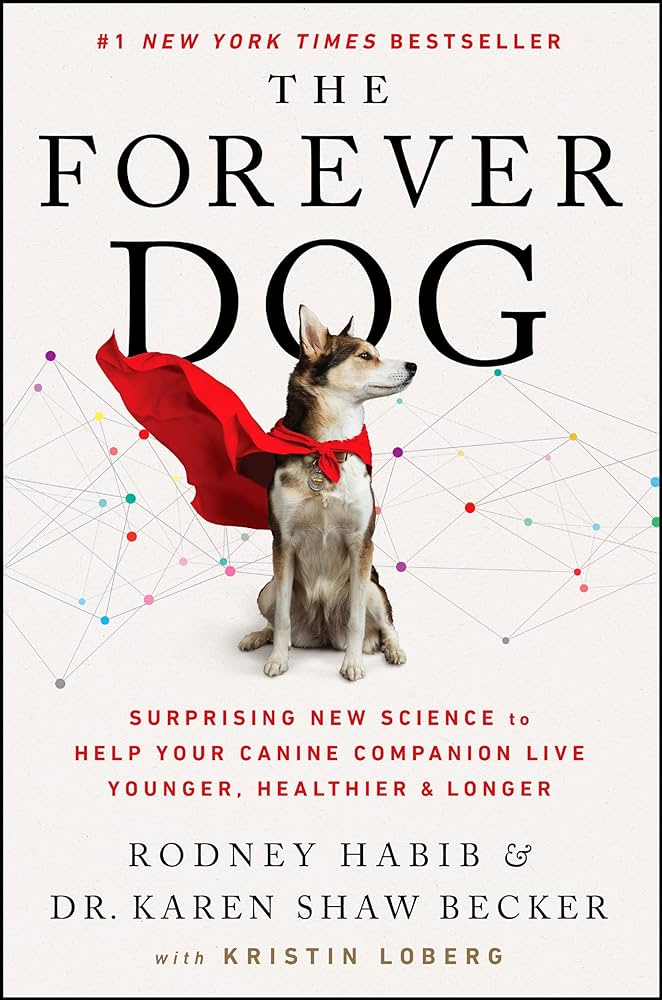
Alternatively, you could refer to chapter nine of The Forever Dog* by Rodney Habib and Dr. Karen Shaw Becker. They share tips for how to objectively analyze your dog’s food based on similar standards to TruthAboutPetFood.com.
You may be short on time or not yet ready to make a change. A simple way to improve the quality of your dog’s meals is to incorporate what The Forever Dog* calls “Core Longevity Toppers (or CLTs).” These are fresh superfoods that you can offer your dog as treats or add as a topper to their meals.
Vaccines & Preventatives
This may be a bit controversial, but it’s something I’ve discussed with my veterinarian and have found supported through multiple trustworthy sources. Studies show that dogs have immunity for much longer than expected (or advertised) with vaccines (a great resource to learn more is The Forever Dog* or Dr. Judy Morgan’s website).
After the initial rounds of core vaccines, I conduct titers. A titer is a blood test to check your pup’s immunity levels. If the test comes back recommending a vaccine, our vet’s office won’t charge for the vaccine since we did the blood test. Other vaccines, such as Bordetella, flu, etc., I evaluated with our veterinarian based on our dogs’ lifestyles and risk of illness. Another factor that may come into decision-making is vaccine requirements by the groomer or training facilities.
Similarly, based on our geographic location and lessons learned from Dr. Judy Morgan, among others, I have switched brands of heartworm preventative and modified dosage to be every six weeks year-round instead of every four weeks. I have discontinued flea and tick preventatives with the support of our veterinarian.
Please do your own research and consult with your care team before making any changes to your dog’s care.
Quality Time & training
Cookie & Me, Dog Day in the Garden, May 2022
Cookie and Ziggy almost always did everything together from the start. With Chip, I’m intentional about giving them separate time with me. Some of it is practical – it’s hard to train a puppy properly on a walk when both hands are occupied with a leash. Some of it is mental and emotional, allowing each to have a break from the other (admittedly, Cookie wants more breaks from Chip given their eight-year age difference) and to form a strong bond with each of us.
So, I also try to take each pup out (aside from a walk) independently once a week. Sometimes it’s a drive through a car wash or a visit to the vet to pick up supplement refills. Other times it’s a shopping excursion to a pet-friendly store or a local farmer’s market. I try to keep it simple and build it into my routine.
Final Thoughts
There may be more things that I do differently, but these are the main changes. You can refer to the Health & Nutrition Pawrenting Resources page for more tools.
Be sure to consult with your care team (veterinarians, specialists, trainers, etc.) before making any changes to your pup’s care.
Note
*I’m an Amazon affiliate and can earn commission on eligible purchases.
Some days, when I stop and think about the accounts I follow and the resources I lean on, I wonder how I got here. But there are a few essential resources that led me to where I am (before the algorithms took over).
Where it all Began
I don’t remember how I found Tripawds. I suspect in reading material Ziggy’s diagnosing veterinarian shared when amputation was initially mentioned.
Once we decided on having the surgery, I read all I could about amputation and how to support Ziggy. Tripawds’ e-books and web community were invaluable.
Most tripawds are three-legged due to cancer. Naturally, my next stop was the book Dog Cancer Survival Guide, a book recommended within the community.
Dog Cancer Deep Dive
The Dog Cancer Survival Guide is authored by a veterinarian, Dr. Demien Dressler, and veterinary oncologist, Dr. Susan Ettinger. I began with the first chapter, and despite repeated recommendations to read the book in sequence, I jumped around based on what was most pressing, given where we were in Ziggy’s journey. I don’t remember exactly the sequence, but I recall focusing on the suspected cancers to learn about treatments, what to expect, etc., then focusing on nutrition and nutraceuticals while ending on other alternative therapies.
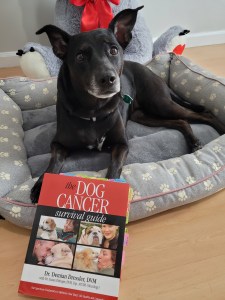
Cookie posing with my copy of Dog Cancer Survival Guide
My copy is well-highlighted and flagged. While it started with Ziggy, when Cookie had her own encounters with cancer (more on that in a future post!), it was helpful to reference and learn what to expect with her cancer.
Note
I’m an Amazon affiliate and can earn commission on eligible purchases.
In addition to resources on the site, they have an excellent podcast, newsletter, and Facebook support group. In the beginning, I listened to EVERY podcast episode – even ones that didn’t seem particularly relevant to Ziggy. With time, I learned to be more selective of which episodes I listen to for the sake of my emotional health.
Similarly, the Facebook group can be heartbreaking, seeing how many lives are touched by canine cancer. But, it can be incredibly helpful to lean on a community that can relate to the rollercoaster of emotions you experience. Sharing the wins along the way can also bring so much joy, or even asking for ideas and suggestions when you encounter challenges (just be sure to consult your care team before making any changes).
And more!
Thanks to DogCancer.com‘s podcasts, I was introduced to many great resources that led me to even more. I often start following many accounts, and with time, I may choose to unfollow some that may not align as well with my values or are otherwise not a fit. Visit the Pawrenting Resources page for more recommendations.
Tips
Don’t take my word for it. Your experience or views of a particular resource may differ from mine based on your journey and values.
As you start following different professionals, assess if they’re one-sided, if they address counterarguments, and how they align with your views.
The more you follow, the more viewpoints open your mind, and the more likely you will find some that rub you the wrong way. Don’t write them off because there’s one bit of content you disagree with. It’s hard. Who you follow should bring you joy or expand your knowledge. If they do neither, unfollow them.
Always consult your real-life pack (vets, specialists, trainers, groomers, and beyond), and remember – you can unfollow people in real life, too. (More to come when I tackle being your pup’s advocate!)
Today, I want to introduce you to Ziggy, the inspiration for this blog. Mostly, I want to share with you the journey we went on with him. Future posts will go into more detail about various aspects of his journey, including his Gotcha Day, the treatments we did, and the day we said goodbye.
The first second dog
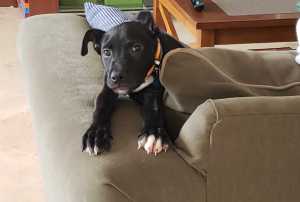
Ziggy a few days after coming home, March 2019.
Ziggy was our first second dog. We brought him into our family in March of 2019. Cookie was a few months shy of her fifth birthday. She was unsure about the idea of a sibling but quickly warmed up to Ziggy, and they became inseparable.
Like most puppies, Ziggy was a bundle of energy. I mistook that energy for not being a “chill” dog, but he was actually very easygoing and the friendliest pup around.
Around the time we brought him home, things were starting to click for Cookie in the agility world, so Ziggy came with us to several agility competitions. While he didn’t do much of anything besides looking adorable, it was amazing to see how easily this puppy adapted to chaotic environments. If you’ve never been to an agility competition, it can be overwhelming – noisy from the barking and the buzzers, crowded with all kinds of dogs and people.
Cookie and Ziggy sharing a crate at the May 2019 Tailwaggers agility trial in Punta Gorda, FL.
Ziggy didn’t get much obedience training. Where we trained Cookie wasn’t offering classes, one place we dropped out of due to a lousy instructor, and many other places were either inconvenient or overpriced. Plus, we kept hoping and expecting that Cookie’s “school” would schedule classes. Thankfully, a friend (and agility instructor of Cookie’s) helped us with some training.
Ziggy and Cookie did everything together – walks, backyard shenanigans, agility trials or practices, spa appointments, and barn hunt trials. Ziggy’s sole teacher did encourage us to walk him separately and dedicate some one-on-one time with each dog. But we didn’t listen. This, however, is one of many lessons Ziggy would teach, but definitely, the key takeaway from him being the first-second dog.
The diagnosis
When Ziggy’s first Gotcha Day anniversary arrived, COVID-19 hit and I was working from home. The first few months were an incredible rollercoaster. Professionally, I went from starting remote work, being furloughed and ultimately laid off, and starting a new job remotely in just four months. Personally, I worried, like the rest of the world, about how everything would play out and what would happen if we caught COVID.
Meanwhile, Cookie and Ziggy were thrilled. The lack of a commute meant longer morning walks. Ziggy no longer had to spend whole days in his crate on the days my husband and I worked. I took my lunch breaks on our back patio so they could sunbathe, patrol the yard, and play together.
About six months into the pandemic, I noticed that Ziggy wouldn’t put weight on his hind right leg. It was so subtle I wasn’t sure if I was imagining it. The only reason I noticed anything was because I was working from home. One night, after a particularly rambunctious play session, Ziggy was obviously limping. It was time to see the vet.
September 2020 showing what I observed with Ziggy not putting weight on his right hind leg. It’s incredibly subtle. By this point, he had already done his round of anti-inflammatories, and was at least scheduled for the sedated exam and X-ray.
Based on the description of symptoms, the initial suspect was a cruciate ligament injury. Though the vet observed that his gait was off, the physical exam didn’t indicate any injury. There were two recommendations: take an anti-inflammatory and rest for two weeks, or do a sedated exam and X-ray. (Apparently, big dogs can tense up and mask these injuries, which is why a sedated exam was suggested, along with an X-ray to rule out other possibilities.)
We started with rest and anti-inflammatories. We also got a second opinion, who confirmed that there was no way Ziggy had a torn cruciate ligament. While on the anti-inflammatory, Ziggy’s limping went away, and he regularly put weight on his leg.
The limping was back one or two days after he was done with the anti-inflammatory. We opted to do the sedated exam and X-ray.
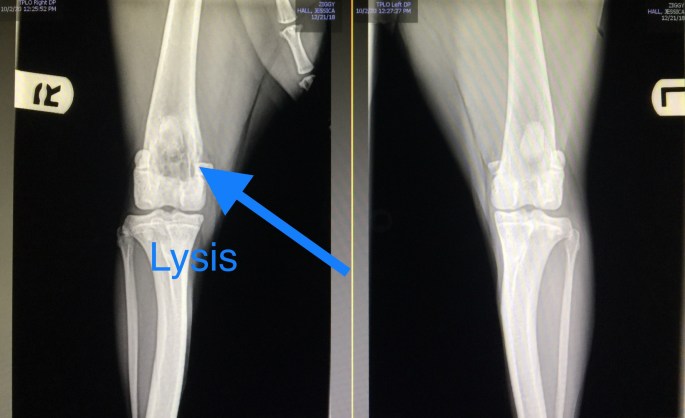
October 2, 2020 was the day we heard it was cancer. The bone in his hind leg was severely wasted away. Looking at the image, it doesn’t take a professional to see something wrong.
As the vet explained, lysis meant the bone was eaten away.
We were devastated. Ziggy wasn’t quite two years old. We were also in denial. While waiting for the oncologist’s consult, we again got a second opinion. We hoped that we’d find that it was a fungal infection, but that was an incredibly uncommon diagnosis given where we live.
The oncologist confirmed the diagnosis and recommended amputation. It wasn’t an easy decision, but knowing that it wouldn’t take much for Ziggy to have a catastrophic break, requiring an emergency amputation, helped make the decision.
Ziggy’s hind leg was amputated on October 27, 2020 – about two months before his second birthday.
Despite having tissue biopsied as part of the amputation, it wouldn’t be until December that we learned what kind of cancer Ziggy had: hemangiosarcoma.
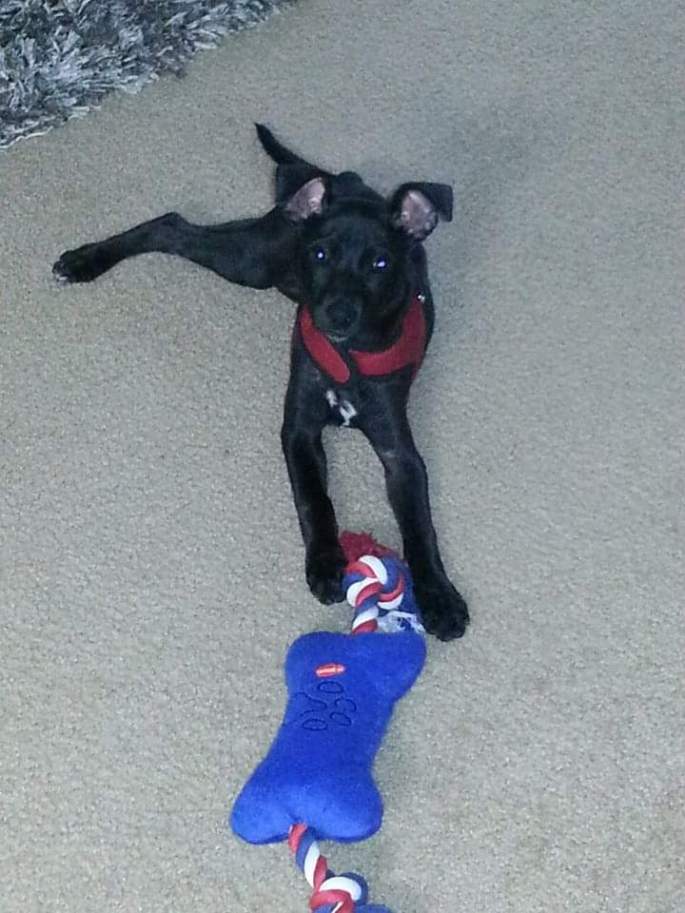
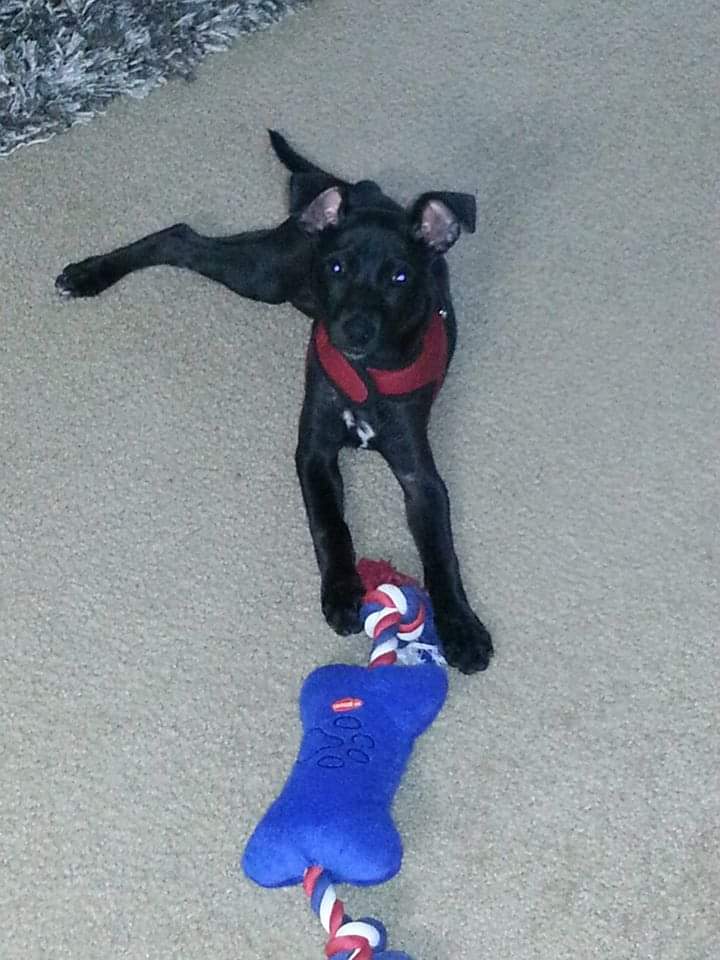
Pixar Ziggy! While recovering from the amputation, Ziggy reminded us of the Pixar lamp.
Treatment
Hemangiosarcoma is a horrible cancer. One that often leads to sudden, even traumatic, death. The fact that it presented in Ziggy’s bone, incredibly uncommon, is something I clung to as I hoped that he would defy the odds.
Armed with a diagnosis, Ziggy began chemotherapy in January of 2021. I started cooking for him during his chemo treatments to reduce his kibble intake. Any supplement that might help was added to his regimen. We found a holistic veterinarian. I dove into learning anything and everything I could that would possibly extend his life.
And we focused on giving him a high quality of life. He got lots of treats and toys; we started frequenting the local botanical garden and a doggy ice cream shop, bought a massive stroller for him to enjoy long walks in, and took him to Key West.
Ziggy loved going for strolls. This one was in Key West, May 2021.
After he finished chemo, we started Ziggy on a low-dose chemo pill at home. He was on that until the very end. Every couple of months he would get chest X-rays and an abdominal ultrasound. We breathed a deep sigh of relief each time they came back clear.
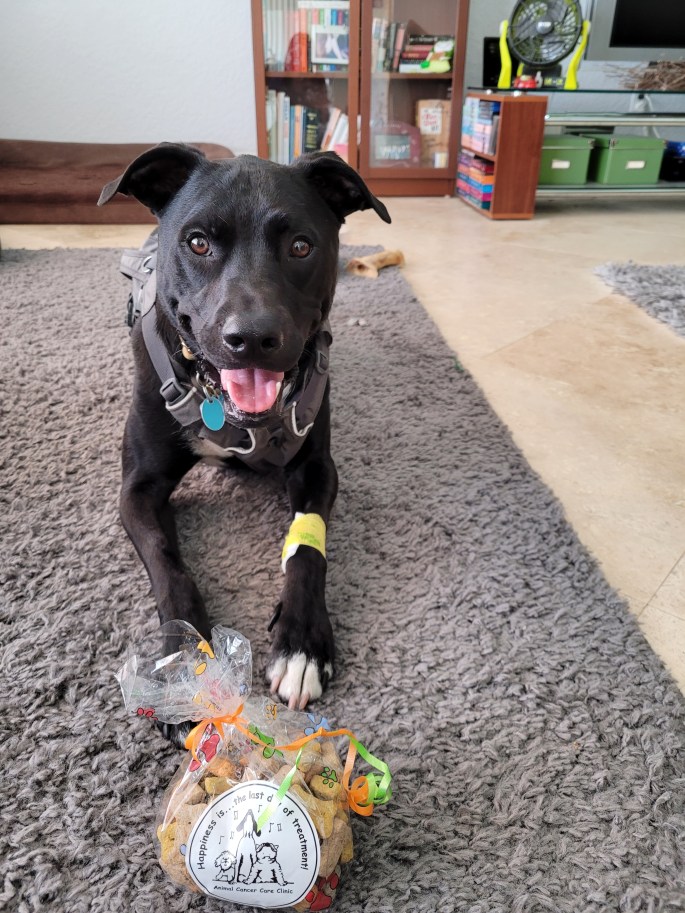
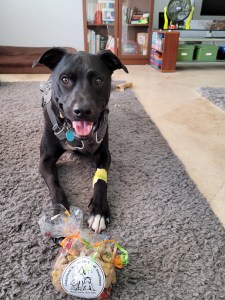
Celebrating his last chemo treatment, April 2021!
Final Months
In January of 2022, we were devastated once again. A couple of days before a barn hunt trial, Ziggy went in for his scans. Our vet called. They found a small mass on his spleen that looked to be bleeding slightly. Splenic hemangiosarcoma, the most common form of hemangiosarcoma.
We canceled the barn hunt trial and miraculously scheduled a splenectomy within about a week of the scans. Surgery was successful, and sutures were removed.
We had a couple of good weeks following the surgery before Ziggy’s health took a turn. He underwent a blood transfusion after he started bleeding internally. Ziggy recovered, but he wasn’t the same. We got enough time to prepare and create a few final memories.
Ziggy crossed the rainbow bridge on March 12, 2022. Not a day goes by that I don’t think about or talk to him.
The Blessings
Ziggy’s story can seem sad or even tragic, given he died a few months after his third birthday. His story is filled with blessings, and that’s what I focus on most.
First, Ziggy was the happiest dog, and the best patient a dog could be. He was all smiles after being hospitalized to have a blood transfusion. His attitude is a big reason choosing the treatments we did wasn’t as difficult as they could have been.
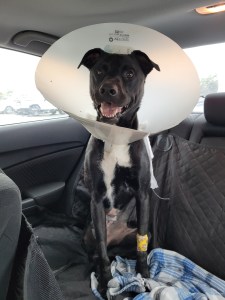
Ziggy, happy to be headed home after his splenectomy, January 2022.
Second, the COVID-19 pandemic allowed me to be with him 24/7 to notice that he wasn’t putting weight on his hind leg. Would we have noticed otherwise? Maybe. But it probably would have taken longer, and who knows how much the cancer would have spread by then. Or maybe we wouldn’t have discovered it until he had a traumatic fracture on the weakened bone.
Third, the ongoing pandemic, plus joining a startup that was remote first, allowed me continued flexibility to work from home full-time. Being home made it easier to get to vet appointments and monitor Ziggy’s recovery from his scans and surgeries.
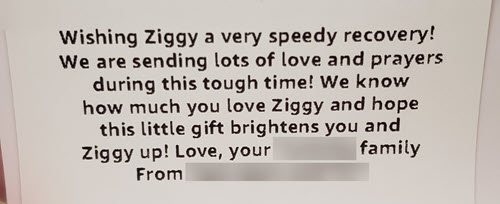
Get well card from work ahead of Ziggy’s amputation, October 2020.
Lastly, we were able to prepare. The loss of a beloved furbaby is never easy. But Ziggy living with cancer for 17 months post-diagnosis allowed us to prepare. It ensured that we focused on quality of life and prioritized making memories. Even when the mass was found on his spleen, we had almost three months with him.
Ziggy’s Legacy
There is so much that Ziggy taught me and that I have learned. I’m doing things differently for both Cookie and Chip. And that is my mission with this blog. I want to capture and share what I’ve learned.
I’m not a veterinarian, dog trainer, or other canine professional. I am a devoted dog mom who wants to encourage everyone to learn more so we can do better by the pups that leave pawprints on our hearts.
It’s Cookie’s Gotcha Day! Nine years ago today, we adopted Cookie at the inaugural Countdown to Zero adoption event!
My husband and I talked about adopting a dog a couple months after dog-sitting for my parents’ dog, Brie. When my husband pressed me for a timeline, I blurted out the date for the adoption event.
Then, we didn’t talk about it until the week before.
What we were looking for
When we finally started talking about what we wanted in a dog, we were pretty much on opposite ends. I wanted a female, he wanted a male. I was open to dogs around a year old, my husband preferred a puppy. I wanted a 20 pound dog, he wanted a bigger dog.
Ultimately, we agreed on one thing: we both had to agree on which dog we wanted to bring home. And seeing who we ultimately brought home, it seems like we blended our preferences.
Spotting Cookie
The inaugural event was held at the convention center. Knowing me, I made sure we got there early so we’d have the maximum selection. There were SO many shelters and rescue organizations present. We walked a couple of laps, stopping here and there to meet some of the dogs. We would each find a pup that one of us liked, but the other person wasn’t wanting to bring home.
I remember spotting Cookie from afar when she was in an X-pen, bouncing up and down.
Me: “What about that one?”
My husband: “Too hyper…”
We took one more lap, and said that maybe we’d need to try again another week at a specific shelter. Then we walked past Cookie, out of the x-pen on leash. My husband kneeled down to say hi. She crawled into his lap, and that was it!
Cookie’s Story
Cookie, formerly known as Allie, puppy biting our fingers.
At the time, Cookie’s name was “Allie” (we think it may have been short for alligator, given the sharp puppy biting we’d come to experience…). A Second Chance found her litter in a dumpster. Cookie weighed 12 pounds, and we were told she was a Chihuahua terrier mix.
Me: Perfect! She’ll be 20ish pounds.
Several months later when we ran into her foster mom at another adoption event, her jaw dropped and she proclaimed, “That’s no Chihuahua!”
Thankfully, a 50 pound dog was the exact perfect size.
Cookie at her first day in school in 2014.Cookie in 2023 at Dog Day in the Garden.
Welcome to my site! I’m Jessica, and I’m a Dog Mom. I started the pawrenting journey in 2014 when my husband and I adopted Cookie. Since then, we’ve also adopted Ziggy and Chip. I’ve learned a lot over the years, and I look forward to sharing my experiences with you.
About me
Photo Credit: My mom
I’ve always loved dogs since I was a kid. I convinced my parents that I should get a dog because I was the only one who had never had a dog, and fish didn’t make good pets because you couldn’t take them for a walk. (I was 8, and I was terrible at walking Lady.)
After my childhood dog passed away while in college, I decided I didn’t want to get another dog until I was on my own. Like in many households, I may have been the one that advocated for getting and ultimately picked Lady, but she quickly became my mom’s dog.
I have worked in the corporate world in marketing and product management. In the years since adopting Cookie, I’ve gone down the rabbit hole of “crazy” Dog Mom. I would love to be a stay-at-home Dog Mom or otherwise immerse myself in the world of dogs. Maybe that’s in the cards, or maybe my love of dogs will be what keeps me sane in the professional world.
Why Blog, Why Now
In March 2019, my husband and I adopted our second dog, Ziggy. He was three months old when we brought him home. About six months into the pandemic, in October 2020, Ziggy was diagnosed with cancer. Two months shy of his second birthday, his hind leg was amputated, and right around his second birthday, we finally learned what kind of cancer he had – hemangiosarcoma.
Hemangiosarcoma is a cancer of blood vessels. It is common and often has a very short survival time (about six months). Ziggy lived with hemangiosarcoma for 17 months. He died just three months after his third birthday.
As our journey into canine cancer began, I learned SO much – not just about canine cancer, but canine health in general. There is so much that seems obvious when you learn it, but it is counter to common knowledge or what we knew as kids with our dogs.
Dogs are incredibly precious to me. They are loving, and loyal and bring us so much joy. No matter how long they live, their lives are always too short.
With each of our dogs, I learn something that makes me a better Dog Mom to the next dog in our life. I want to do everything I can to give them the longest, best life possible. And I want to help like-minded pawrents do the same for their pups.
Meet The Pups
Now it’s time to meet our dogs, and the family dogs, that will make appearances in future posts.
Cookie
Photo Credit: Robin T. Brumfield
Cookie made me a Dog Mom. My husband and I adopted her in September 2014 when she was three months old. She benefitted greatly from being an only child for years.
She is incredibly smart, a fast learner, a good two shoes, strong willed, friendly but anti-social, and an amazing athlete. Cookie introduced us to the world of dog sports beyond obedience.
While Cookie earned titles in agility, barn hunt, and tricks, she also tried tracking and nose work.
We brought Ziggy home in March 2019, also aged three months. He was our first second dog. Ziggy was my greatest teacher and the inspiration for this blog.
There will be many posts about everything that Ziggy taught me, but the top two are how to advocate for your dog and how to pawrent two dogs.
Ziggy was the happiest, friendliest, and sweetest pup. His tail was always thumping, and he was delighted to go with the flow. I hate that he had to be one for half of his too short life, but he was also a fantastic patient.
Cookie introduced us to dog sports, and Ziggy introduced us to canine holistic health care.
Chip
Photo Credit: Me
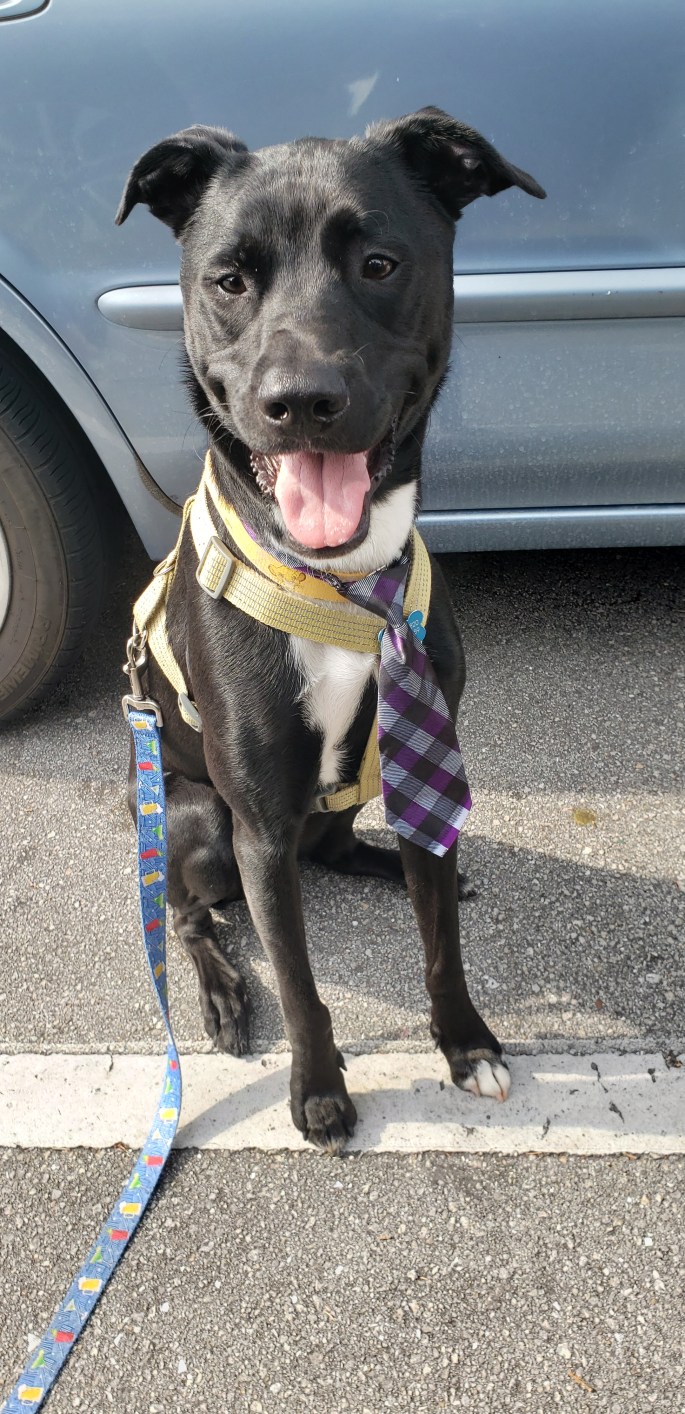
Seven months after Ziggy passed, we made room in our hearts for our second second dog, Chip. In October 2022, Chip became the third dog to enter our home at the age of three months.
Chip is a firecracker, and our biggest challenge. He is vocal, anxious, stubborn, silly, sweet, and smarter than I often give him credit for. Chip lived through a lot in his first three months of life, and it shows. It hasn’t quite been a year, but he has come SUCH a long way.
In under a year Chip has taught me that patience and love pays off. He reinforced a lesson learned with Ziggy – that every dog is different. Most importantly Chip is teaching me how misunderstood reactive dogs are.
The family dogs
Lady & Me, early 2000s Photo Credit: one of my parentsBrie Photo Credit: Me or my mom
Lastly are two girls no longer with us, Lady and Brie.
Lady joined our family in 1991 and passed in 2004. Compared to the dogs I have now, she was tiny – just 20 pounds! But boy did she have presence. While she was only ever taught the most basic obedience commands, Lady was very well behaved and super smart. She was healthy her whole life, until the last year or two when she was on several heart medications.
Brie replaced me when I moved out on my own. My mom lasted five months after I moved out before bringing home Brie. She was at least a year old when she joined the family in 2007 and she crossed the rainbow bridge in 2019. Brie never played, was a steady companion, apparently could hold a grudge, had separation anxiety, and taught Cookie how to behave and paw at the door. (Meanwhile, Cookie taught Brie how to bark and eat grass.)
Here we Go
In a nutshell that’s me and the dogs of my life. I look forward to sharing lessons learned, resources I turn to, products I’ve tried, and countless silly stories.
An important note and reminder: I’m not a veterinarian, certified dog trainer, or other dog professional. I’m a dog mom sharing her tales in pawrenting.
While I hope that my experiences help you, I’m only an expert in the dogs that I’ve lived with (and even with them, I’m always learning). So please, consult the experts that are part of your pack for the needs the pups in your life. When applicable, I’ll link to accounts of the professionals that I follow.























 pawrentingtails.com