Canine Health Research

There are many organizations researching aspects of dog health. There are differing ways to participate if you are interested in helping advance canine health and longevity.

Organizations

This is by no means a comprehensive list, but the ones that I have come across in my pawrenting journey.

The Dog Aging Project is a longitudinal study evaluating how your dog’s age. I registered Cookie about a year ago. At the time, I only had the option of enrolling one dog. I don’t recall whether they provided guidelines on which pup to pick or if that was left up to me.

The time commitment is pretty minimal. Upon joining, I filled out a number of surveys about Cookie’s health and lifestyle. Every so often, I receive an email about an activity to do with Cookie and to register the results on their website. You always have the option to skip the exercise, but I always do it because otherwise, it defeats the purpose of enrolling, and it ends up being a bonding activity with Cookie that she enjoys.

The Dog Aging Project aims to extrapolate their findings to humans. Despite aging quicker, dogs experience similar aging issues as humans. Their studies include a medication trial (if you’re local to their facility) and cognitive assessments that you conduct periodically in your home (this is what we do).

Darwin’s Ark brings scientific minds together with pet parents to help study the effects of the environment on our furry companions. They have several projects, but the one that appealed to me was their cancer project.

You can register more than one dog, participate by filling out surveys, and even submit your dog’s DNA. You can purchase a kit or be added to the waitlist once you complete a minimum number of surveys to obtain one for free! (I have yet to reach that minimum.)

Take C.H.A.R.G.E. is a canine health registry and exchange. That simply means that veterinary clinics and dog pawrents can upload the medical records of dogs with cancer. The records are anonymized, and the data surrounding dogs with cancer is available in a dashboard.

When I signed up, I was able to upload the medical information for both Ziggy and Cookie. It was simple to do, and there hasn’t been any additional action needed or requested from me.

The American Kennel Club is involved in all things dog and has its own foundation. The AKC Canine Health Foundation funds scientific research centering on canine illness. You can contribute to the organization, read about the outcomes of studies, or even participate in research.

I don’t have any experience with participating in research studies. Whether or not it makes sense for you requires careful consideration of several factors such as the criteria of participation, your financial situation, whether covering the cost of care is included, comfort with the risk of getting a new treatment, comfort with the risk of getting a placebo treatment, etc.

Considerations

Participation with these organizations or others boils down to your comfort level, the time commitment, and the risk-benefit analysis for your particular situation. Everything other than the research studies seems to have no risk and low time commitment, but it’s ultimately up to you to decide.

Paying for cancer treatment

Last week, in anticipation of Thanksgiving, I wrote about what I’m grateful for in our canine cancer journey. Following the shopping “holidays” of Black Friday and Cyber Monday, what better than a post about affording cancer treatment?

What will it cost?

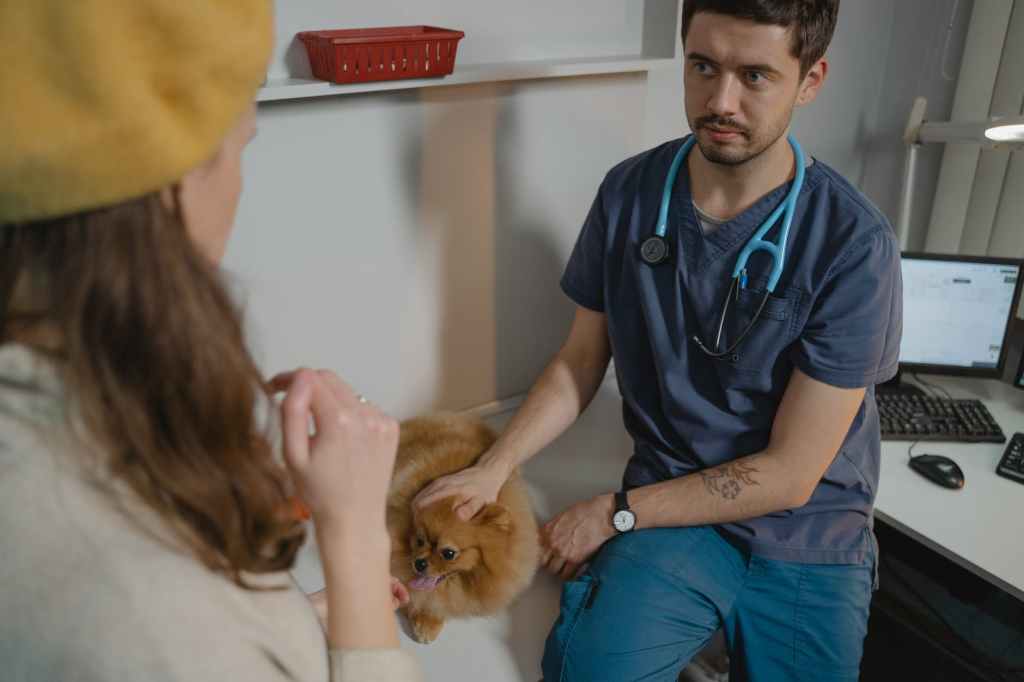
Photo by Kindel Media on Pexels.com

No one can accurately estimate what treatment will cost because it’s determined by many factors. First is the kind of treatment you’re choosing. Surgery, chemotherapy, supplements, radiation, or some combination of those will all affect the costs.

Second is where you live and your options. Like everything, where you live influences the cost of services. Similarly, suppose you want to pursue treatments that your veterinarian doesn’t offer (e.g., chemotherapy or radiation), and specialists are hard to come by in your area. In that case, you may choose to travel for treatment. That will add in another layer of costs – travel expenses.

Third is for how long you are treating your fur baby. Ziggy lived 17 months post-diagnosis. He had surgery, six rounds of traditional chemo, and then went on a low-dose at-home chemo pill. Our oncologist advised that the standard protocol for the at-home chemo is six months. It was safe to continue on it long-term, so we kept him on it until the end. When a mass was found on his spleen, we were going to attempt traditional chemo once again (a different protocol), but Ziggy’s health took a turn before we could continue.

Meanwhile, Cookie had a total of three surgeries in two years and is on the low-dose at-home chemo. She has been on it for nearly seven months and counting.

Not counting supplements, we have spent about half of what we spent (out of pocket) on Ziggy on Cookie so far.

More details about what affects the cost of treating cancer can be found in this DogCancer.com article or this DogCancer.com podcast episode.

Insurance

One reason we can choose ongoing treatment for our pups is through pet insurance. Each time we bring home a pup, the first thing we do is to sign them up for pet insurance. I plan to dedicate a post to insurance, but my key bits of advice:

  • Get it early, before health issues arise. Pre-existing conditions are real!
  • Choose the highest maximum annual coverage. Increasing it later on will constitute a new plan and any health issues previously found may be considered a pre-existing condition – even cancer.

Financing

Photo by Pixabay on Pexels.com

Almost everything that we pay for out of pocket we use Care Credit. Yes, it’s a credit card, but it offers no interest financing for at least six months for purchases over $200.

Like any other purchase, you should spend within your means. The benefit of the financing options allows you to spread the cost over time instead of taking a huge hit all at once.

The veterinarians you visit must accept Care Credit as a payment option. Every practice we have been to (at least four in the last three years) accepts Care Credit. What varies by practice is the number of months of financing that they offer. Some only offer six months, while others offer up to 24 months.

Some practices with multiple options would give us the choice of how many months to finance, while others would choose for us based on the amount of our invoice.

Since applying for Care Credit, we were “upgraded” to a MasterCard option, allowing us to earn points on purchases at Care Credit practitioners and other retailers. You can redeem the points for gift cards or statement credits. We apply the points as statement credits to lower the cost of the vet bills that we pay out of pocket.

Read this DogCancer.com article about Care Credit, or visit their website for more information.

Other options

There are other options for paying for treatment that I don’t have first-hand experience with but have read about.

One option is clinical trials. You’ll most likely need to live within travel distance of a veterinary college. There are pros and cons to participating in a clinical trial. While you may get free treatment, there’s a risk that instead of treatment your dog gets a placebo. That may be a worthwhile risk if that’s your only option for affording care. It’s important to note that costs of care may not be covered by the trial, so it’s worth doing your homework before enrolling.

Another option is to look into organizations that may offer grants or other types of financial aid to cover the costs of cancer care. This DogCancer.com article overviews some of the organizations that provide financial aid.

For additional advice, listen to this DogCancer.com podcast episode, where one dog racked up $60,000 in vet bills, or this episode highlighting creative solutions and difficult conversations.

Final tips

My top recommendations from personal experience are to sign up for pet insurance and research whether Care Credit is right for you.

When discussing treatment options with your veterinarian, discuss the cost and your financial situation. They can provide estimates for the treatment so you can research payment options and consider them when choosing what treatment is right for your pup.

Discussing your financial situation with your veterinarian may enable them to offer alternative diagnostics or treatments or even share discounts that their practice offers (e.g., a multi-pet discount).

Bottom line: Don’t assume that care is out of financial reach without getting written estimates from your vet and researching options to help offset the costs.

F*ck. My dog has cancer

I’m so sorry to hear that. Cancer sucks. Here’s my advice on what to do based on my experience.

Feel your emotions

Photo by Sofia Alejandra on Pexels.com

Whether your furbaby is old or young, showing symptoms or not, the cancer diagnosis is likely to feel like a punch to the gut. There’s no right or wrong set of emotions to feel. You may be sad, angry, anxious, or afraid. Allow yourself the grace to feel your emotions.

Don’t try to suppress your emotions. It will only blow up later. Do try to process them away from your furbaby if possible. I know it may be hard, but they pick up on our emotions, and you want to minimize them picking up on the anger, sadness, or fear, which can increase their stress.

When dealing with Ziggy and Cookie’s diagnoses, Ziggy’s especially, we bawled, cursed, and screamed. We did our best to have the worst of our breakdowns away from the pups to minimize their stress. It’s not always easy or possible, but do what you can.

Take action

Photo by Tima Miroshnichenko on Pexels.com

Once you’ve taken a beat to digest the news and process your emotions, it’s time to take action. That can look like many different things, depending on many factors.

You may want to consider a second opinion, which may come in the form of a specialist (i.e., a veterinary oncologist) or simply another vet. We did both with Ziggy because of his young age and our hope for a less traumatic diagnosis. Additionally, it was a few weeks before the oncologist could see us, so a second opinion with another vet was a good checkpoint while we waited for the oncology consultation.

I highly recommend a consultation with a veterinary oncologist. They’re more likely to be able to give you a range of treatment options, give you information on a prognosis, and other important details. If there isn’t a veterinary oncologist near you, you may be able to do a virtual consult (thanks, pandemic!) or at least have your primary vet consult with one.

On the American College of Veterinary Internal Medicine’s website, you can search for a specialist using their “find a specialist” search tool.

Learn More

Being human isn’t easy these days, and you may not have the privilege of time to do so, but I strongly encourage you to do what you can to learn more. Beyond the conventional treatments (surgery and chemo), most of the additional treatments that we started for Ziggy and Cookie (e.g., supplements, home-cooked foods, etc.) are ones found through DogCancer.com‘s resources.

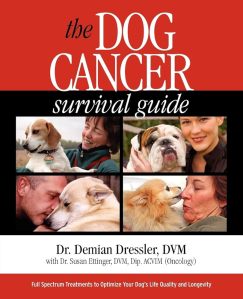
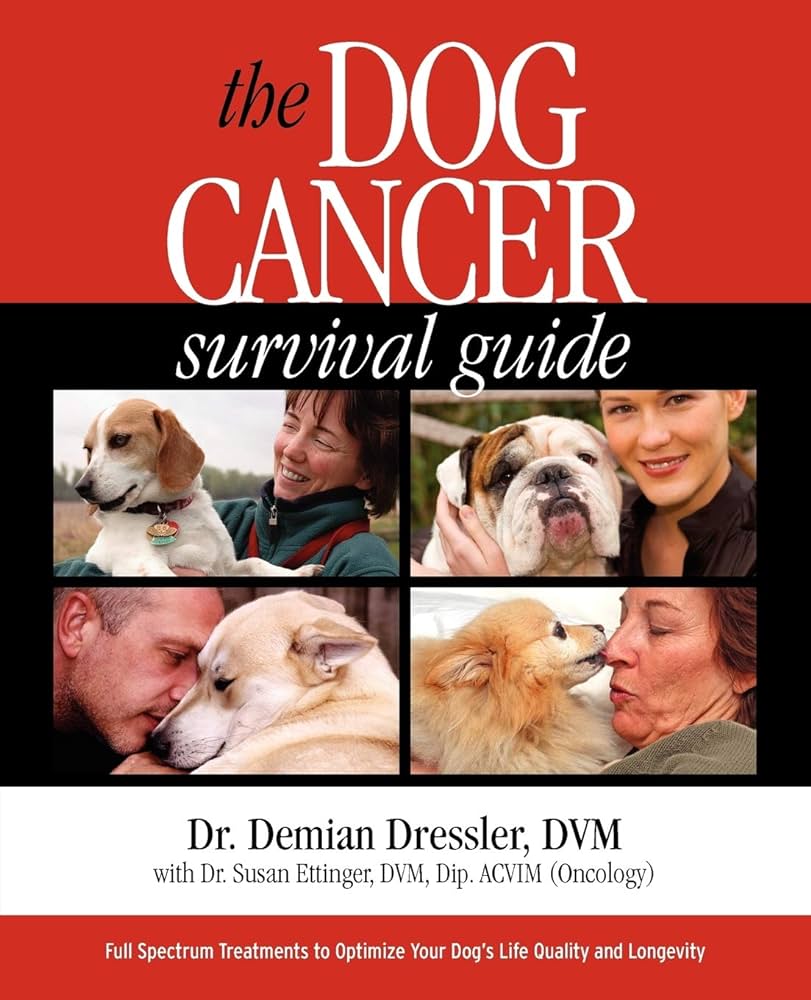
The Dog Cancer Survival Guide (I’m an Amazon affiliate and may earn based on qualifying purchases) is my top recommendation. They present many treatment options that vary in cost and time intensiveness. They also have short podcast episodes, though I recommend selectively listening to topics of most interest to you based on your dog’s journey. Their Facebook support group can also be a source of comfort from fellow pawrents who you may relate to better than your family and friends.

Be your pup’s advocate

No one knows your pup better than you. If something doesn’t feel right, don’t do it. Consult with experts and others who have been through something similar, but remember the key difference: you and your dog.

You know your situation best. I do encourage you to explore and consider various options. That may include aggressive conventional treatment, hospice care, holistic treatments, or a little bit of each at different points in your journey. Everything from your pet’s age, cancer type/stage, and personal circumstances (i.e., financial ability, time constraints, etc.) will influence your decisions.

Treatment can add up financially, but there may be options to help with the costs. I plan to write about the tools we use to help manage expenses, but there are more options out there that I urge you to explore.

Dogs don’t have expiration dates

Don’t let anyone tell you that your pup only has a certain amount of time left. I’ve heard this repeated countless times with the DogCancer.com community – dogs don’t have expiration dates. Your vet or oncologist may tell you that with or without treatment, your dog has an average of N days/weeks/months. But that is an average that doesn’t include your dog.

Hemangiosarcoma is one of the most aggressive canine cancers. When Ziggy was diagnosed, we feared he may only have a few months. He lived 17 months post-diagnosis.

My parents’ dog, Brie, went to the emergency vet one night after collapsing (due to internal bleeding). She wasn’t supposed to survive the night, but my parents took her home when she returned to her usual self. Brie lived five months after that. While never officially diagnosed with cancer, based on what I learned about hemangiosarcoma, I suspect that’s what she had. With no treatment, she lived five more months being spoiled with all kinds of yummy food and love. The emergency vet suggested they could do surgery, but there was a possibility that she wouldn’t survive. My parents opted to take her home and forego treatment.

Ziggy coming home after his splenectomy.

What is right for one pup and one family may not be right for another. Even within one family, you may make different decisions for different dogs. Ziggy was young, and he was an EXCELLENT patient, going to the vet with a smile on his face. Cookie and Chip aren’t as easygoing as patients. That may factor into what options we choose for them.

Ask for help

Being human is hard. Being human while caring for a sick pet is harder. Whatever path you choose, ask for help. It may not be caring for the sick furbaby, but it may be helping with other stuff so that you can care for your furbaby.

Cherish every day

Ziggy enjoying a stroll in Key West 7 months after his amputation.

Most important: cherish each moment with your furbaby. We should do this every day, even when they’re healthy, and with all of our loved ones. But being human is hard, and sometimes we get caught up in the little things that don’t matter.

When they’re sick, regardless of what treatment path you choose, prioritize their quality of life. Do what you can to do more of what makes them happy. You won’t regret it.

What I changed because of Ziggy

Everything that we experienced with Ziggy led me to do a number of things differently or started doing for both Cookie and Chip.

Health Journal

A health journal for each of my pups

After getting the hemangiosarcoma diagnosis in December 2020, I started a health journal for Ziggy and Cookie. It’s a notebook where I keep track of the supplements they’re on, changes in diet, notes of any symptoms I observe, questions for the vets, feedback from the vets, etc.

I’m very diligent about documenting whenever a particular symptom arises (i.e. vomiting, diarrhea, limping, etc.). It may not seem to be a big deal if it happens once, but it certainly helps with identifying patterns, connections to changes in diet, or determining if it’s something that happened previously.

About one year before noticing the limping that led to Ziggy’s diagnosis, he ran around in the yard and briefly limped. A year later though when it started again, I had no recollection of what leg it was on. While it turned out to be irrelevant, it may have been helpful to reference when going through his diagnosis.

It can be a challenge to be consistent with it when the pups are healthy. I have a reminder set on my phone to take notes every couple of days. Sometimes I skip it (especially if I’ve been making several other notes), and other times I consider the framework I learned in a seminar from PetSummits.com: BEAM – behavior, energy, appetite, and mood. There may not always be much to write, but noting what is normal or what changes you’re observing can help identify patterns or other changes to discuss with your care team.

Nutrition

In January 2020, I started home cooking for Ziggy. At some point, I also started cooking for Cookie. They both started on the dog cancer diet from The Dog Cancer Survival Guide*. When Chip joined our pack, I planned to keep him on kibble until he graduated to adulthood. However, he was a very itchy pup. Among several recommendations from our vet, I started cooking for him too. I chose a recipe based on my veterinarian’s guidelines from Yin & Yang Nutrition for Dogs* by Dr. Judy Morgan.

While fresh whole-food diets are the highest quality for dogs (not unlike humans), it’s not always the most convenient (again, not unlike humans). Our veterinarian once advised us to balance a whole fresh food diet with the constraint of being a busy human.

Based on the volume that I’m able to batch cook and how much they eat for their weight, I feed them kibble for breakfast (they’re fed twice daily) and home-cooked food for dinner.

When choosing kibble (or other pre-made food), I refer to TruthAboutPetFood.com. They publish a list every year of the highest quality pre-made food (be it kibble, fresh, or raw). They contact pet food manufacturers inquiring about how they source ingredients and their cooking methods. Many brands are not on the list, but that could be due to unresponsiveness from the manufacturer or lack of awareness of the brand by the website. Nonetheless, it’s my go-to for selecting kibble.

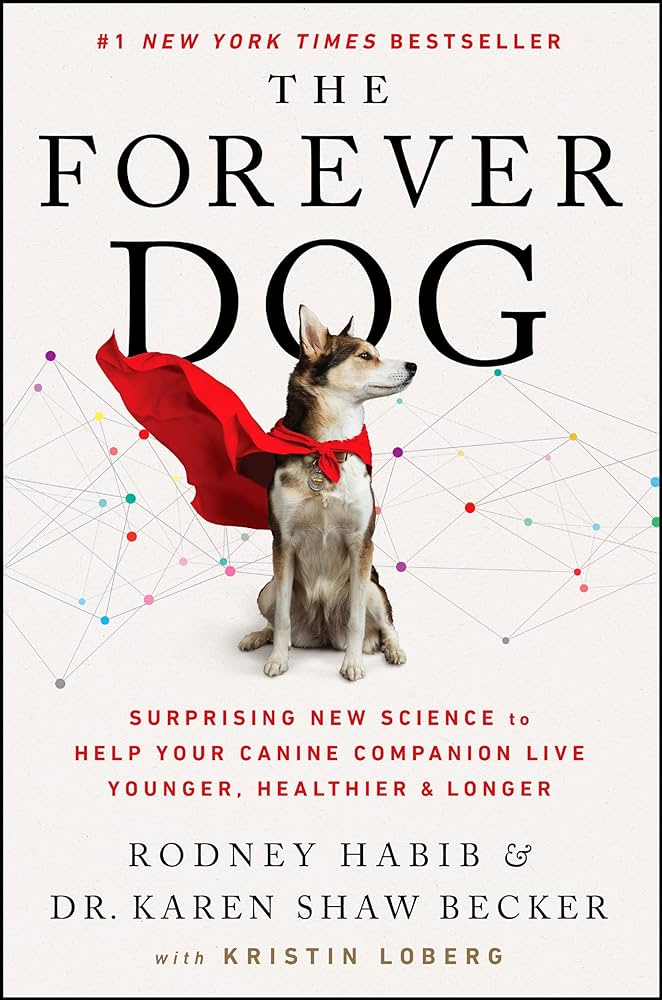
Alternatively, you could refer to chapter nine of The Forever Dog* by Rodney Habib and Dr. Karen Shaw Becker. They share tips for how to objectively analyze your dog’s food based on similar standards to TruthAboutPetFood.com.

You may be short on time or not yet ready to make a change. A simple way to improve the quality of your dog’s meals is to incorporate what The Forever Dog* calls “Core Longevity Toppers (or CLTs).” These are fresh superfoods that you can offer your dog as treats or add as a topper to their meals.

Vaccines & Preventatives

This may be a bit controversial, but it’s something I’ve discussed with my veterinarian and have found supported through multiple trustworthy sources. Studies show that dogs have immunity for much longer than expected (or advertised) with vaccines (a great resource to learn more is The Forever Dog* or Dr. Judy Morgan’s website).

After the initial rounds of core vaccines, I conduct titers. A titer is a blood test to check your pup’s immunity levels. If the test comes back recommending a vaccine, our vet’s office won’t charge for the vaccine since we did the blood test. Other vaccines, such as Bordetella, flu, etc., I evaluated with our veterinarian based on our dogs’ lifestyles and risk of illness. Another factor that may come into decision-making is vaccine requirements by the groomer or training facilities.

Similarly, based on our geographic location and lessons learned from Dr. Judy Morgan, among others, I have switched brands of heartworm preventative and modified dosage to be every six weeks year-round instead of every four weeks. I have discontinued flea and tick preventatives with the support of our veterinarian.

Please do your own research and consult with your care team before making any changes to your dog’s care.

Quality Time & training

Cookie & Me, Dog Day in the Garden, May 2022

Cookie and Ziggy almost always did everything together from the start. With Chip, I’m intentional about giving them separate time with me. Some of it is practical – it’s hard to train a puppy properly on a walk when both hands are occupied with a leash. Some of it is mental and emotional, allowing each to have a break from the other (admittedly, Cookie wants more breaks from Chip given their eight-year age difference) and to form a strong bond with each of us.

So, I also try to take each pup out (aside from a walk) independently once a week. Sometimes it’s a drive through a car wash or a visit to the vet to pick up supplement refills. Other times it’s a shopping excursion to a pet-friendly store or a local farmer’s market. I try to keep it simple and build it into my routine.

Final Thoughts

There may be more things that I do differently, but these are the main changes. You can refer to the Health & Nutrition Pawrenting Resources page for more tools.

Be sure to consult with your care team (veterinarians, specialists, trainers, etc.) before making any changes to your pup’s care.

Note

*I’m an Amazon affiliate and can earn commission on eligible purchases.

One resource led to another

Some days, when I stop and think about the accounts I follow and the resources I lean on, I wonder how I got here. But there are a few essential resources that led me to where I am (before the algorithms took over).

Where it all Began

I don’t remember how I found Tripawds. I suspect in reading material Ziggy’s diagnosing veterinarian shared when amputation was initially mentioned.

Once we decided on having the surgery, I read all I could about amputation and how to support Ziggy. Tripawds’ e-books and web community were invaluable.

Most tripawds are three-legged due to cancer. Naturally, my next stop was the book Dog Cancer Survival Guide, a book recommended within the community.

Dog Cancer Deep Dive

The Dog Cancer Survival Guide is authored by a veterinarian, Dr. Demien Dressler, and veterinary oncologist, Dr. Susan Ettinger. I began with the first chapter, and despite repeated recommendations to read the book in sequence, I jumped around based on what was most pressing, given where we were in Ziggy’s journey. I don’t remember exactly the sequence, but I recall focusing on the suspected cancers to learn about treatments, what to expect, etc., then focusing on nutrition and nutraceuticals while ending on other alternative therapies.

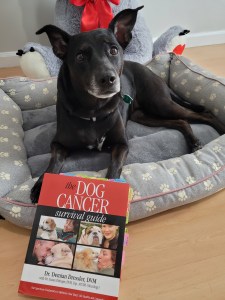
Cookie posing with my copy of Dog Cancer Survival Guide

My copy is well-highlighted and flagged. While it started with Ziggy, when Cookie had her own encounters with cancer (more on that in a future post!), it was helpful to reference and learn what to expect with her cancer.

Note

I’m an Amazon affiliate and can earn commission on eligible purchases.

I found DogCancer.com as it is run by the publishers of the Dog Cancer Survival Guide.

In addition to resources on the site, they have an excellent podcast, newsletter, and Facebook support group. In the beginning, I listened to EVERY podcast episode – even ones that didn’t seem particularly relevant to Ziggy. With time, I learned to be more selective of which episodes I listen to for the sake of my emotional health.

Similarly, the Facebook group can be heartbreaking, seeing how many lives are touched by canine cancer. But, it can be incredibly helpful to lean on a community that can relate to the rollercoaster of emotions you experience. Sharing the wins along the way can also bring so much joy, or even asking for ideas and suggestions when you encounter challenges (just be sure to consult your care team before making any changes).

And more!

Thanks to DogCancer.com‘s podcasts, I was introduced to many great resources that led me to even more. I often start following many accounts, and with time, I may choose to unfollow some that may not align as well with my values or are otherwise not a fit. Visit the Pawrenting Resources page for more recommendations.

Tips

Don’t take my word for it. Your experience or views of a particular resource may differ from mine based on your journey and values.

As you start following different professionals, assess if they’re one-sided, if they address counterarguments, and how they align with your views.

The more you follow, the more viewpoints open your mind, and the more likely you will find some that rub you the wrong way. Don’t write them off because there’s one bit of content you disagree with. It’s hard. Who you follow should bring you joy or expand your knowledge. If they do neither, unfollow them.

Always consult your real-life pack (vets, specialists, trainers, groomers, and beyond), and remember – you can unfollow people in real life, too. (More to come when I tackle being your pup’s advocate!)