What we’ve been up to

Hello! It’s been a while since the last post. I’ve been trying to get back in the habit for at least a month, but life has been “life-ing.”

Shortly after my last post, I got COVID and was out of commission for about a week. Then there was catching up on work and life after being sick, home projects that took time, a road trip (with the pups!), and a bunch of other reasons why the blog went on the back burner.

I have several blog post ideas bouncing around my brain, but I have had some mental blocks to drafting them.

In the meantime, I wanted to post something to let you know that I haven’t given up on the blog.

First Rally Competition

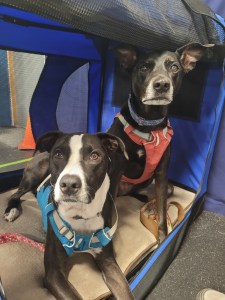
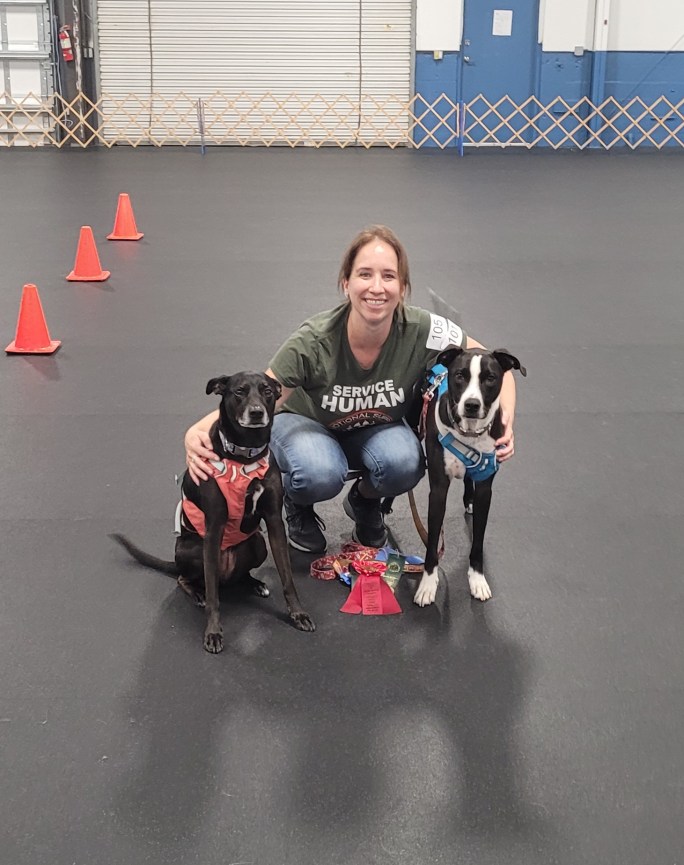
Chip and Cookie participated in their first AKC rally competition this past weekend. We only entered on one day, but they were the only two competing in their class (novice A). They were disqualified during their first run of the day because their lead was too tight. They fared better in the second run – with Chip earning first place and Cookie getting second place (thanks to the judges’ pity points!).
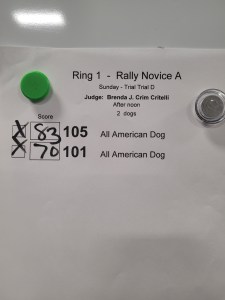
Chip and Cookie's scores. To qualify, you need a score of 70 or more.
Chip and Cookie’s scores. To qualify, you need a score of 70 or more.

Chip’s Performance

I’m incredibly proud of Chip’s performance in both runs and outside the competition ring. Their crate was positioned near the entry to the competition ring, so dogs were constantly walking past his crate. He ignored or calmly observed them all. While in the ring, he generally listened to me, did what I asked (eventually), and didn’t bark (at the judge or the competitors sitting outside the ring). Last summer, Chip was in a training class for reactive dogs. The progress he’s made is TREMENDOUS. The official qualifying score and first place are the icing on the cake for us!

Chip’s “award-winning” rally run!

Cookie’s Turn

Cookie is an excellently trained, competitive, eager-to-please pup. She has repeatedly “told” us (in class, this trial, and elsewhere) that she’s done. She’s only interested in the “paycheck” (chicken or cheese). At 10, Cookie has earned the right to retire. So we’ll provide her with mental enrichment in other ways – practicing for fun at home, going on special outings, and bringing her along as Chip’s cheerleader.

Regardless of her score, she qualified as a comedienne in my book – sitting backward in the first run and jumping on me during the second. She channeled her inner mischievous puppy.

This is Cookie’s first run that disqualified her. The qualifying run wasn’t recorded, but take my word for it – it wasn’t much better.

Bottom line

Chip and Cookie awaiting the ribbon ceremony so they can go home and have dinner
Chip and Cookie await the ribbon ceremony so they can go home and have dinner.

I want to take the opportunity to thank the trainers that my husband and I had when we first started our dog sports journey 10 years ago with Cookie. They always emphasized having fun with our dogs, celebrating our runs (no matter how sloppy they may be), and always ending on a positive note. Some people focus too much on competing and earning titles and lose sight of these sports as opportunities for bonding and fun.

If you’re disappointed in your dog, you’re doing it wrong. And always listen to your dog before you listen to anyone else.

Ready, set, go: Getting started in dog sports!

Now that you know that there are so many dog sports to choose from, how do you pick?

General Research

Reading about the experience of other pawrents, or talking to friends with experience in dog sports, can be one way to familiarize yourself with the sport. So can watching YouTube videos of classes or competitions.

The websites of the various venues can also provide a wealth of information, including connecting you with dog clubs in your area that host competitions and/or classes.

Here are the websites of various groups I’ve referenced this past month.

find classes

Ziggy and Cookie waiting their turns in an agility class, circa 2019.

Research dog trainers or dog clubs in your area. Sign up for classes to better gauge what the sport will entail long term. If you take a class and the sport interests you, but you’re unsure, consider trying classes with another instructor. Everyone has different teaching styles and personalities. Look for someone you’re comfortable with and that prioritizes the well-being of your dog.

Assess Personality & Interest

A good place to begin is assessing you and your dog’s personalities and interests. Is your dog high-energy? Agility may be a great fit. Does your dog have a knack for sniffing? Perhaps barn hunt or nose work would interest them. Can’t keep your pup out of the pool? Give dock diving a try!

If you recently adopted your dog, or perhaps your dog is still a puppy, you may not know their interests. Obedience is always a great place to start, even if you don’t compete, because obeying basic commands will be important in any sport, if for no other reason than good behavior in classes and competitions.

Safety

Safety and physical well-being is also important. This may be true of all sports, but the one that I’m most familiar with is agility. The high speeds, twists, and turns can put a strain on your dog’s body. If you’ve never used any agility equipment before, don’t introduce your dog to them without guidance from an instructor. Young pups are developing their bones and muscles. Introducing them to tight weave poles too young can cause long-term damage. This is an excellent article about preventing orthopedic injuries in dogs that compete in sports.

Budget Considerations

Depending on your goals for your dog, some sports are more expensive than others when you add up classes, entry fees for competitions, travel expenses, and any equipment you may choose to purchase for at-home training.

Start slow and make sure you want to commit to the sport before investing heavily.

Bottom Line

There countless canine sports available to try. Take your time to find one that best suits you and your pup. And, remember, the competition and titles are a distant second to having fun and bonding with your pup!

Sit Ubu sit, good dog!

Since January is National Train Your Dog Month, I want to dedicate this month’s posts to the different dog sports out there.

As always, these posts focus on my knowledge and experience of the sport. Consult the various links in the posts for more information.

First up, obedience and Canine Good Citizen!

What is it?

Obedience is probably the first thing that comes to mind when most people think of dog training. It’s following basic commands and your dog obeying those instructions.

Canine Good Citizen (CGC) is a skills test that is meant to show that your dog has good manners. To me, it’s a form of obedience, but where the end result is a certificate that shows that your dog has good matters, and you, in turn, are a responsible dog owner. I’ve been told that this can be helpful in getting acceptance for your dog with a landlord or similar situations. I’ve never had this need, so I don’t know how accepting people may be of the certification.

I’m sure there are more differences, but you can compete in different levels of obedience, whereas in CGC, there are different classes and test levels, but it’s not a competition. Simply pass or fail.

How we started

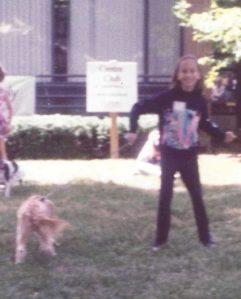
As a child, my mom trained Lady with basic commands. Somehow, we came across an obedience competition that I entered, and we did well. I have no clue if it was affiliated with the American Kennel Club (AKC). Aside from this one random competition from my childhood, we have never competed in obedience.

Me circa 1992 with my childhood dog, Lady, "competing" in obedience.
Me circa 1992 with my childhood dog, Lady, “competing” in obedience.

Cookie is the one who truly introduced us to the world of dog sports. It started with us taking her to a free (for a donation) obedience class at a shelter down the street from us. After a few sessions, our instructors suggested we upgrade to a paid AKC Star Puppy class. From there, we were introduced to a dog sports club that offered a range of classes, including Canine Good Citizen.

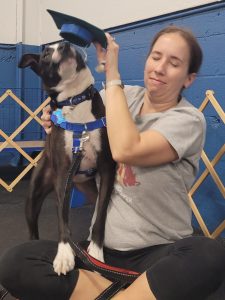
Cookie earned her Canine Good Citizen and Canine Good Citizen Advanced. Chip earned his Canine Good Citizen in November, though some of us suspect the evaluator graded on a curve.

Chip's CGC graduation. Thankfully, the test didn't include wearing a graduation cap.
Chip’s CGC graduation. Thankfully, the test didn’t include wearing a graduation cap.

What they don’t tell you

If nothing else, the AKC is adept at making money. While you’re likely to always pay a fee to take the class and/or tests, to have AKC titles (obedience, CGC, or other sports) registered, you will have to pay.

Your dog must be registered with the AKC. Don’t worry if your pup isn’t a purebred. They have a program for mixed breeds.

The one thing that is truly fun about registering with the AKC is that they require a dog’s name to be unique. When I first registered Cookie and learned of this requirement, I searched the combinations of her name and our last names. Hyphenated versions of our last names were available, but that seemed boring. Thus, Cookie is officially Cookie Wookie. Then came Ziggy Kenobi, and Chip S. Ahoy. (This is also why you may come across some very long, crazy names the more involved you become in the dog sports world.)

Aside from registering your dog, if you want a certificate recognizing your title, you also get to pay for that. The AKC also allows you to purchase medals and ribbons showing your new titles. If you compete in obedience and title, I assume that the club sponsoring the event will provide ribbons (that is common practice in other sports).

The biggest lesson that I remember from our early days in obedience and CGC is that your dog will only be as good based on how much you practice. Your dog may heel and pass CGC, but if you never heel again, their obedience to the command will also suffer.

The bottom line

Whether or not you choose to compete, obedience is a great starting point. At a minimum, you should want your pup to respond to basic commands and behave. Even if your pup will be a homebody, they will need to venture out on occasion, be it for walks, vet appointments, or trips to the groomers. Having them understand basic commands will be invaluable for you and other caregivers.