It’s the season of gratitude, and while we’re in a stable spot on our canine cancer journey, I’m reflecting on what I’m thankful for in how we experienced canine cancer.
The Pandemic
The pandemic was a source of fear, stress, and anxiety for all of us. But without it, I wouldn’t have been working from home and able to catch Ziggy’s limp. It’s impossible to know whether we would have caught the cancer as early as we did without the pandemic, but catching Ziggy’s cancer early was certainly a critical factor in his survival time.
The first dog
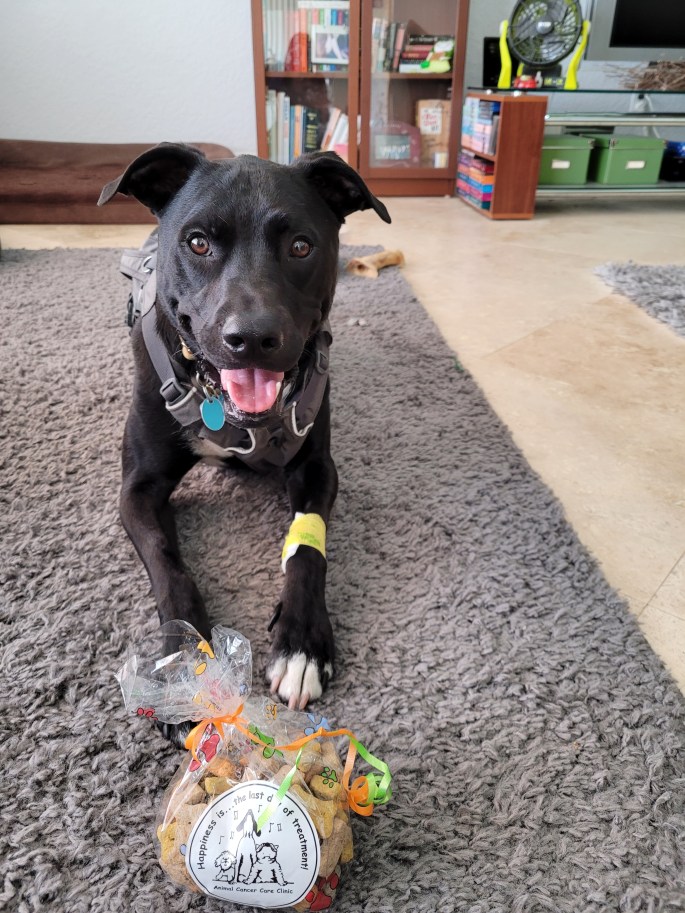
Ziggy, the happy patient, after his last traditional chemo treatment in April 2021.
I absolutely HATE that Ziggy was diagnosed with cancer and amputated a leg before his second birthday. It kills me that he died shortly after his third birthday. But I am grateful that he was the one to lead us on the cancer journey.
Ziggy was the best patient. He always smiled when going to the vet (which was a near-constant occurrence once he was diagnosed). He easily adapted to the tripawd life and showed us what resilience is. Ziggy’s pawsitive attitude and resilience made it easier for us to make treatment decisions and to figure out ways to maximize his quality of life.
Seeing how well he responded (physically and emotionally) to these challenges gives us the strength to make the best decisions for every other dog.
The unexpected prognosis
When we at long last learned that Ziggy’s cancer was hemangiosarcoma, we were devastated and afraid because of how short that prognosis tends to be. He was already three months post-diagnosis when we confirmed the type of cancer. We were incredibly fortunate to have 17 months with him post-diagnosis.
It would never be enough time, even if he’d lived to age 10. This success with cancer treatment not only softened the devastation of losing a pup so young but also gave us an optimistic lens when confronting the cancer journeys of subsequent pups.
Cookie’s Simpler Journey
Cookie recovering from surgery in April 2023.
When I first found Cookie’s lump on her leg in July 2021, my heart sank. How could we handle a second dog with cancer? Why is this happening so close to Ziggy? Given their age difference, it should have been unlikely.
While the prospect of two dogs with cancer simultaneously sucked, I’m grateful that Cookie’s cancer (soft tissue sarcoma) was less serious and more easily treated. She’s a terrible patient and tries to find a new family after each surgery, which are two reasons why I’m relieved that she hasn’t needed traditional chemo or radiation.
We’re fortunate to have an amazing holistic veterinarian, his patient and compassionate staff, a terrific veterinary oncologist, and the oncology care team to help keep our pups healthy.
Lessons Learned
I would never wish this on anyone, but this journey has taught me a lot. Sometimes, it seems like common sense (e.g., fresh food is better than processed kibble); everything I’ve learned helps to improve the care for Cookie, Chip, and any other dog that comes along. There’s plenty more that I could (or want to) be doing, but I do the best that I can right now. And I look for opportunities to make improvements wherever and whenever I can.
All the sources that have taught me about healthcare have exposed me to other resources, such as trainers. Exposure to more perspectives in all areas helps me be a better dog pawrent. It’s helpful when encountering new challenges, such as an anxious and sometimes reactive Chip.
Every day Gratitude
Most importantly, these cancer journeys are reminders to say yes to the pups as much as possible. To take them out for activities that bring them joy (like Cookie’s recent beach day and slide escapades). To let Chip lay on me a little longer in the mornings before getting ready for work. And appreciate all the time we are given because you never know when it will end.
Whether your furbaby is old or young, showing symptoms or not, the cancer diagnosis is likely to feel like a punch to the gut. There’s no right or wrong set of emotions to feel. You may be sad, angry, anxious, or afraid. Allow yourself the grace to feel your emotions.
Don’t try to suppress your emotions. It will only blow up later. Do try to process them away from your furbaby if possible. I know it may be hard, but they pick up on our emotions, and you want to minimize them picking up on the anger, sadness, or fear, which can increase their stress.
When dealing with Ziggy and Cookie’s diagnoses, Ziggy’s especially, we bawled, cursed, and screamed. We did our best to have the worst of our breakdowns away from the pups to minimize their stress. It’s not always easy or possible, but do what you can.
Once you’ve taken a beat to digest the news and process your emotions, it’s time to take action. That can look like many different things, depending on many factors.
You may want to consider a second opinion, which may come in the form of a specialist (i.e., a veterinary oncologist) or simply another vet. We did both with Ziggy because of his young age and our hope for a less traumatic diagnosis. Additionally, it was a few weeks before the oncologist could see us, so a second opinion with another vet was a good checkpoint while we waited for the oncology consultation.
I highly recommend a consultation with a veterinary oncologist. They’re more likely to be able to give you a range of treatment options, give you information on a prognosis, and other important details. If there isn’t a veterinary oncologist near you, you may be able to do a virtual consult (thanks, pandemic!) or at least have your primary vet consult with one.
Being human isn’t easy these days, and you may not have the privilege of time to do so, but I strongly encourage you to do what you can to learn more. Beyond the conventional treatments (surgery and chemo), most of the additional treatments that we started for Ziggy and Cookie (e.g., supplements, home-cooked foods, etc.) are ones found through DogCancer.com‘s resources.
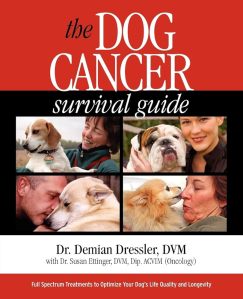
The Dog Cancer Survival Guide (I’m an Amazon affiliate and may earn based on qualifying purchases) is my top recommendation. They present many treatment options that vary in cost and time intensiveness. They also have short podcast episodes, though I recommend selectively listening to topics of most interest to you based on your dog’s journey. Their Facebook support group can also be a source of comfort from fellow pawrents who you may relate to better than your family and friends.
Be your pup’s advocate
No one knows your pup better than you. If something doesn’t feel right, don’t do it. Consult with experts and others who have been through something similar, but remember the key difference: you and your dog.
You know your situation best. I do encourage you to explore and consider various options. That may include aggressive conventional treatment, hospice care, holistic treatments, or a little bit of each at different points in your journey. Everything from your pet’s age, cancer type/stage, and personal circumstances (i.e., financial ability, time constraints, etc.) will influence your decisions.
Treatment can add up financially, but there may be options to help with the costs. I plan to write about the tools we use to help manage expenses, but there are more options out there that I urge you to explore.
Dogs don’t have expiration dates
Don’t let anyone tell you that your pup only has a certain amount of time left. I’ve heard this repeated countless times with the DogCancer.com community – dogs don’t have expiration dates. Your vet or oncologist may tell you that with or without treatment, your dog has an average of N days/weeks/months. But that is an average that doesn’t include your dog.
Hemangiosarcoma is one of the most aggressive canine cancers. When Ziggy was diagnosed, we feared he may only have a few months. He lived 17 months post-diagnosis.
My parents’ dog, Brie, went to the emergency vet one night after collapsing (due to internal bleeding). She wasn’t supposed to survive the night, but my parents took her home when she returned to her usual self. Brie lived five months after that. While never officially diagnosed with cancer, based on what I learned about hemangiosarcoma, I suspect that’s what she had. With no treatment, she lived five more months being spoiled with all kinds of yummy food and love. The emergency vet suggested they could do surgery, but there was a possibility that she wouldn’t survive. My parents opted to take her home and forego treatment.
Ziggy coming home after his splenectomy.
What is right for one pup and one family may not be right for another. Even within one family, you may make different decisions for different dogs. Ziggy was young, and he was an EXCELLENT patient, going to the vet with a smile on his face. Cookie and Chip aren’t as easygoing as patients. That may factor into what options we choose for them.
Ask for help
Being human is hard. Being human while caring for a sick pet is harder. Whatever path you choose, ask for help. It may not be caring for the sick furbaby, but it may be helping with other stuff so that you can care for your furbaby.
Cherish every day
Ziggy enjoying a stroll in Key West 7 months after his amputation.
Most important: cherish each moment with your furbaby. We should do this every day, even when they’re healthy, and with all of our loved ones. But being human is hard, and sometimes we get caught up in the little things that don’t matter.
When they’re sick, regardless of what treatment path you choose, prioritize their quality of life. Do what you can to do more of what makes them happy. You won’t regret it.
Today, I want to introduce you to Ziggy, the inspiration for this blog. Mostly, I want to share with you the journey we went on with him. Future posts will go into more detail about various aspects of his journey, including his Gotcha Day, the treatments we did, and the day we said goodbye.
The first second dog
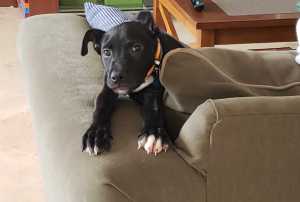
Ziggy a few days after coming home, March 2019.
Ziggy was our first second dog. We brought him into our family in March of 2019. Cookie was a few months shy of her fifth birthday. She was unsure about the idea of a sibling but quickly warmed up to Ziggy, and they became inseparable.
Like most puppies, Ziggy was a bundle of energy. I mistook that energy for not being a “chill” dog, but he was actually very easygoing and the friendliest pup around.
Around the time we brought him home, things were starting to click for Cookie in the agility world, so Ziggy came with us to several agility competitions. While he didn’t do much of anything besides looking adorable, it was amazing to see how easily this puppy adapted to chaotic environments. If you’ve never been to an agility competition, it can be overwhelming – noisy from the barking and the buzzers, crowded with all kinds of dogs and people.
Cookie and Ziggy sharing a crate at the May 2019 Tailwaggers agility trial in Punta Gorda, FL.
Ziggy didn’t get much obedience training. Where we trained Cookie wasn’t offering classes, one place we dropped out of due to a lousy instructor, and many other places were either inconvenient or overpriced. Plus, we kept hoping and expecting that Cookie’s “school” would schedule classes. Thankfully, a friend (and agility instructor of Cookie’s) helped us with some training.
Ziggy and Cookie did everything together – walks, backyard shenanigans, agility trials or practices, spa appointments, and barn hunt trials. Ziggy’s sole teacher did encourage us to walk him separately and dedicate some one-on-one time with each dog. But we didn’t listen. This, however, is one of many lessons Ziggy would teach, but definitely, the key takeaway from him being the first-second dog.
The diagnosis
When Ziggy’s first Gotcha Day anniversary arrived, COVID-19 hit and I was working from home. The first few months were an incredible rollercoaster. Professionally, I went from starting remote work, being furloughed and ultimately laid off, and starting a new job remotely in just four months. Personally, I worried, like the rest of the world, about how everything would play out and what would happen if we caught COVID.
Meanwhile, Cookie and Ziggy were thrilled. The lack of a commute meant longer morning walks. Ziggy no longer had to spend whole days in his crate on the days my husband and I worked. I took my lunch breaks on our back patio so they could sunbathe, patrol the yard, and play together.
About six months into the pandemic, I noticed that Ziggy wouldn’t put weight on his hind right leg. It was so subtle I wasn’t sure if I was imagining it. The only reason I noticed anything was because I was working from home. One night, after a particularly rambunctious play session, Ziggy was obviously limping. It was time to see the vet.
September 2020 showing what I observed with Ziggy not putting weight on his right hind leg. It’s incredibly subtle. By this point, he had already done his round of anti-inflammatories, and was at least scheduled for the sedated exam and X-ray.
Based on the description of symptoms, the initial suspect was a cruciate ligament injury. Though the vet observed that his gait was off, the physical exam didn’t indicate any injury. There were two recommendations: take an anti-inflammatory and rest for two weeks, or do a sedated exam and X-ray. (Apparently, big dogs can tense up and mask these injuries, which is why a sedated exam was suggested, along with an X-ray to rule out other possibilities.)
We started with rest and anti-inflammatories. We also got a second opinion, who confirmed that there was no way Ziggy had a torn cruciate ligament. While on the anti-inflammatory, Ziggy’s limping went away, and he regularly put weight on his leg.
The limping was back one or two days after he was done with the anti-inflammatory. We opted to do the sedated exam and X-ray.
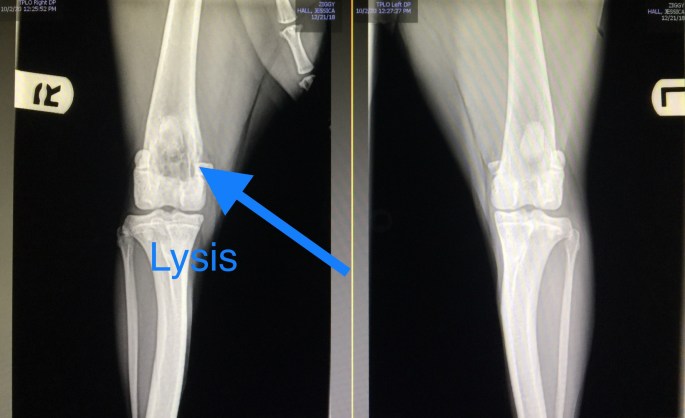
October 2, 2020 was the day we heard it was cancer. The bone in his hind leg was severely wasted away. Looking at the image, it doesn’t take a professional to see something wrong.
As the vet explained, lysis meant the bone was eaten away.
We were devastated. Ziggy wasn’t quite two years old. We were also in denial. While waiting for the oncologist’s consult, we again got a second opinion. We hoped that we’d find that it was a fungal infection, but that was an incredibly uncommon diagnosis given where we live.
The oncologist confirmed the diagnosis and recommended amputation. It wasn’t an easy decision, but knowing that it wouldn’t take much for Ziggy to have a catastrophic break, requiring an emergency amputation, helped make the decision.
Ziggy’s hind leg was amputated on October 27, 2020 – about two months before his second birthday.
Despite having tissue biopsied as part of the amputation, it wouldn’t be until December that we learned what kind of cancer Ziggy had: hemangiosarcoma.
Pixar Ziggy! While recovering from the amputation, Ziggy reminded us of the Pixar lamp.
Treatment
Hemangiosarcoma is a horrible cancer. One that often leads to sudden, even traumatic, death. The fact that it presented in Ziggy’s bone, incredibly uncommon, is something I clung to as I hoped that he would defy the odds.
Armed with a diagnosis, Ziggy began chemotherapy in January of 2021. I started cooking for him during his chemo treatments to reduce his kibble intake. Any supplement that might help was added to his regimen. We found a holistic veterinarian. I dove into learning anything and everything I could that would possibly extend his life.
And we focused on giving him a high quality of life. He got lots of treats and toys; we started frequenting the local botanical garden and a doggy ice cream shop, bought a massive stroller for him to enjoy long walks in, and took him to Key West.
Ziggy loved going for strolls. This one was in Key West, May 2021.
After he finished chemo, we started Ziggy on a low-dose chemo pill at home. He was on that until the very end. Every couple of months he would get chest X-rays and an abdominal ultrasound. We breathed a deep sigh of relief each time they came back clear.
Celebrating his last chemo treatment, April 2021!
Final Months
In January of 2022, we were devastated once again. A couple of days before a barn hunt trial, Ziggy went in for his scans. Our vet called. They found a small mass on his spleen that looked to be bleeding slightly. Splenic hemangiosarcoma, the most common form of hemangiosarcoma.
We canceled the barn hunt trial and miraculously scheduled a splenectomy within about a week of the scans. Surgery was successful, and sutures were removed.
We had a couple of good weeks following the surgery before Ziggy’s health took a turn. He underwent a blood transfusion after he started bleeding internally. Ziggy recovered, but he wasn’t the same. We got enough time to prepare and create a few final memories.
Ziggy crossed the rainbow bridge on March 12, 2022. Not a day goes by that I don’t think about or talk to him.
The Blessings
Ziggy’s story can seem sad or even tragic, given he died a few months after his third birthday. His story is filled with blessings, and that’s what I focus on most.
First, Ziggy was the happiest dog, and the best patient a dog could be. He was all smiles after being hospitalized to have a blood transfusion. His attitude is a big reason choosing the treatments we did wasn’t as difficult as they could have been.
Ziggy, happy to be headed home after his splenectomy, January 2022.
Second, the COVID-19 pandemic allowed me to be with him 24/7 to notice that he wasn’t putting weight on his hind leg. Would we have noticed otherwise? Maybe. But it probably would have taken longer, and who knows how much the cancer would have spread by then. Or maybe we wouldn’t have discovered it until he had a traumatic fracture on the weakened bone.
Third, the ongoing pandemic, plus joining a startup that was remote first, allowed me continued flexibility to work from home full-time. Being home made it easier to get to vet appointments and monitor Ziggy’s recovery from his scans and surgeries.
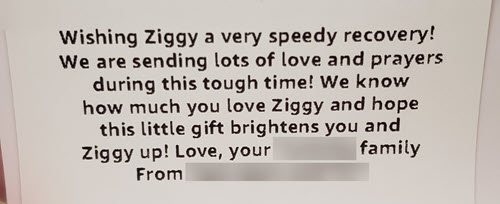
Get well card from work ahead of Ziggy’s amputation, October 2020.
Lastly, we were able to prepare. The loss of a beloved furbaby is never easy. But Ziggy living with cancer for 17 months post-diagnosis allowed us to prepare. It ensured that we focused on quality of life and prioritized making memories. Even when the mass was found on his spleen, we had almost three months with him.
Ziggy’s Legacy
There is so much that Ziggy taught me and that I have learned. I’m doing things differently for both Cookie and Chip. And that is my mission with this blog. I want to capture and share what I’ve learned.
I’m not a veterinarian, dog trainer, or other canine professional. I am a devoted dog mom who wants to encourage everyone to learn more so we can do better by the pups that leave pawprints on our hearts.
Welcome to my site! I’m Jessica, and I’m a Dog Mom. I started the pawrenting journey in 2014 when my husband and I adopted Cookie. Since then, we’ve also adopted Ziggy and Chip. I’ve learned a lot over the years, and I look forward to sharing my experiences with you.
About me
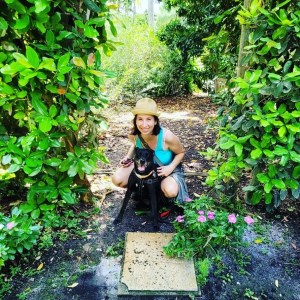
Photo Credit: My mom
I’ve always loved dogs since I was a kid. I convinced my parents that I should get a dog because I was the only one who had never had a dog, and fish didn’t make good pets because you couldn’t take them for a walk. (I was 8, and I was terrible at walking Lady.)
After my childhood dog passed away while in college, I decided I didn’t want to get another dog until I was on my own. Like in many households, I may have been the one that advocated for getting and ultimately picked Lady, but she quickly became my mom’s dog.
I have worked in the corporate world in marketing and product management. In the years since adopting Cookie, I’ve gone down the rabbit hole of “crazy” Dog Mom. I would love to be a stay-at-home Dog Mom or otherwise immerse myself in the world of dogs. Maybe that’s in the cards, or maybe my love of dogs will be what keeps me sane in the professional world.
Why Blog, Why Now
In March 2019, my husband and I adopted our second dog, Ziggy. He was three months old when we brought him home. About six months into the pandemic, in October 2020, Ziggy was diagnosed with cancer. Two months shy of his second birthday, his hind leg was amputated, and right around his second birthday, we finally learned what kind of cancer he had – hemangiosarcoma.
Hemangiosarcoma is a cancer of blood vessels. It is common and often has a very short survival time (about six months). Ziggy lived with hemangiosarcoma for 17 months. He died just three months after his third birthday.
As our journey into canine cancer began, I learned SO much – not just about canine cancer, but canine health in general. There is so much that seems obvious when you learn it, but it is counter to common knowledge or what we knew as kids with our dogs.
Dogs are incredibly precious to me. They are loving, and loyal and bring us so much joy. No matter how long they live, their lives are always too short.
With each of our dogs, I learn something that makes me a better Dog Mom to the next dog in our life. I want to do everything I can to give them the longest, best life possible. And I want to help like-minded pawrents do the same for their pups.
Meet The Pups
Now it’s time to meet our dogs, and the family dogs, that will make appearances in future posts.
Cookie
Photo Credit: Robin T. Brumfield
Cookie made me a Dog Mom. My husband and I adopted her in September 2014 when she was three months old. She benefitted greatly from being an only child for years.
She is incredibly smart, a fast learner, a good two shoes, strong willed, friendly but anti-social, and an amazing athlete. Cookie introduced us to the world of dog sports beyond obedience.
While Cookie earned titles in agility, barn hunt, and tricks, she also tried tracking and nose work.
We brought Ziggy home in March 2019, also aged three months. He was our first second dog. Ziggy was my greatest teacher and the inspiration for this blog.
There will be many posts about everything that Ziggy taught me, but the top two are how to advocate for your dog and how to pawrent two dogs.
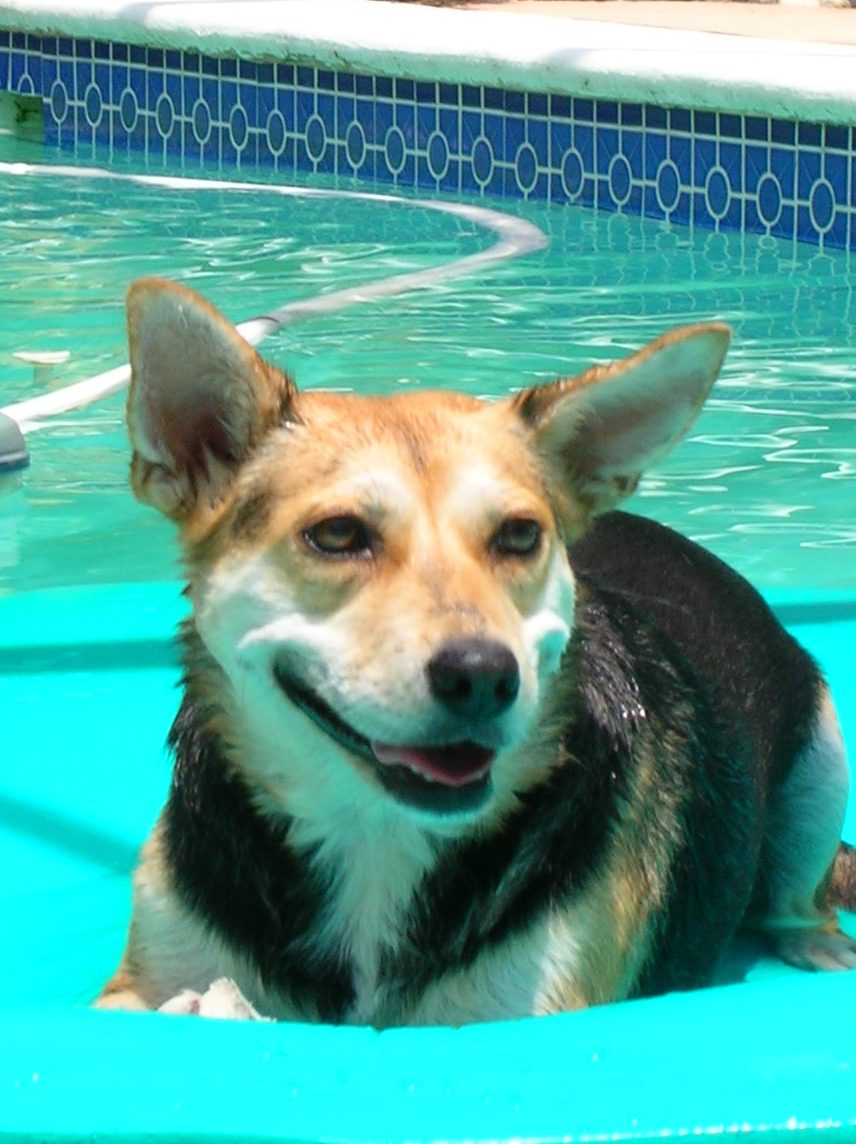
Ziggy was the happiest, friendliest, and sweetest pup. His tail was always thumping, and he was delighted to go with the flow. I hate that he had to be one for half of his too short life, but he was also a fantastic patient.
Cookie introduced us to dog sports, and Ziggy introduced us to canine holistic health care.
Chip
Photo Credit: Me
Seven months after Ziggy passed, we made room in our hearts for our second second dog, Chip. In October 2022, Chip became the third dog to enter our home at the age of three months.
Chip is a firecracker, and our biggest challenge. He is vocal, anxious, stubborn, silly, sweet, and smarter than I often give him credit for. Chip lived through a lot in his first three months of life, and it shows. It hasn’t quite been a year, but he has come SUCH a long way.
In under a year Chip has taught me that patience and love pays off. He reinforced a lesson learned with Ziggy – that every dog is different. Most importantly Chip is teaching me how misunderstood reactive dogs are.
The family dogs
Lady & Me, early 2000s Photo Credit: one of my parentsBrie Photo Credit: Me or my mom
Lastly are two girls no longer with us, Lady and Brie.
Lady joined our family in 1991 and passed in 2004. Compared to the dogs I have now, she was tiny – just 20 pounds! But boy did she have presence. While she was only ever taught the most basic obedience commands, Lady was very well behaved and super smart. She was healthy her whole life, until the last year or two when she was on several heart medications.
Brie replaced me when I moved out on my own. My mom lasted five months after I moved out before bringing home Brie. She was at least a year old when she joined the family in 2007 and she crossed the rainbow bridge in 2019. Brie never played, was a steady companion, apparently could hold a grudge, had separation anxiety, and taught Cookie how to behave and paw at the door. (Meanwhile, Cookie taught Brie how to bark and eat grass.)
Here we Go
In a nutshell that’s me and the dogs of my life. I look forward to sharing lessons learned, resources I turn to, products I’ve tried, and countless silly stories.
An important note and reminder: I’m not a veterinarian, certified dog trainer, or other dog professional. I’m a dog mom sharing her tales in pawrenting.
While I hope that my experiences help you, I’m only an expert in the dogs that I’ve lived with (and even with them, I’m always learning). So please, consult the experts that are part of your pack for the needs the pups in your life. When applicable, I’ll link to accounts of the professionals that I follow.











 pawrentingtails.com