Ready, set, go: Getting started in dog sports!

Now that you know that there are so many dog sports to choose from, how do you pick?

General Research

Reading about the experience of other pawrents, or talking to friends with experience in dog sports, can be one way to familiarize yourself with the sport. So can watching YouTube videos of classes or competitions.

The websites of the various venues can also provide a wealth of information, including connecting you with dog clubs in your area that host competitions and/or classes.

Here are the websites of various groups I’ve referenced this past month.

find classes

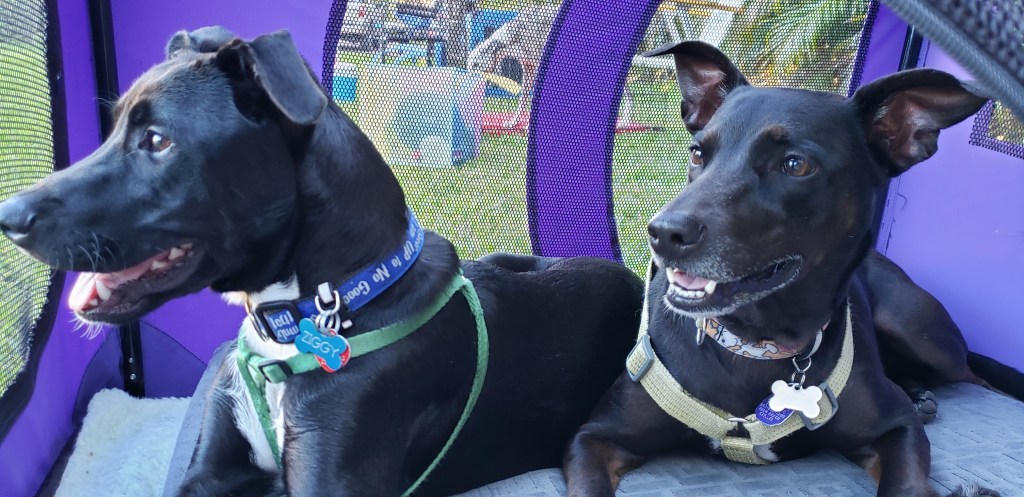
Ziggy and Cookie waiting their turns in an agility class, circa 2019.

Research dog trainers or dog clubs in your area. Sign up for classes to better gauge what the sport will entail long term. If you take a class and the sport interests you, but you’re unsure, consider trying classes with another instructor. Everyone has different teaching styles and personalities. Look for someone you’re comfortable with and that prioritizes the well-being of your dog.

Assess Personality & Interest

A good place to begin is assessing you and your dog’s personalities and interests. Is your dog high-energy? Agility may be a great fit. Does your dog have a knack for sniffing? Perhaps barn hunt or nose work would interest them. Can’t keep your pup out of the pool? Give dock diving a try!

If you recently adopted your dog, or perhaps your dog is still a puppy, you may not know their interests. Obedience is always a great place to start, even if you don’t compete, because obeying basic commands will be important in any sport, if for no other reason than good behavior in classes and competitions.

Safety

Safety and physical well-being is also important. This may be true of all sports, but the one that I’m most familiar with is agility. The high speeds, twists, and turns can put a strain on your dog’s body. If you’ve never used any agility equipment before, don’t introduce your dog to them without guidance from an instructor. Young pups are developing their bones and muscles. Introducing them to tight weave poles too young can cause long-term damage. This is an excellent article about preventing orthopedic injuries in dogs that compete in sports.

Budget Considerations

Depending on your goals for your dog, some sports are more expensive than others when you add up classes, entry fees for competitions, travel expenses, and any equipment you may choose to purchase for at-home training.

Start slow and make sure you want to commit to the sport before investing heavily.

Bottom Line

There countless canine sports available to try. Take your time to find one that best suits you and your pup. And, remember, the competition and titles are a distant second to having fun and bonding with your pup!
Even More Dog Sports!

This week, I’m touching on several sports. A couple of them we have some experience with, while others we have only heard of. As always, this is based on my knowledge and experience with the sport (more limited than usual), and I encourage you to do your own research.

Tricks

Are you familiar with videos of dogs performing silly activities or even dancing a whole routine with a human handler? Well, that’s what the American Kennel Club’s Trick Dog title is all about.

Similar to other AKC sports, tricks have multiple levels in which you can title. In our experience, it’s not a competition like agility but a test like Canine Good Citizen (CGC). Some dog clubs will host classes where you learn a variety of tricks for the given level. Other times, they only offer the test, and it’s up to you to train your dog.

The qualifying tricks at the novice level are mostly your basic obedience commands. In fact, if your dog has their CGC certificate, they only need to perform five novice tricks to earn their novice trick dog title!

Cookie earned her advanced trick dog title virtually during the pandemic. Depending on your patience and motivation, you may plan to train certain tricks but pivot to others depending on how easily your dog picks up the tricks. I did that with Cookie at the more advanced levels, and also with Ziggy.

Cookie earned her advanced tricks title virtually in 2020.

Nose work

Several years ago, we did an introductory nosework class with Cookie. The aim is to train your dog to find certain scents that are hidden. Training starts with finding the scents within boxes and progresses to scents hidden elsewhere in a course. This class was harder for Cookie. Since none of us enjoyed it much, we didn’t pursue it further.

During Chip’s reactive dog class, our instructor shared that nose work is an excellent activity for reactive dogs. In our last class, they showed us how to introduce the concept using boxes and treats. While Chip did OK in class, when I tried at home he was afraid of the boxes! I hope to dig up some patience and try again, consistently, with him because I really do think he would be good at this (and enjoy it!).

Since my experience is incredibly limited, I don’t know anything about how competitive nose work operates. The National Association of Canine Scent Work is a great resource to learn more.

Tracking

Similar to nose work, we only did one class in tracking with Cookie a long time ago. She did well and seemed to enjoy it, but classes were a bit far and offered infrequently, so it was hard to keep up with.

Instead of searching for specific scents, in tracking dogs search for dropped articles outdoors. Tracking is another AKC sport. It’s non-competitive and simply a test with different levels.

Rally

Once again, rally is an AKC sport. We have never tried this with any of our dogs, but it’s one that I contemplate trying with Cookie since she’s a senior dog and the most obedient of all our dogs.

From what I’ve observed, rally is similar to agility in that there is a set course, but instead of obstacles, you stop and do various obedience actions at each “stop” on the course.

While this appeals to me for Cookie because of her age and the fact that she’d crush it, it appeals to me with Chip as it’s an opportunity to practice obedience, but in a new light.

Dock diving

I have never considered dock diving with any of my dogs because they all hate water! Dock diving is exactly what it sounds like – dogs jump into a long pool. The farther they jump, the better. While a Google search showed that there are multiple venues that offer dock diving, North American Diving Dogs is the organization that a friend and mentor has taken her pool-loving dogs to compete in.

To my knowledge, training involves having your dog jump in your pool. Cookie is the closest to a swimmer that we’ve ever had. She can be bribed to step (yes, step) into our pool and swim a semi-circle. If there are no high-value treats involved, she will not step a single paw into the pool.

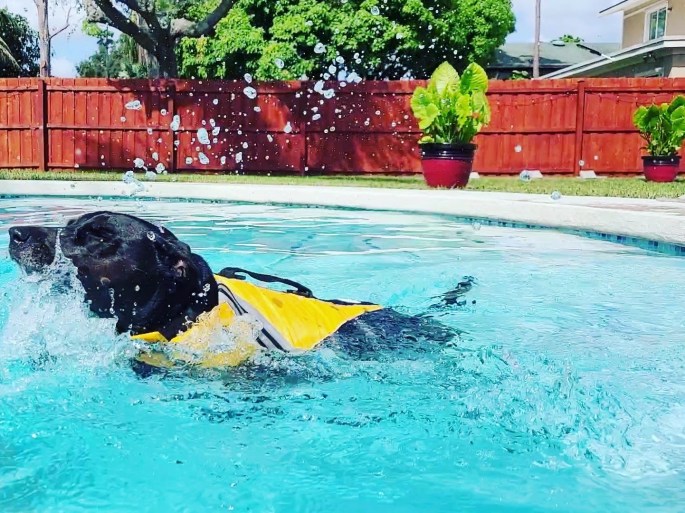
Cookie swimming a lap in 2021, with Ziggy keeping a protective eye on her.

The Bottom Line

As you can see, there’s a dog sport for everyone. I know that the sports that I’ve written about are just the tip of the iceberg. There are sports involving frisbees, farming (perhaps that’s herding?), and more. Finding a sport that both you and your dog enjoy will help strengthen your bond and be a more effective and healthy outlet for them to tire out their body and mind.

Next week, I’ll share some advice on how to find the dog sport that’s right for you.