He may no longer be with us physically, but today we celebrate Ziggy’s fifth gotcha day.
How it started
Cookie, before knowing she was about to be a big sister, on 3/23/19.
My husband and I first discussed getting a second puppy shortly after moving into our new home. Our main criteria was that Cookie had to approve. We hoped to get a puppy that would ultimately be about her size, not that there was any guarantee.
We attended an adoption event about a month before we ultimately adopted Ziggy. As the event was winding down, we found ourselves filling out paperwork to adopt a puppy. The puppy snapped at Cookie, and we, plus the rescue organization, decided it wasn’t the right fit/time.
For several days afterward, Cookie became super clingy—which is unlike her. While she enjoys our company, she is not affectionate and loves her personal space. We started rethinking a second puppy. Maybe Cookie was destined to be a furever only child.
The big day
On National Puppy Day 2019, we went to an adoption event. I didn’t realize it was purely an adoption event. I thought it was a pet expo with a bunch of dog vendors and some adoptable pups.
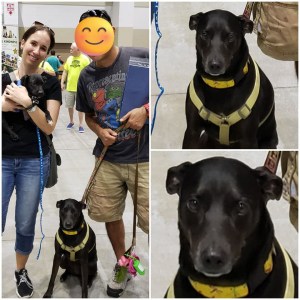
My husband and I argue over who saw Ziggy first, but since this is my version of the story, we’ll go with I saw Ziggy first and made a beeline for him. After an initial hello, we did a lap around the event and came back to say an extended hello. Something that stuck out to me is that there was a row of crates behind him and all the pups in that row were barking and being all kinds of rambunctious. Ziggy was quiet. He was facing them and interested in all their yapping, but he didn’t really have anything to say.
3/23/19: Ziggy saying hi before coming out of his crate.
When we opened the crate door, Cookie walked up slowly, sniffed him, and looked at us as if to say, “Ok, I sniffed him. Can we go home yet?” Ziggy was the only adoptable dog that she voluntarily went up to. Even before the previous month’s event, she seemed to know when we were around adoptable dogs and always looked nervous. As though she was worried that she was going to be exchanged.
My husband and I alternated saying hi, and Cookie kept her distance, ready to go home. The lady from the rescue group mentioned he needed a bath because he rolled in his own poop en route to the event. (Which he would eventually roll in some kind of poop at least twice…notably once during my WFH lunch break my first week at my new job at the start of he pandemic!).
There wasn’t even a hesitation about bringing him home, though Cookie immediately regretted showing the slightest interest.
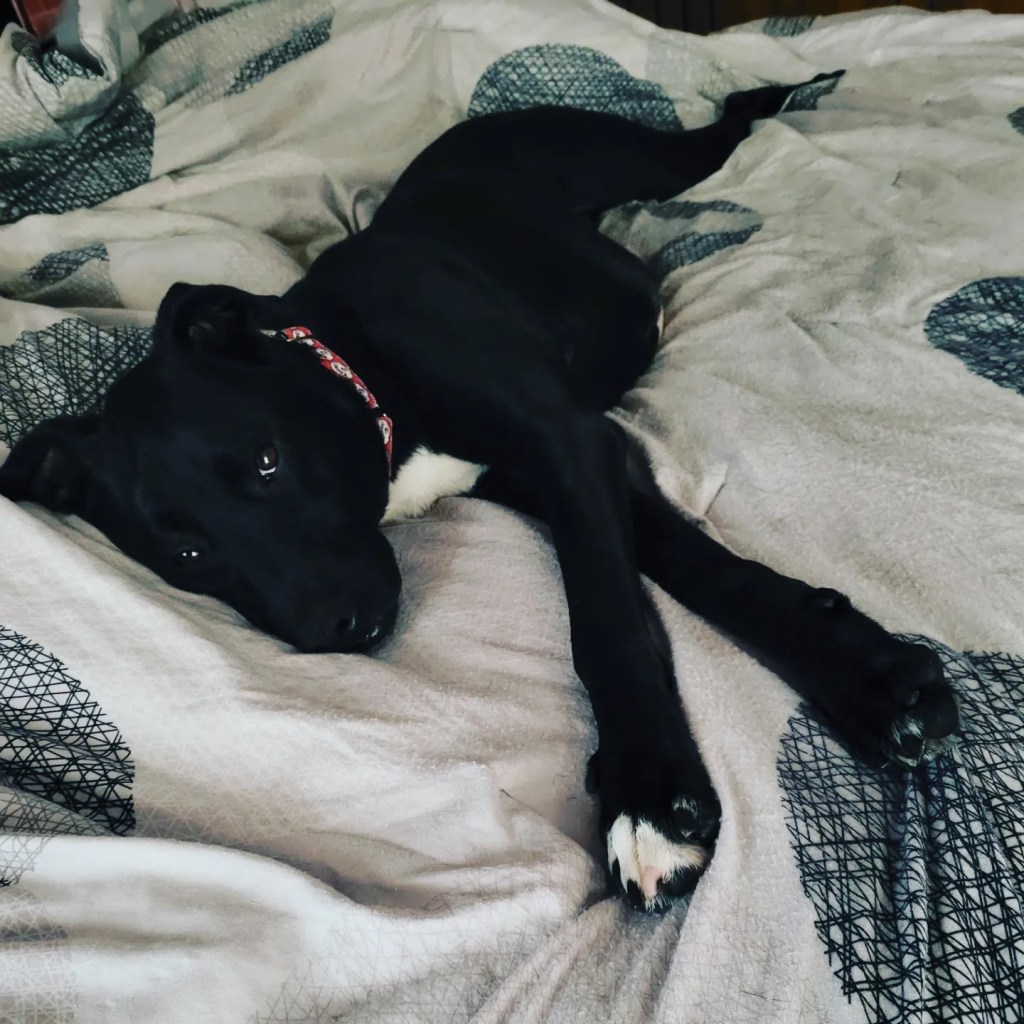
Ziggy’s adoption day photo.
At home, Cookie happily played with Ziggy in the yard and on walksbut pretty much ignored him for about a week inside the house. It never bothered Ziggy, who was content with the attention his pawrents gave. Eventually, Cookie and Ziggy became BFFs, and Cookie proudly settled into her role as Big Sister.
We miss Ziggy every day, but we’re blessed to have loved him for three years.
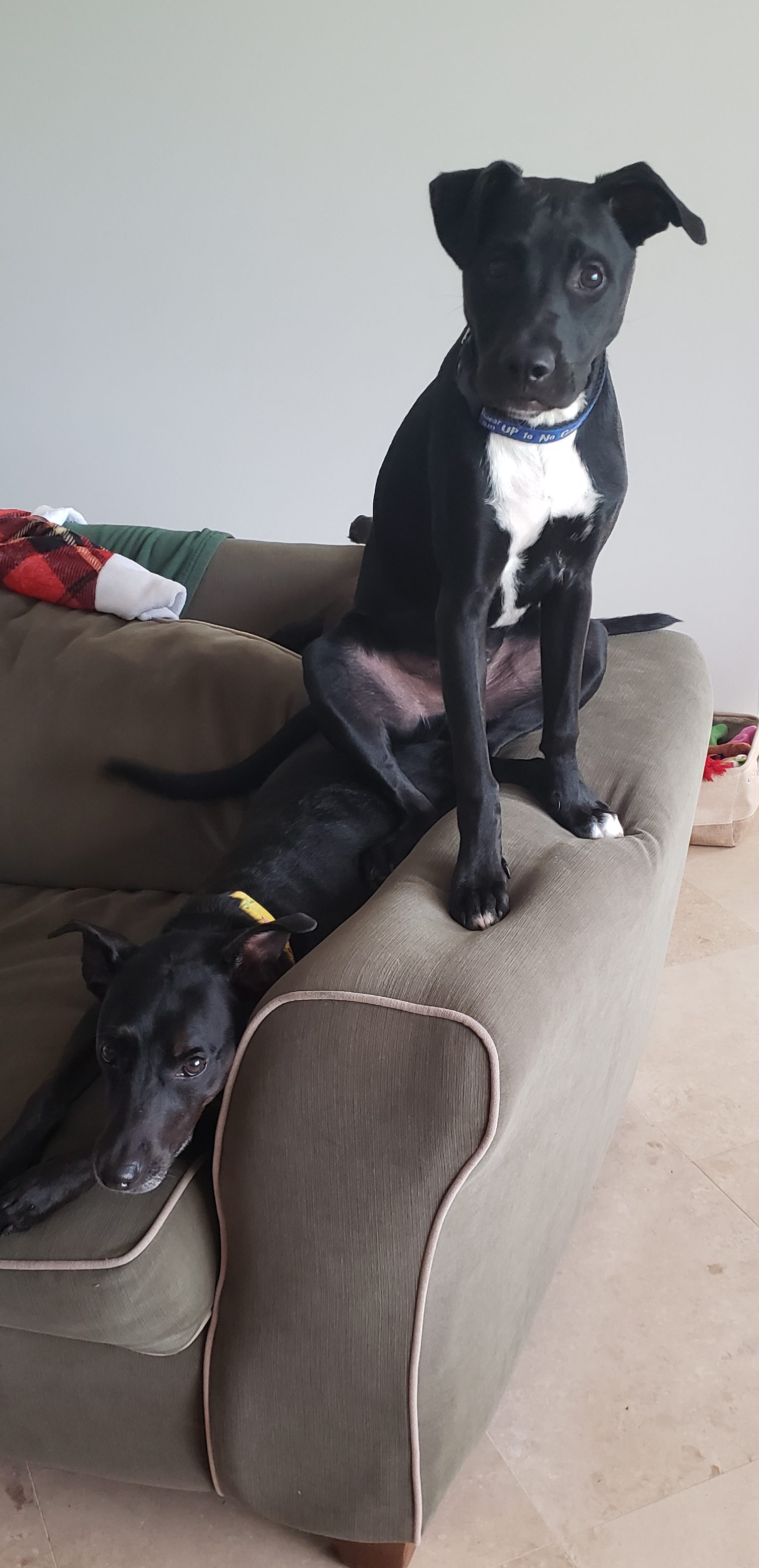
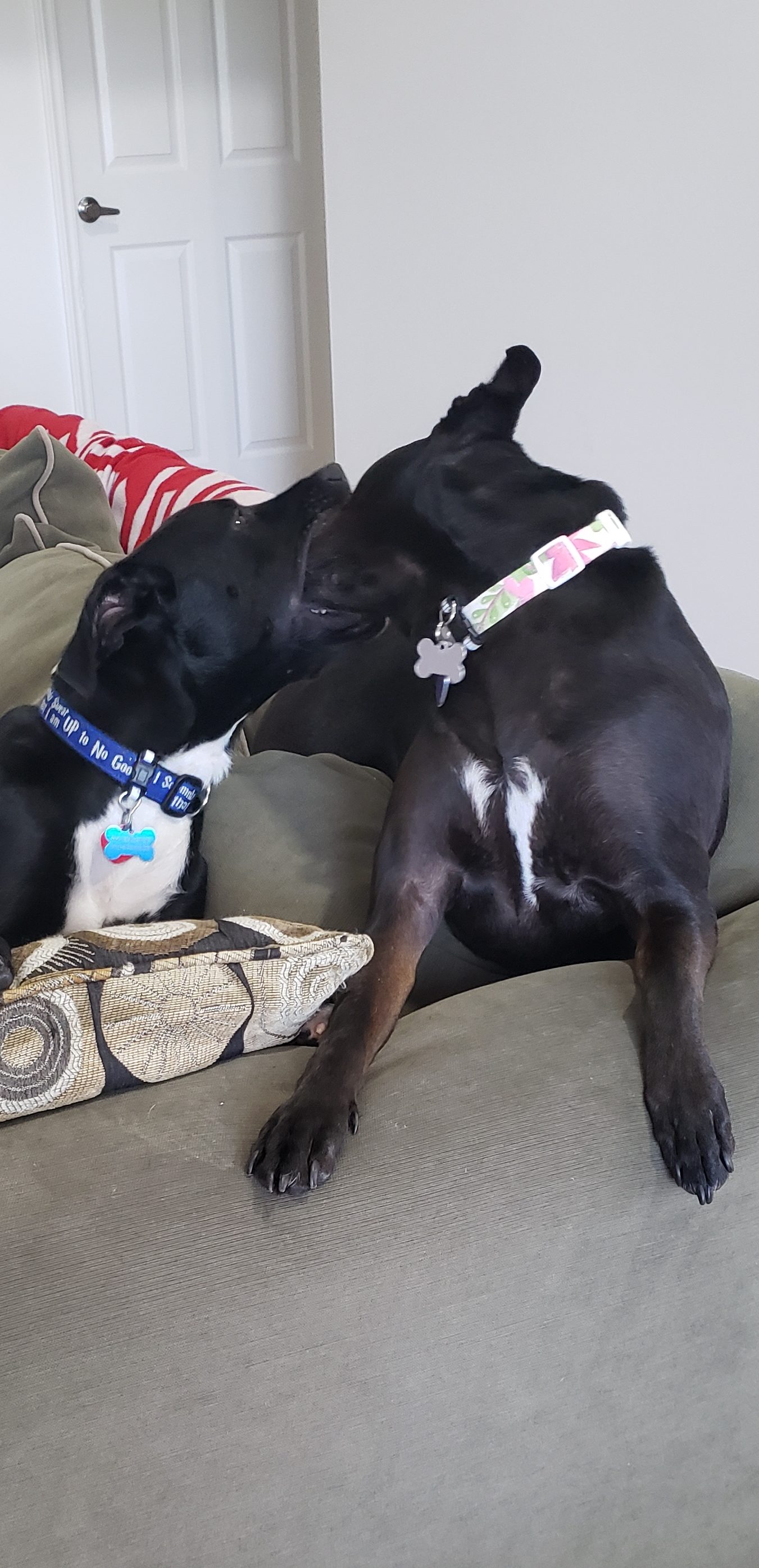
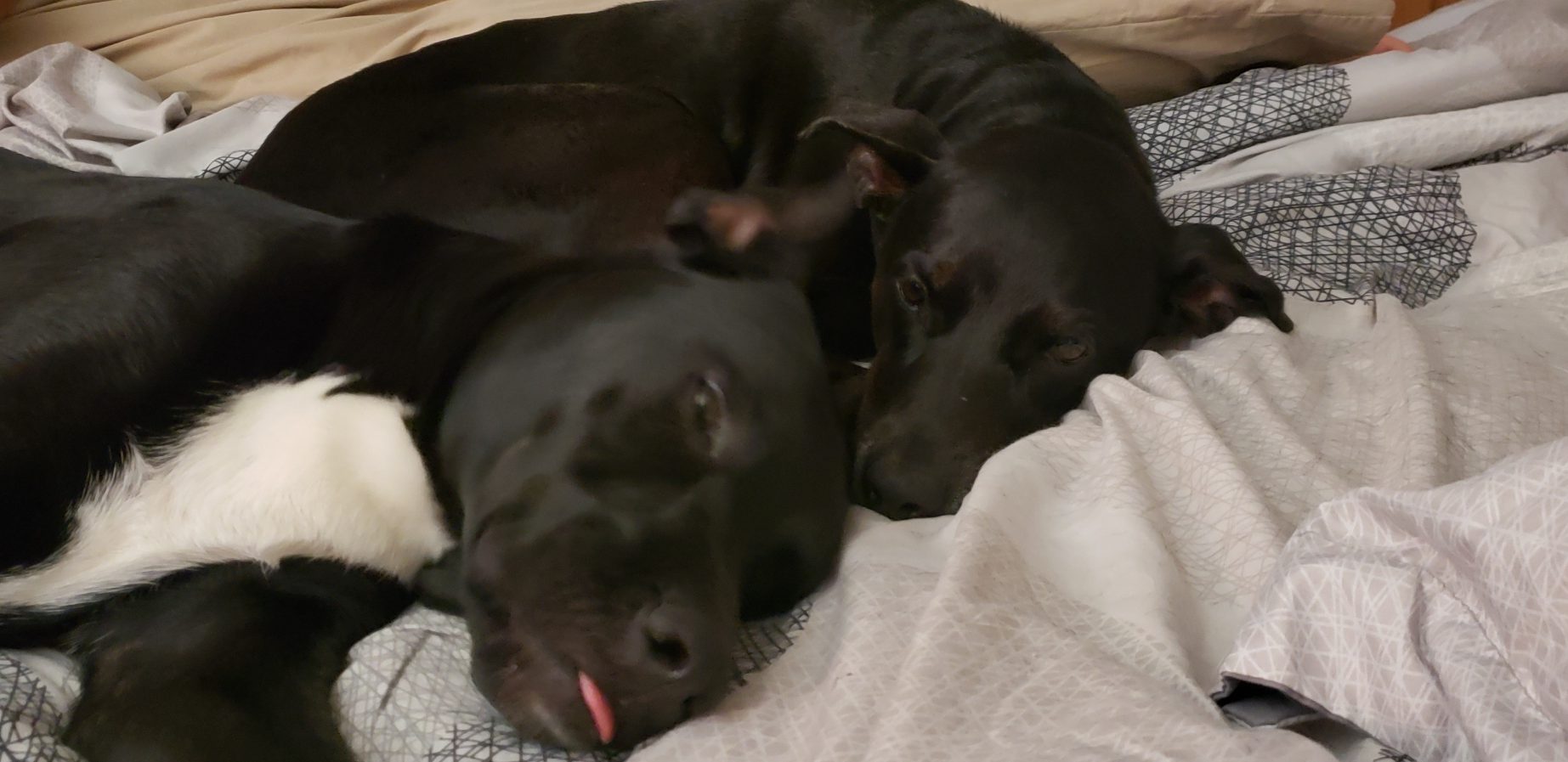
Cookie and Ziggy shenanigans day 1.
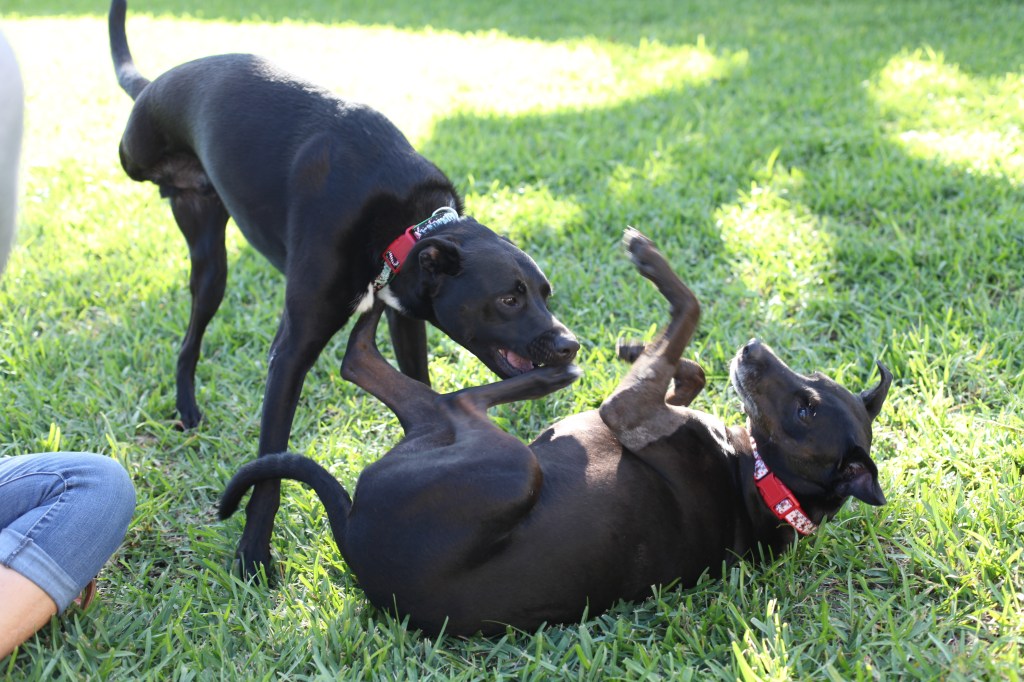
Cookie and Ziggy shenanigans day 1 continuedSisters are nice sofas…Intense game of dentist…Partners in crime!A rare moment of Cookie tolerating cuddles.
Today is the two-year anniversary of Ziggy’s passing. It simultaneously feels like yesterday and 10 years. To commemorate, I want to share my experience with his death, memorializing him and grief.
Knowing when It’s Time
The first time I recall my husband and I talking about the end of Ziggy’s life was driving home from the vet in January or February 2022. I’m fairly certain it was after dropping him off for his splenectomy. Since the mass was found on his spleen and there was a little bit of internal bleeding, we knew we wouldn’t have him much longer, though we’d hoped to have him a couple more months than we did.
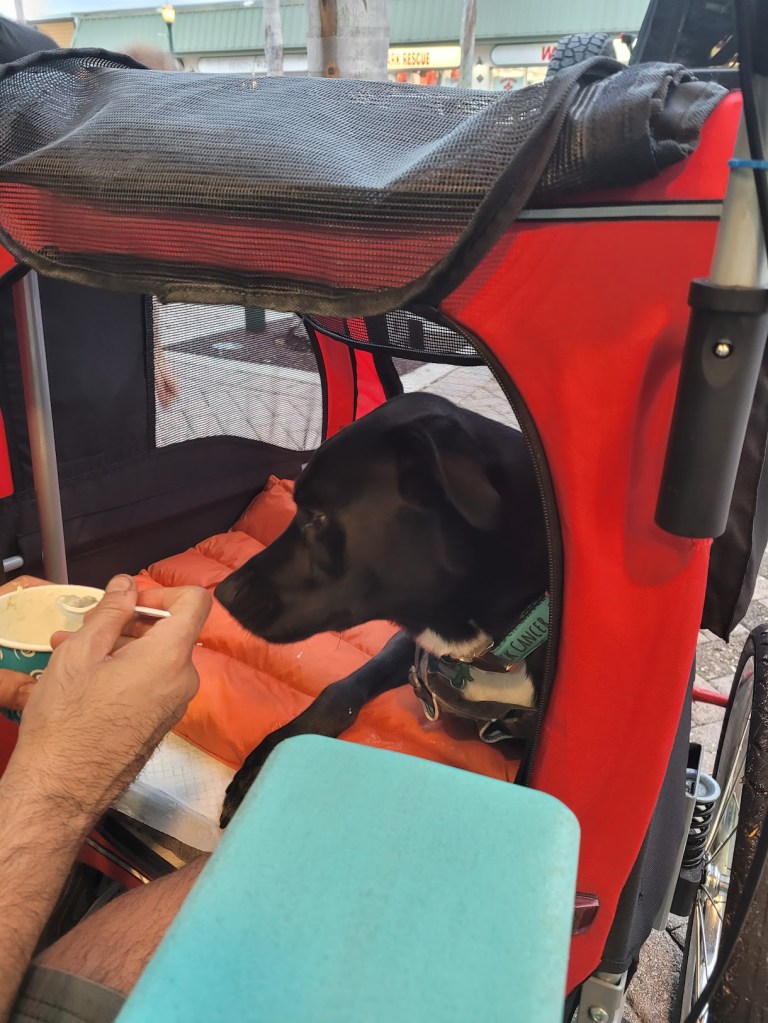
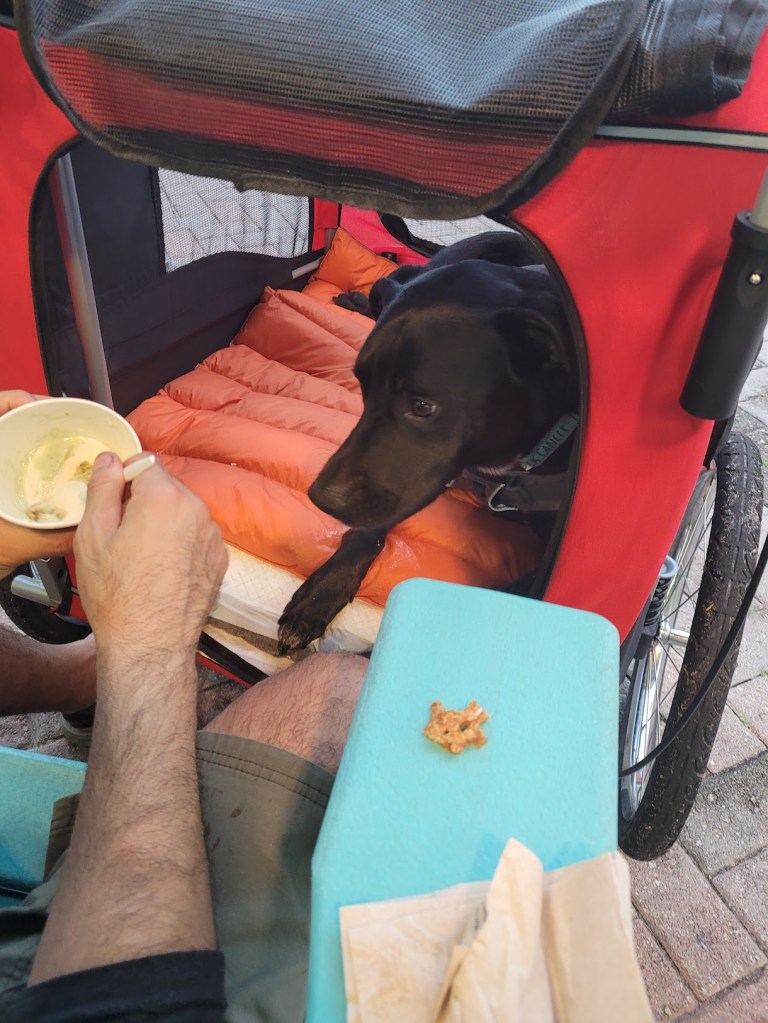
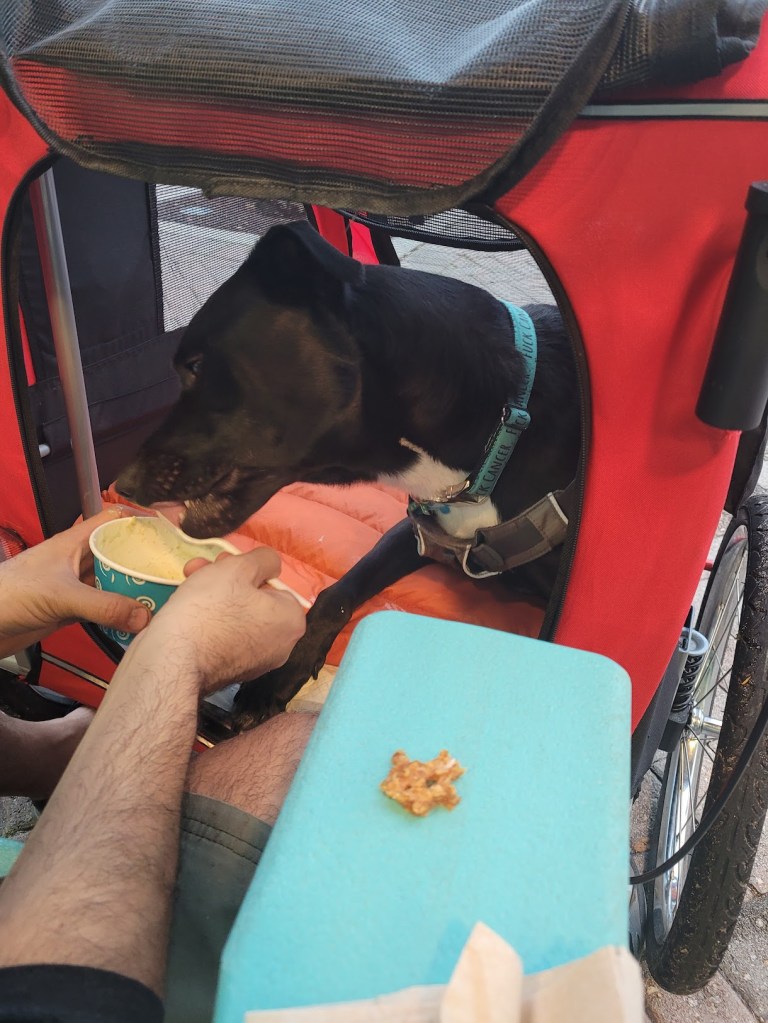
10 days before we said goodbye…Ziggy went out in his stroller for a favorite pastime……a trip to the doggy ice cream store!
We talked about how we’d want to euthanize him. While this was our first conversation, I had done some research at some point during the past year and a half since his diagnosis. I learned about an organization, Lap of Love, that does at-home euthanasia. I immediately knew that’s what I wanted for Ziggy and really any other dog. When I suggested it to my husband, he agreed.
We also talked about what symptoms or signs would be a signal that it was time for us. Fortunately, we were on the same page. Deciding on treatment and care over the next couple of weeks was relatively easy. We talked about it again when he went in for his transfusion and were again easily on the same page. The decisions in the last few days were harder. Especially when Ziggy continued to thump his tail when we came in the room, or he showed interest in going around the neighborhood in his stroller. We both feared the same thing – saying goodbye too soon or causing him to suffer. In the end, we both knew and agreed when it was truly time to say goodbye.
Lap of Love
One of the reasons I wanted Lap of Love is because of Cookie. I wanted her to be present for his death so that she would know what happened. Taking them both to the vet would have been too much. Cookie gets nervous at the vet; we would have been emotional about Ziggy and then stressed about Cookie’s stress about being at the vet.
Additionally, Ziggy went to the vet so much that we really wanted him to be at home and comfortable. We didn’t know it at the time that we had the conversation, but Ziggy was going to be at the vet a lot in the coming weeks. I posted a Ziggy update on March 1, 2022; he had been to the vet eight times since that January. He didn’t need to be going to the vet again on his final day.
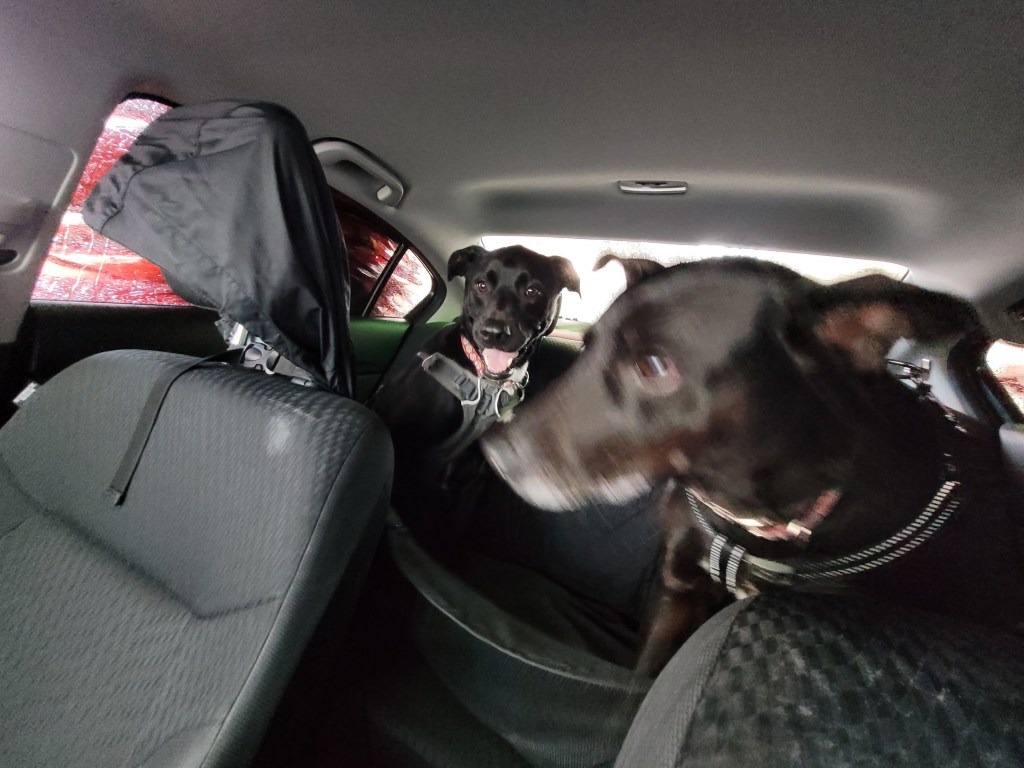
2/14/22: An outing to the car wash post stitches removal from his splenectomy2/14/22: After getting his stitches removed and only a few days before he needed a transfusion.
A few days after having the stitches from his splenectomy removed, Ziggy had internal bleeding and underwent a transfusion. He was hospitalized for about 36 hours. When I brought him home, I called Lap of Love for information.
I am so grateful I called then. While it would be a few weeks before we called to schedule his passing, and while he was on the mend when I called, I was an emotional wreck. The person I spoke with that day (and every other time), was incredibly compassionate, a true angel. She answered my questions and took down our information. She was patient and calming through my tears and blubbering.
A few weeks later, when it was time, I just called them and asked for them to come the next day. And then called a short while later to see if they could come that afternoon. Being able to simply schedule it without having to go into Ziggy’s history, personality, or whether there was another dog at the house that day was a relief.
Cookie and Ziggy, exactly one month before Ziggy passed.
We’d hoped to euthanize Ziggy in the backyard, but it was raining lightly when the vet arrived, so we did it in our covered patio. We could have done it anywhere in the house, but Ziggy loved being outside, so we made him comfortable on the patio.
The veterinarian could not have been more sympathetic and caring for all of us. She walked us through what would happen. She took a few photos upon request (that I will never share), and took a paw print imprint. She also told us we could give him any last treats, even chocolate. Ziggy wasn’t interested in the chocolate or even a pupsicle (a favorite treat of his). Up till then, Cookie had been laying quietly, watching, by our side. But, upon seeing Ziggy’s lack of interest in ice cream, she was quick to do her brother a final “favor” and eat his ice cream. Even in death, these pups know how to make us smile.
Once he was gone, my husband and the vet carried Ziggy out in a stretcher, and Cookie, my mom, and I accompanied them. Cookie gave Ziggy a final sniff before his physical body left us too.
Memorializing Ziggy
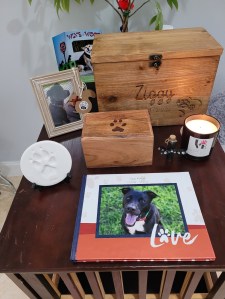
A week or two later, we picked up his ashes at his vet’s. The ashes are stored in a wooden box engraved with his name and paw print. We received another paw print impression and a tiny glass vial with some of his ashes.
Those were part of the memorial space I created for him a top of a wooden crate (used mostly for decoration). I also created a photo book, added a framed photo, purchased a custom box to store mementos from his life, and added a candle.
Ziggy’s memorial space.
The outpouring of love from our community was also incredibly special. The most meaningful was when a neighbor a couple of houses over brought the most beautiful bouquet from her garden. When we first met, she was afraid of dogs generally, and was particularly nervous around our 50 pounders. We respected her boundaries, but with time, Ziggy won her over. She always asked about him, said hi, and one time when my husband was out with Cookie, told him to come back with “the friendly one!” Her gesture meant the world to me because she was once afraid of him.
Grief
The best description of grief is one that a friend shared that compares grief to the waves of the ocean. It’s incredibly accurate. One of the most interesting experiences in grieving Ziggy was watching Cookie grieve. Cookie is a more serious dog, so it was hard at times to know if she was grieving. There were plenty of moments in the days immediately after his passing that I thought I noticed Cookie grieving, but I may have been projecting.
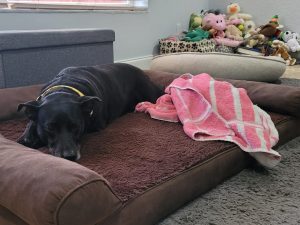
The biggest wasn’t clear to me until three months later. After Ziggy’s amputation, we purchased two large orthopedic dog beds. We kept one in the bedroom and the other in the living room. In the last week or so of Ziggy’s life, he barely left the bed in the living room. (The three of us would rotate sleeping there with him or all stay there with him.) The bed was covered in sheets, towels, and blankets. They were heavily soiled. After he passed, I washed everything twice. Cookie refused to lie in that bed. Even when I swapped the one in the living room with the one in the bedroom, she refused to lie in the one in the living room.
Three months to the day after he passed, Cookie walked over and lay down in Ziggy’s living room bed.
June 12, 2022, Cookie laid in Ziggy’s bed for the first time since he passed.
Final Thoughts
Losing a fur baby is hard. It’s difficult for people who haven’t gone through it to understand how it can be harder than the loss of a human loved one. There’s no right or wrong way, or right or wrong time, to euthanize your furbaby. You may second guess yourself, thinking it was too soon or later than it should have been. You do the best you can. Do not let anyone else influence you. And don’t influence or pressure someone to make the decision the way you would. Every dog is different. What we chose for Ziggy may be different than what we choose for another dog in a similar situation.
Rest in peace, Ziggy. See on the other side of the Rainbow Bridge.
March 3rd (3/3) is Tripawd Awareness Day! While Ziggy was truly a three-legged dog, I managed to unintentionally capture an optical illusion moment.
Years ago, well before meeting my husband, I walked dogs as a volunteer at a local shelter. I was fortunate to have the opportunity to walk a three-legged dog. I was amazed at how happy that dog was – because he was three-legged and in a shelter.
Ziggy and Cookie, December 2021. Photo Credit: Jill Nero
When it was recommended that Ziggy’s hind leg be amputated, it was a hard adjustment, but having seen the joy and ease with which that shelter dog moved on three legs, it was an easier decision than for many.
I was fortunate to have found the Tripawd community online, which helped prepare us for Ziggy’s surgery and recovery. The resources in that community led me to find all of the other wonderful canine cancer and canine health resources I reference today, as well as recommendations for harnesses and more.
If you ever find yourself confronted with the prospect of amputation or adopting a tripawd, I strongly encourage you to turn to this community for support. They are truly priceless!
February is spay and neuter awareness month. You may think you know everything there is to know about getting your pups fixed, but if you’re like me, I’m betting you don’t. There are some commonalities with cats, but never having had cats, I will speak only to dogs. Remember that this post is based on my experience and learning. Be sure to consult your veterinarian or other professionals before making a decision for your pup.
I Didn’t Know Diddly
Until the past two to three years I knew that getting dogs fixed was important in preventing unwanted litters of puppies. With thousands of dogs being euthanized annually due to limited homes and limited space in shelters, spaying and neutering dogs is key to reducing the number of healthy dogs euthanized. I knew that getting a dog from a shelter or other rescue meant that they would be fixed before coming home. While I didn’t know the details of the timing, I did know that dogs from breeders would get fixed months to a year after being brought home.
I never thought much of this, as spaying and neutering is a familiar and routine procedure. I assumed that it only carried the risk that comes with any kind of surgery.
My education
When Ziggy was diagnosed with cancer in late 2020, I began doing a lot of research – attending online conferences and reading articles. I started seeing a lot of references to a link between early spay/neuter and cancer. Many advocated delaying the surgeries until the dogs are around one year old to ensure they get the health benefits of their sex hormones.
While this advice struck me as common sense in retrospect, I was confused. If there was a link between early surgeries and cancer, why did rescue groups opt for early surgeries? In a nutshell: humans are irresponsible and suck.
In March 2022, I attended the Holistic Pet Care Summit. The module with veterinarian Dr. Tara Timpson, who worked at Best Friends Animal Sanctuary, addressed my questions and confusion.
Once upon a time, dogs and puppies would be adopted out without being fixed. The organizations would encourage adopters to return for FREE surgery once the dogs mature to the appropriate age. But the lazy humans DIDN’T follow through on their commitment. While there’s nothing wrong with responsibly breeding dogs, people would be irresponsible with their intact dogs, resulting in unwanted litters of puppies – not enough homes and not enough space in shelter groups.
So the rescue groups were confronted with a choice: do we risk high kill rates of otherwise healthy dogs due to lack of space? Or do we operate on them young, risking illness later in life?
Beyond Cancer
Early spay and neutering is linked to more than cancer.
After Ziggy died in March 2022, Cookie started experiencing incontinence in her sleep. My worrisome brain went straight to cancer. After a couple of tests to rule out more serious illness, our vet advised that the incontinence was likely caused by early spay. While there is medication available to help with incontinence, it comes with its own risks (like all medications). We opted to keep Cookie off of the medication and manage the incontinence with diapers, supplements, and more frequent walks and potty breaks (even in the middle of the night).
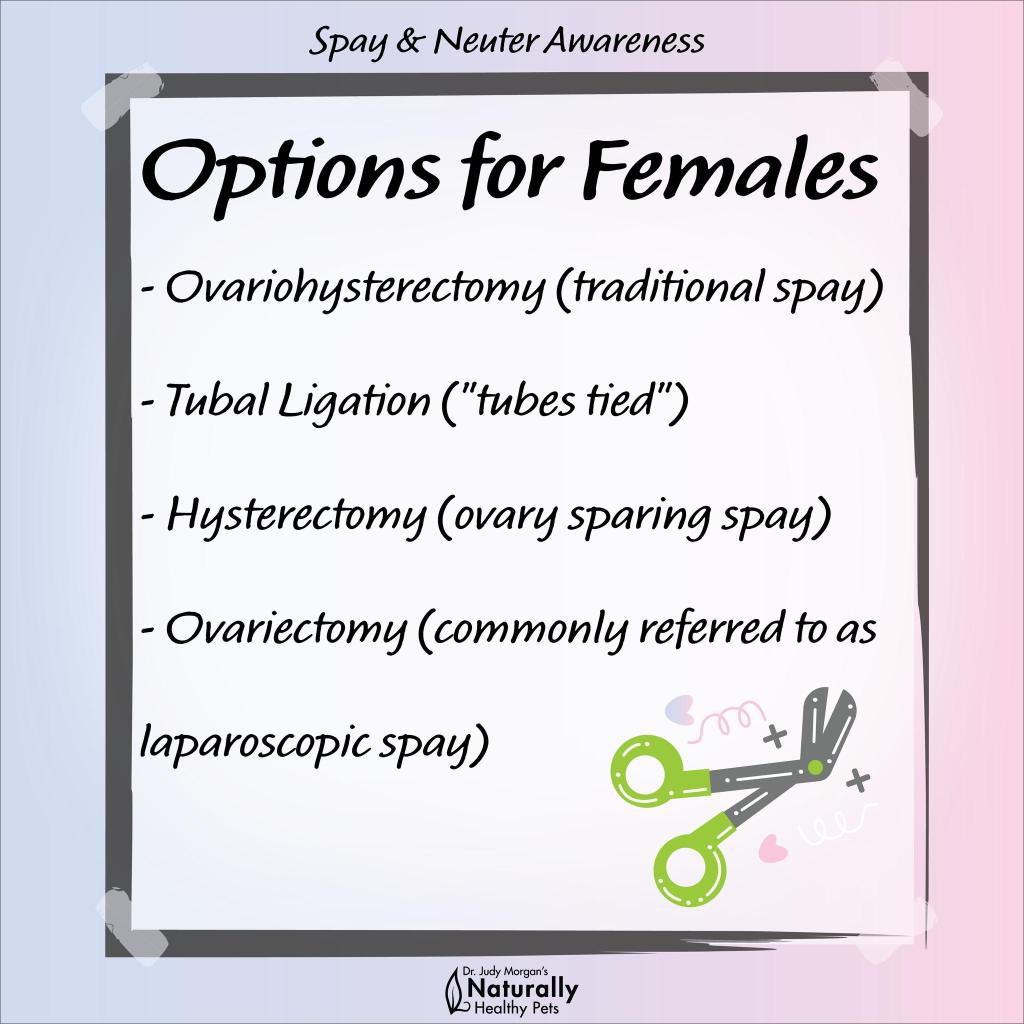
There are multiple surgical solutions for preventing an unwanted litter – two for males and four for females. If you bring an unfixed dog into your home, consult with your veterinarian to consider which option is best for your pup based on age and lifestyle. Each has its own risk factors, so evaluating the options with your veterinarian is important.
If you rescue, you may feel as if you have no options. You could try contacting potential rescue groups to learn what procedure is done on their pups prior to adoption and whether they may be open to letting you choose the procedure. I haven’t tried this, nor have I heard anecdotes from anyone who may have tried it.
You can also work to make changes to veterinary education. Dr. Karen Becker has a petition to include all procedures as part of the veterinary curriculum. On the petition page, you can learn more about the limited curriculum veterinarians receive on spay and neuter surgeries
The Bottom Line
You may not always have a choice in when or what kind of spay/neuter surgery your pup gets, but if you do, evaluate all the options with your veterinarian and decide what is best for your dog. And if you can’t, you CAN advocate for changes in veterinary education, and when
Now that you know that there are so many dog sports to choose from, how do you pick?
General Research
Reading about the experience of other pawrents, or talking to friends with experience in dog sports, can be one way to familiarize yourself with the sport. So can watching YouTube videos of classes or competitions.
The websites of the various venues can also provide a wealth of information, including connecting you with dog clubs in your area that host competitions and/or classes.
Here are the websites of various groups I’ve referenced this past month.
Ziggy and Cookie waiting their turns in an agility class, circa 2019.
Research dog trainers or dog clubs in your area. Sign up for classes to better gauge what the sport will entail long term. If you take a class and the sport interests you, but you’re unsure, consider trying classes with another instructor. Everyone has different teaching styles and personalities. Look for someone you’re comfortable with and that prioritizes the well-being of your dog.
Assess Personality & Interest
Cookie at a CPE agility competition in March 2019Ziggy competing in Barn Hunt instinct 2019. Credit: Pix N PagesChip goofing off at graduation time for his CGC certificate, November 2023
A good place to begin is assessing you and your dog’s personalities and interests. Is your dog high-energy? Agility may be a great fit. Does your dog have a knack for sniffing? Perhaps barn hunt or nose work would interest them. Can’t keep your pup out of the pool? Give dock diving a try!
If you recently adopted your dog, or perhaps your dog is still a puppy, you may not know their interests. Obedience is always a great place to start, even if you don’t compete, because obeying basic commands will be important in any sport, if for no other reason than good behavior in classes and competitions.
Safety
Safety and physical well-being is also important. This may be true of all sports, but the one that I’m most familiar with is agility. The high speeds, twists, and turns can put a strain on your dog’s body. If you’ve never used any agility equipment before, don’t introduce your dog to them without guidance from an instructor. Young pups are developing their bones and muscles. Introducing them to tight weave poles too young can cause long-term damage. This is an excellent article about preventing orthopedic injuries in dogs that compete in sports.
Budget Considerations
Depending on your goals for your dog, some sports are more expensive than others when you add up classes, entry fees for competitions, travel expenses, and any equipment you may choose to purchase for at-home training.
Start slow and make sure you want to commit to the sport before investing heavily.
Bottom Line
There countless canine sports available to try. Take your time to find one that best suits you and your pup. And, remember, the competition and titles are a distant second to having fun and bonding with your pup!
This week, I’m touching on several sports. A couple of them we have some experience with, while others we have only heard of. As always, this is based on my knowledge and experience with the sport (more limited than usual), and I encourage you to do your own research.
Tricks
Are you familiar with videos of dogs performing silly activities or even dancing a whole routine with a human handler? Well, that’s what the American Kennel Club’s Trick Dog title is all about.
Similar to other AKC sports, tricks have multiple levels in which you can title. In our experience, it’s not a competition like agility but a test like Canine Good Citizen (CGC). Some dog clubs will host classes where you learn a variety of tricks for the given level. Other times, they only offer the test, and it’s up to you to train your dog.
The qualifying tricks at the novice level are mostly your basic obedience commands. In fact, if your dog has their CGC certificate, they only need to perform five novice tricks to earn their novice trick dog title!
Cookie earned her advanced trick dog title virtually during the pandemic. Depending on your patience and motivation, you may plan to train certain tricks but pivot to others depending on how easily your dog picks up the tricks. I did that with Cookie at the more advanced levels, and also with Ziggy.
Cookie earned her advanced tricks title virtually in 2020.
Nose work
Several years ago, we did an introductory nosework class with Cookie. The aim is to train your dog to find certain scents that are hidden. Training starts with finding the scents within boxes and progresses to scents hidden elsewhere in a course. This class was harder for Cookie. Since none of us enjoyed it much, we didn’t pursue it further.
During Chip’s reactive dog class, our instructor shared that nose work is an excellent activity for reactive dogs. In our last class, they showed us how to introduce the concept using boxes and treats. While Chip did OK in class, when I tried at home he was afraid of the boxes! I hope to dig up some patience and try again, consistently, with him because I really do think he would be good at this (and enjoy it!).
Since my experience is incredibly limited, I don’t know anything about how competitive nose work operates. The National Association of Canine Scent Work is a great resource to learn more.
Tracking
Similar to nose work, we only did one class in tracking with Cookie a long time ago. She did well and seemed to enjoy it, but classes were a bit far and offered infrequently, so it was hard to keep up with.
Instead of searching for specific scents, in tracking dogs search for dropped articles outdoors. Tracking is another AKC sport. It’s non-competitive and simply a test with different levels.
Rally
Once again, rally is an AKC sport. We have never tried this with any of our dogs, but it’s one that I contemplate trying with Cookie since she’s a senior dog and the most obedient of all our dogs.
From what I’ve observed, rally is similar to agility in that there is a set course, but instead of obstacles, you stop and do various obedience actions at each “stop” on the course.
While this appeals to me for Cookie because of her age and the fact that she’d crush it, it appeals to me with Chip as it’s an opportunity to practice obedience, but in a new light.
Dock diving
I have never considered dock diving with any of my dogs because they all hate water! Dock diving is exactly what it sounds like – dogs jump into a long pool. The farther they jump, the better. While a Google search showed that there are multiple venues that offer dock diving, North American Diving Dogs is the organization that a friend and mentor has taken her pool-loving dogs to compete in.
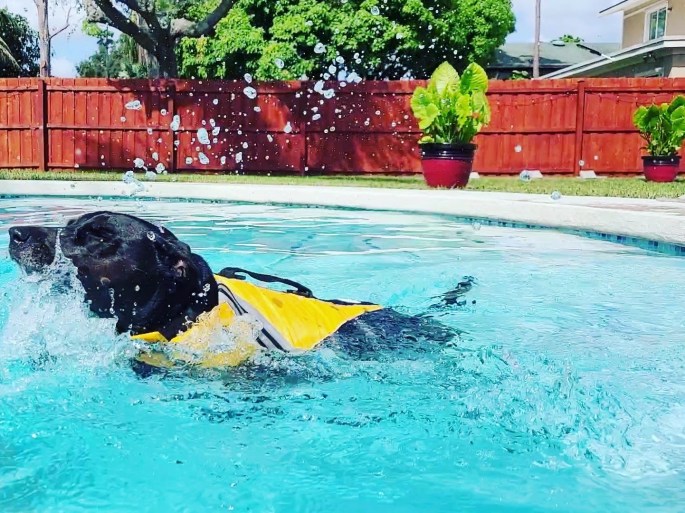
To my knowledge, training involves having your dog jump in your pool. Cookie is the closest to a swimmer that we’ve ever had. She can be bribed to step (yes, step) into our pool and swim a semi-circle. If there are no high-value treats involved, she will not step a single paw into the pool.
Cookie swimming a lap in 2021, with Ziggy keeping a protective eye on her.
The Bottom Line
As you can see, there’s a dog sport for everyone. I know that the sports that I’ve written about are just the tip of the iceberg. There are sports involving frisbees, farming (perhaps that’s herding?), and more. Finding a sport that both you and your dog enjoy will help strengthen your bond and be a more effective and healthy outlet for them to tire out their body and mind.
Next week, I’ll share some advice on how to find the dog sport that’s right for you.
Next up for National Train Your Dog Month is barn hunt!
As always, these posts focus on my knowledge and experience of the sport. Consult the various links in the posts for more information.
What is it?
Cookie competing in a barn hunt trial, January 2020.
The essence of barn hunt is hide and seek with rats in a maze of hay bales. Fear not; the rats are safely secured inside plastic tubes with holes. Depending on the level your dog is competing in, the number of rats hidden will vary. There will also be at least one tube that is completely empty, while another will have “litter” (or bits of hay/bedding that smells like rats).
The tubes are hidden in a course of bales of hay. Your dog is to sniff out the rats, signal to you that they found a rat, and you proclaim, “Rat!” In addition to successfully identifying all hidden rats, your dog must also climb atop a bale of hay and complete a tunnel.
As far as I know, the only organization that sponsors barn hunt trials is the Barn Hunt Association. Your dogs must be registered with them to compete in trials hosted by various dog clubs. When you earn barn hunt titles, the American Kennel Club (AKC) will recognize the title, for a fee, of course.
How we started
Ziggy finds rats in a barn hunt trial, January 2020
When Cookie started her journey with agility, we became members of a local dog sports club. Barn hunt was another sport that they hosted competitions in. I was a bit averse to the concept of searching for rats, but friends in the group suggested trying it, telling me that no training was needed.
So I did. Cookie and I signed up for an initial trial. She started with the instinct level, the most basic round. There are 3 tubes that are not hidden in hay. They sit in a rack on the other side of the tunnel. Climb and tunnel are optional at this level. The goal is for your pup to identify the tube with the rat, for you to correctly guess based on your dog’s cue, and move on.
Chip shows off his RATI (instinct) title, August 2023
Cookie, Ziggy, and Chip all competed in barn hunt, but Cookie is the only one not to title in Instinct. The reason is that titling in instinct isn’t required to compete in the next level up, and once you title in novice, you can’t compete in Instinct.
Once Cookie got started in novice, she quickly moved up to earn her novice title and came one qualifying run short of titling in the open. Cookie got stuck in open when Ziggy came along. When Ziggy started competing, he would bark the entire time that Cookie was competing, and she instantly became more preoccupied with the well-being of her brother than finding rats.
When the pandemic hit and Ziggy’s cancer journey began, all competition stopped. Last August, we signed Chip up for his first barn hunt trial. He’s a pro at finding the rats but is too nervous to tunnel. And Cookie remains uninterested in finding rats.
What they don’t tell you
The club that I started with in barn hunt always said that you didn’t need training in barn hunt and to just rely on your dog’s instincts. This worked for Cookie and Ziggy, but Chip would benefit from training (which I didn’t know was a thing for barn hunt until after his first trial). While the instinct may be there to find the rat, your dog may need training to learn to tunnel or also to exit the ring. Chip was hard to catch once our turn was up. The judge advised that it is something that he could be disqualified for, which would be a shame had he qualified in novice.
Competing in barn hunt is significantly more expensive than agility. It may seem surprising at first, but upon inspection, it makes sense. The equipment in agility can be used for years through countless competitions. But the key “equipment” in barn hunt are live rats. Additionally, while bales of hay can be reused while they remain intact, it’s not uncommon for dogs to mark on them (or paw or bite them). While it’s common to charge the owner a fee when this happens, bales of hay don’t last nearly as long as agility equipment.
How dogs signal that they’ve found a rat can vary wildly. I’ve seen some dogs go CRAZY barking and biting bales of hay to say they found a rat. Meanwhile, others, like Cookie, go completely still. (According to the judge who made this observation, Cookie was “disgusted” by the rats!)
I also learned how your dog signals can change over time. Once Cookie started getting stuck in open, I wish I had taken a break from trials and instead took a couple of classes or done a fun run to learn if she was changing how she was signaling or if she truly lost interest in the sport.
The bottom line
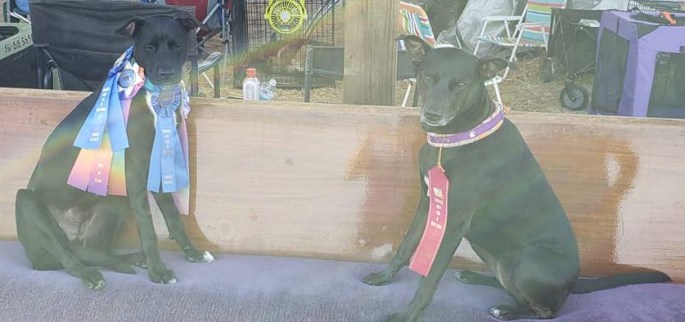
A proud Cookie showing off her barn hunt ribbons in January 2019 (before Ziggy came along).
Barn hunt is a less physically demanding sport compared to agility. It leverages your dog’s natural hunting instincts but can benefit from practice and classes.
Like with everything else, explore your dog’s interests and simply HAVE FUN!! Even if your dog doesn’t find a rat in the competition, every judge we’ve competed under has made sure that a rat tube is presented to the dog to sniff and for excitement to be demonstrated so they leave the ring on a pawsitive note.
Since January is National Train Your Dog Month, I want to dedicate this month’s posts to the different dog sports out there.
As always, these posts focus on my knowledge and experience of the sport. Consult the various links in the posts for more information.
First up, obedience and Canine Good Citizen!
What is it?
Obedience is probably the first thing that comes to mind when most people think of dog training. It’s following basic commands and your dog obeying those instructions.
Canine Good Citizen (CGC) is a skills test that is meant to show that your dog has good manners. To me, it’s a form of obedience, but where the end result is a certificate that shows that your dog has good matters, and you, in turn, are a responsible dog owner. I’ve been told that this can be helpful in getting acceptance for your dog with a landlord or similar situations. I’ve never had this need, so I don’t know how accepting people may be of the certification.
I’m sure there are more differences, but you can compete in different levels of obedience, whereas in CGC, there are different classes and test levels, but it’s not a competition. Simply pass or fail.
How we started
As a child, my mom trained Lady with basic commands. Somehow, we came across an obedience competition that I entered, and we did well. I have no clue if it was affiliated with the American Kennel Club (AKC). Aside from this one random competition from my childhood, we have never competed in obedience.
Me circa 1992 with my childhood dog, Lady, “competing” in obedience.
Cookie is the one who truly introduced us to the world of dog sports. It started with us taking her to a free (for a donation) obedience class at a shelter down the street from us. After a few sessions, our instructors suggested we upgrade to a paid AKC Star Puppy class. From there, we were introduced to a dog sports club that offered a range of classes, including Canine Good Citizen.
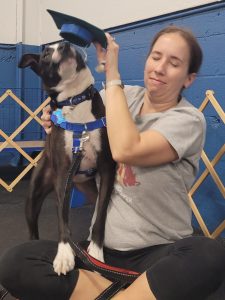
Cookie earned her Canine Good Citizen and Canine Good Citizen Advanced. Chip earned his Canine Good Citizen in November, though some of us suspect the evaluator graded on a curve.
Chip’s CGC graduation. Thankfully, the test didn’t include wearing a graduation cap.
What they don’t tell you
If nothing else, the AKC is adept at making money. While you’re likely to always pay a fee to take the class and/or tests, to have AKC titles (obedience, CGC, or other sports) registered, you will have to pay.
Your dog must be registered with the AKC. Don’t worry if your pup isn’t a purebred. They have a program for mixed breeds.
The one thing that is truly fun about registering with the AKC is that they require a dog’s name to be unique. When I first registered Cookie and learned of this requirement, I searched the combinations of her name and our last names. Hyphenated versions of our last names were available, but that seemed boring. Thus, Cookie is officially Cookie Wookie. Then came Ziggy Kenobi, and Chip S. Ahoy. (This is also why you may come across some very long, crazy names the more involved you become in the dog sports world.)
Aside from registering your dog, if you want a certificate recognizing your title, you also get to pay for that. The AKC also allows you to purchase medals and ribbons showing your new titles. If you compete in obedience and title, I assume that the club sponsoring the event will provide ribbons (that is common practice in other sports).
The biggest lesson that I remember from our early days in obedience and CGC is that your dog will only be as good based on how much you practice. Your dog may heel and pass CGC, but if you never heel again, their obedience to the command will also suffer.
The bottom line
Whether or not you choose to compete, obedience is a great starting point. At a minimum, you should want your pup to respond to basic commands and behave. Even if your pup will be a homebody, they will need to venture out on occasion, be it for walks, vet appointments, or trips to the groomers. Having them understand basic commands will be invaluable for you and other caregivers.
‘Tis the season for gift giving. If you’re like us, you include your pups (and those of your family) in holiday gift exchanges. And, you’re likely to appreciate receiving dog-themed gifts and gifting those to your fellow dog parent friends.
Gifting your pups
Cookie enjoying a gift, Christmas 2014
The most important part of gifting your pups is to consider their personalities. Like us, their interests may change as they get older.
Once upon a time, Cookie enjoyed getting toys as presents. Now, all she wants is food. So we ensure Santa Paws leaves a treat or a chew for Cookie. Chip enjoys the food, but he also LOVES toys.
If you have amassed an insane toy collection (as we have), keep some out of rotation. So, come Christmas, we save a large box and fill it with new-to-Chip toys that we will swap out with some of the toys he’s currently playing with. He may still get something new, but since the chaos of opening gifts is half the fun, we like to do this to bring joy without breaking the bank.
The holidays can also be a good time to refresh some of their staples, like upgrading their bed (or adding to the beds scattered in each room), harnesses, or collars.
We took advantage of Ruffwear‘s (I’m an Amazon affiliate and may earn based on qualifying purchases) Black Friday sale and purchased new harnesses for Cookie and Chip. We love these harnesses because they’re among the few brands that ensure a proper fit (hooking further down the body) without constricting shoulder movement. The Flagline model (I’m an Amazon affiliate and may earn based on qualifying purchases) also has a top handle that can be handy if you need to aid your pup in getting in/out of the car (or navigating a hike for the more adventurous). They have a back and front clip for the leash. Ruffwear harnesses are also great for tripawds since they go over the head and clip in the back – no balancing is needed like with step-in harnesses.
The pups have an extensive collar collection, but I can’t help buying a new one or two whenever 5 Dog Designs opens their Etsy shop. Their collars are cute, funny, and high quality. They have great BOGO deals (part of the reason we have so many) and even have a “recycling” program. I haven’t taken advantage of that yet, but I have a collar in mind to swap the next time they re-open.
Gifting Pawrents
Cookie and Chip posing with one of my gifts, Christmas 2022
Like gifting your pups, it’s important to know your dog-loving friends. If you’re gifting their pups, it may be harder to know what to get them if you don’t know their pawrenting habits.
For instance, pawrents are becoming more particular about the quality of treats they feed their pets. Be cautious about purchasing highly processed treats (commonly found in major pet retailers). Instead, look for high-quality, small-batch, single-ingredient treats.
Similarly, when it comes to toys, do you know their personalities? Some dogs destroy toys just by looking at them or tend to chew off certain parts that can become a hazard.
A safe bet can always be a gift card to independent pet stores or retailers like Chewy and Amazon, with a broad product selection. Dog-themed clothing, mugs, etc., are always welcome. Even if you think they have too much, we’ll always disagree. Great retailers on this front include I’d Rather Be With My Dog, Dog is Good, Teddy the Dog, and Life is Good. (You can find similar products at discount retailers such as Home Goods and TJ Maxx.)
Joy of the Season
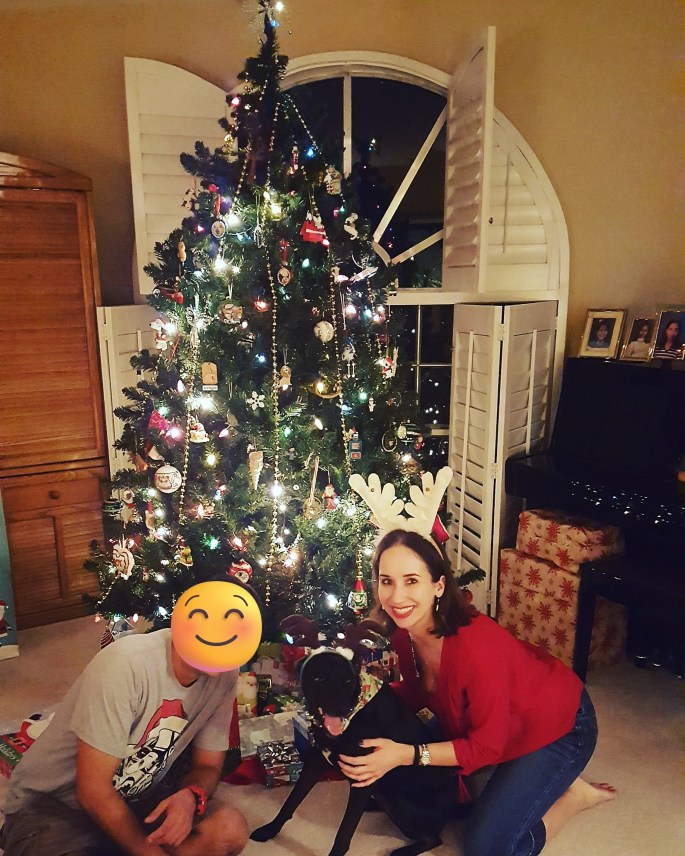
Cookie and Ziggy by the tree, Christmas 2019
Giving presents to the dog pawrents, or their pups, in your life can be a challenge. Most pawrents would also appreciate donations to rescue groups or charities that are meaningful to them.
We are fortunate to be able to afford gifts for our pups (and ourselves). And while we don’t need gifts, some folks insist on gifting us. Donations (monetary or otherwise) to the rescues where we adopted our pups (e.g., A Second Chance Puppies and Kittens Rescue, Barking Outloud) or to those fighting canine cancer (e.g., National Canine Cancer Foundation) are also appreciated.
Last week, in anticipation of Thanksgiving, I wrote about what I’m grateful for in our canine cancer journey. Following the shopping “holidays” of Black Friday and Cyber Monday, what better than a post about affording cancer treatment?
No one can accurately estimate what treatment will cost because it’s determined by many factors. First is the kind of treatment you’re choosing. Surgery, chemotherapy, supplements, radiation, or some combination of those will all affect the costs.
Second is where you live and your options. Like everything, where you live influences the cost of services. Similarly, suppose you want to pursue treatments that your veterinarian doesn’t offer (e.g., chemotherapy or radiation), and specialists are hard to come by in your area. In that case, you may choose to travel for treatment. That will add in another layer of costs – travel expenses.
Third is for how long you are treating your fur baby. Ziggy lived 17 months post-diagnosis. He had surgery, six rounds of traditional chemo, and then went on a low-dose at-home chemo pill. Our oncologist advised that the standard protocol for the at-home chemo is six months. It was safe to continue on it long-term, so we kept him on it until the end. When a mass was found on his spleen, we were going to attempt traditional chemo once again (a different protocol), but Ziggy’s health took a turn before we could continue.
Meanwhile, Cookie had a total of three surgeries in two years and is on the low-dose at-home chemo. She has been on it for nearly seven months and counting.
Not counting supplements, we have spent about half of what we spent (out of pocket) on Ziggy on Cookie so far.
One reason we can choose ongoing treatment for our pups is through pet insurance. Each time we bring home a pup, the first thing we do is to sign them up for pet insurance. I plan to dedicate a post to insurance, but my key bits of advice:
Get it early, before health issues arise. Pre-existing conditions are real!
Choose the highest maximum annual coverage. Increasing it later on will constitute a new plan and any health issues previously found may be considered a pre-existing condition – even cancer.
Almost everything that we pay for out of pocket we use Care Credit. Yes, it’s a credit card, but it offers no interest financing for at least six months for purchases over $200.
Like any other purchase, you should spend within your means. The benefit of the financing options allows you to spread the cost over time instead of taking a huge hit all at once.
The veterinarians you visit must accept Care Credit as a payment option. Every practice we have been to (at least four in the last three years) accepts Care Credit. What varies by practice is the number of months of financing that they offer. Some only offer six months, while others offer up to 24 months.
Some practices with multiple options would give us the choice of how many months to finance, while others would choose for us based on the amount of our invoice.
Since applying for Care Credit, we were “upgraded” to a MasterCard option, allowing us to earn points on purchases at Care Credit practitioners and other retailers. You can redeem the points for gift cards or statement credits. We apply the points as statement credits to lower the cost of the vet bills that we pay out of pocket.
There are other options for paying for treatment that I don’t have first-hand experience with but have read about.
One option is clinical trials. You’ll most likely need to live within travel distance of a veterinary college. There are pros and cons to participating in a clinical trial. While you may get free treatment, there’s a risk that instead of treatment your dog gets a placebo. That may be a worthwhile risk if that’s your only option for affording care. It’s important to note that costs of care may not be covered by the trial, so it’s worth doing your homework before enrolling.
Another option is to look into organizations that may offer grants or other types of financial aid to cover the costs of cancer care. This DogCancer.com article overviews some of the organizations that provide financial aid.
For additional advice, listen to this DogCancer.com podcast episode, where one dog racked up $60,000 in vet bills, or this episode highlighting creative solutions and difficult conversations.
Final tips
My top recommendations from personal experience are to sign up for pet insurance and research whether Care Credit is right for you.
When discussing treatment options with your veterinarian, discuss the cost and your financial situation. They can provide estimates for the treatment so you can research payment options and consider them when choosing what treatment is right for your pup.
Discussing your financial situation with your veterinarian may enable them to offer alternative diagnostics or treatments or even share discounts that their practice offers (e.g., a multi-pet discount).
Bottom line: Don’t assume that care is out of financial reach without getting written estimates from your vet and researching options to help offset the costs.














 pawrentingtails.com